
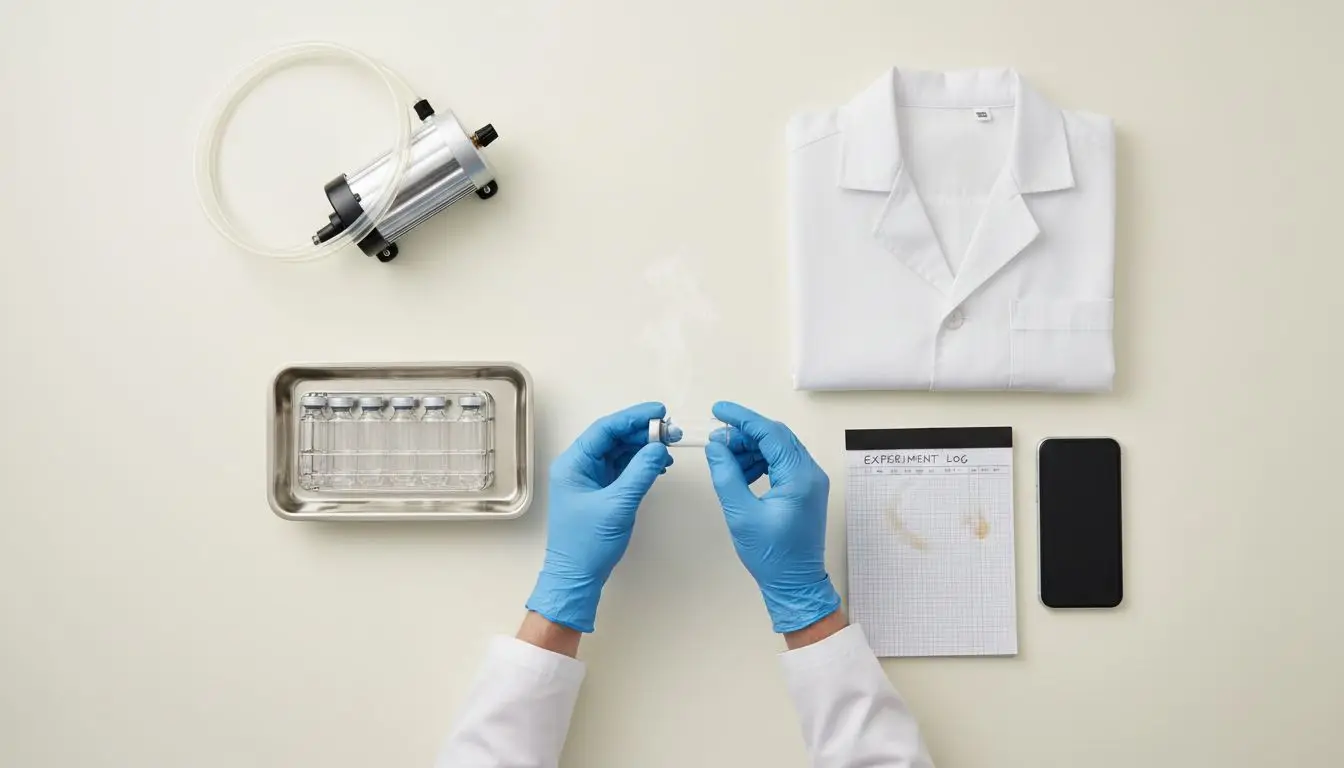
Vacuum pressure inside sterile vials can dip as low as 0.01 atmospheres, creating an environment where contamination risks drop sharply. For American citizen scientists and DIY researchers, maintaining precise vial sterility means every peptide study depends on getting pressure management right. The fundamentals behind vacuum integrity unlock greater purity, reliability, and speed for those racing to advance scientific discovery with uncompromised materials.
Table of Contents
- Vacuum Pressure Basics In Sterile Vials
- Types Of Vial Integrity Testing Methods
- How Vacuum Protects Against Contamination
- Risks Of Poor Pressure And Common Mistakes
- Industry Standards For Vial Sterility Assurance
Key Takeaways
| Point | Details |
|---|---|
| Vacuum Pressure is Essential | Maintaining vacuum pressure in sterile vials is crucial to prevent contamination and ensure the integrity of sensitive compounds. |
| Rigorous Testing Methods Required | Employ a variety of vial integrity testing methods to achieve comprehensive sterility verification and minimize risks. |
| Monitor Environmental Factors | Regularly check and document environmental parameters, as fluctuations can jeopardize vial integrity. |
| Adhere to Regulatory Standards | Familiarize yourself with international sterility standards to maintain compliance and uphold research integrity. |
Vacuum Pressure Basics In Sterile Vials
In the precision-driven world of laboratory research, vacuum pressure plays a crucial role in maintaining sterile vial conditions. When scientists need absolute purity, understanding how vacuum environments protect sensitive compounds becomes mission critical. Vacuum pressure fundamentals in sterile environments reveal an intricate process that goes far beyond simple air removal.
The core mechanism involves creating a low-pressure internal environment within vials, which serves multiple protective functions. By systematically extracting air molecules, researchers eliminate potential contamination pathways. Typical vacuum pressure ranges between 0.01 to 0.1 atmospheres, creating an almost hermetic seal that prevents microbial infiltration. This ultra-controlled environment ensures that research-grade materials remain uncompromised throughout storage and transportation.
Maintaining precise vacuum pressure requires specialized equipment and rigorous protocols. Vacuum pumps extract air through strategically placed valves, creating a near-perfect seal that prevents external particulates from entering. The process involves multiple stages of pressure reduction, with sophisticated monitoring systems tracking internal atmospheric conditions in real time. Each reduction in air pressure represents another layer of protection against potential contamination vectors.
Pro Tip: Always verify vacuum vial integrity using calibrated pressure measurement tools to ensure maximum sterility and research reliability.
Types Of Vial Integrity Testing Methods
In laboratory research, maintaining vial integrity is a critical process that demands rigorous and precise testing methods. Container closure integrity testing techniques represent a sophisticated array of scientific approaches designed to ensure absolute sterility and prevent potential contamination.
Researchers typically employ six primary testing methodologies to verify vial integrity. These include: microbial challenge tests, liquid tracer methods, vacuum decay analysis, electrical conductivity assessments, tracer gas detection, and headspace analysis. Each method offers unique advantages and targets specific potential vulnerabilities in the container closure system. Vacuum decay testing, for instance, is particularly effective at identifying microscopic leaks by measuring pressure changes within a sealed environment.
Regulatory agencies worldwide increasingly demand deterministic testing approaches that provide quantifiable, reproducible results. Modern container closure integrity testing (CCIT) techniques focus on non-destructive methods that can detect even the most minute potential contamination pathways. These sophisticated protocols help researchers maintain the highest standards of research material protection, ensuring that sensitive compounds remain completely isolated from external environmental factors.
Pro Tip: Always cross-validate multiple vial integrity testing methods to ensure comprehensive sterility verification and minimize potential research compromises.
Here’s a quick comparison of vial integrity testing methods and their ideal use case:
| Method | Best For | Detection Sensitivity |
|---|---|---|
| Microbial Challenge | Biological contamination | High for living agents |
| Liquid Tracer | Seal breach with liquids | Moderate resolution |
| Vacuum Decay | Microscopic leak detection | Very high precision |
| Electrical Conductivity | Metallic seal monitoring | Detects conductive flaws |
| Tracer Gas Detection | Volatile gas leaks | Extremely sensitive |
| Headspace Analysis | Internal vapor composition | Sensitive to gas loss |
How Vacuum Protects Against Contamination
In the high-stakes world of laboratory research, preventing contamination is not just a priority—it’s an absolute necessity. Sterilization methods for pharmaceutical vials reveal how vacuum technology serves as a critical defensive barrier against microscopic invaders that could compromise research integrity.
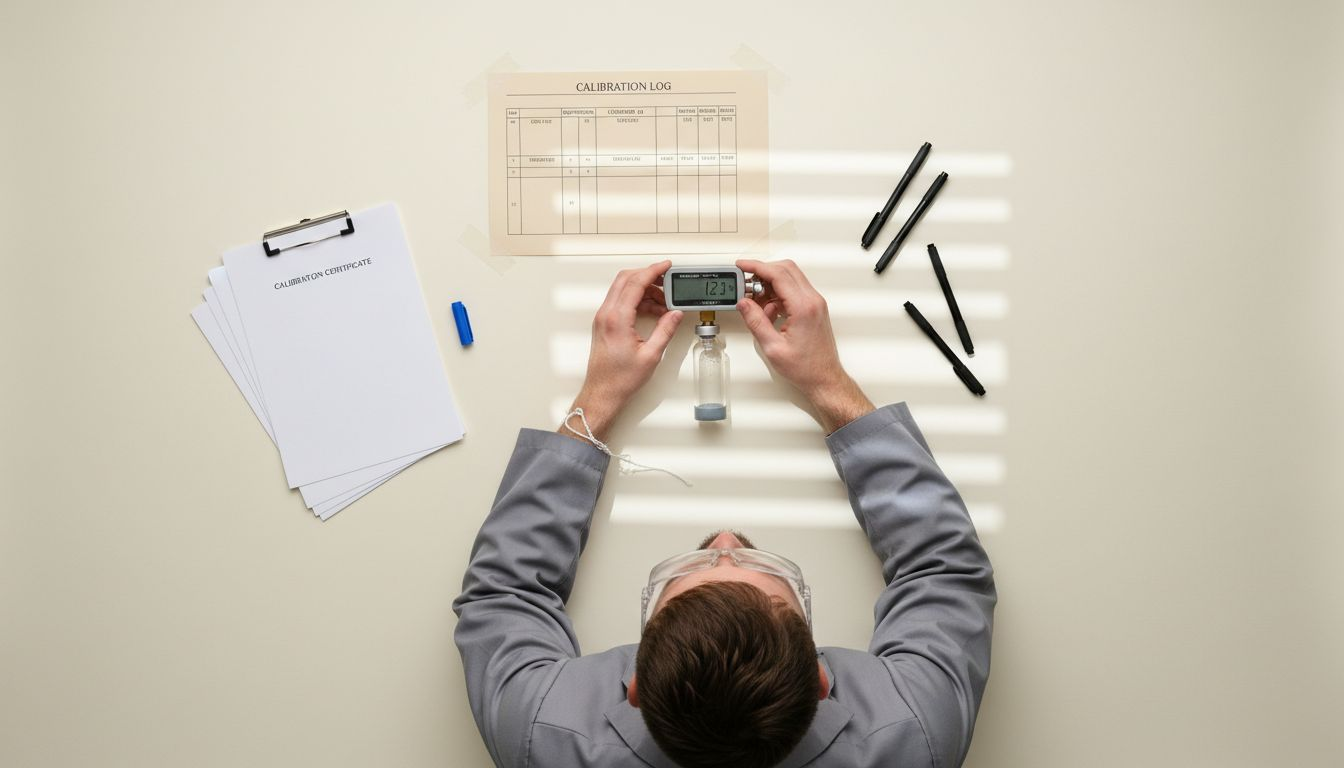
The vacuum’s protective mechanism operates through a sophisticated process of environmental manipulation. By removing air molecules and creating a low-pressure internal environment, researchers effectively eliminate potential pathways for bacterial or fungal infiltration. Negative pressure becomes a powerful shield, preventing external contaminants from penetrating the vial’s sealed space. This technique creates an almost impenetrable barrier that maintains the pristine condition of sensitive research materials, ensuring that every compound remains isolated from potentially destructive environmental factors.
Understanding the nuanced protective functions of vacuum seals provides insight into their remarkable effectiveness. The vacuum environment disrupts the typical conditions necessary for microbial survival—removing moisture, reducing atmospheric pressure, and creating an inhospitable microclimate that prevents biological degradation. Pharmaceutical and research protocols leverage these vacuum principles to extend product shelf life, maintain compound purity, and guarantee the highest standards of scientific reliability.
Pro Tip: Monitor vacuum seal integrity using precision instruments and implement regular calibration checks to maintain optimal contamination prevention protocols.
Risks Of Poor Pressure And Common Mistakes
The world of laboratory research operates on razor-thin margins of error, where seemingly minor pressure inconsistencies can trigger catastrophic consequences. Comprehensive vial inspection and quality control strategies reveal the intricate risks associated with poor pressure management that can devastate research integrity.
Researchers frequently encounter several critical pressure-related vulnerabilities. Headspace pressure variations represent a primary risk factor, potentially compromising vial sterility through microscopic seal breaches. Common mistakes include improper capping techniques, inconsistent environmental temperature controls, and neglecting periodic pressure equilibration checks. These seemingly minor oversights can create invisible pathways for contamination, transforming pristine research environments into potential microbial breeding grounds.
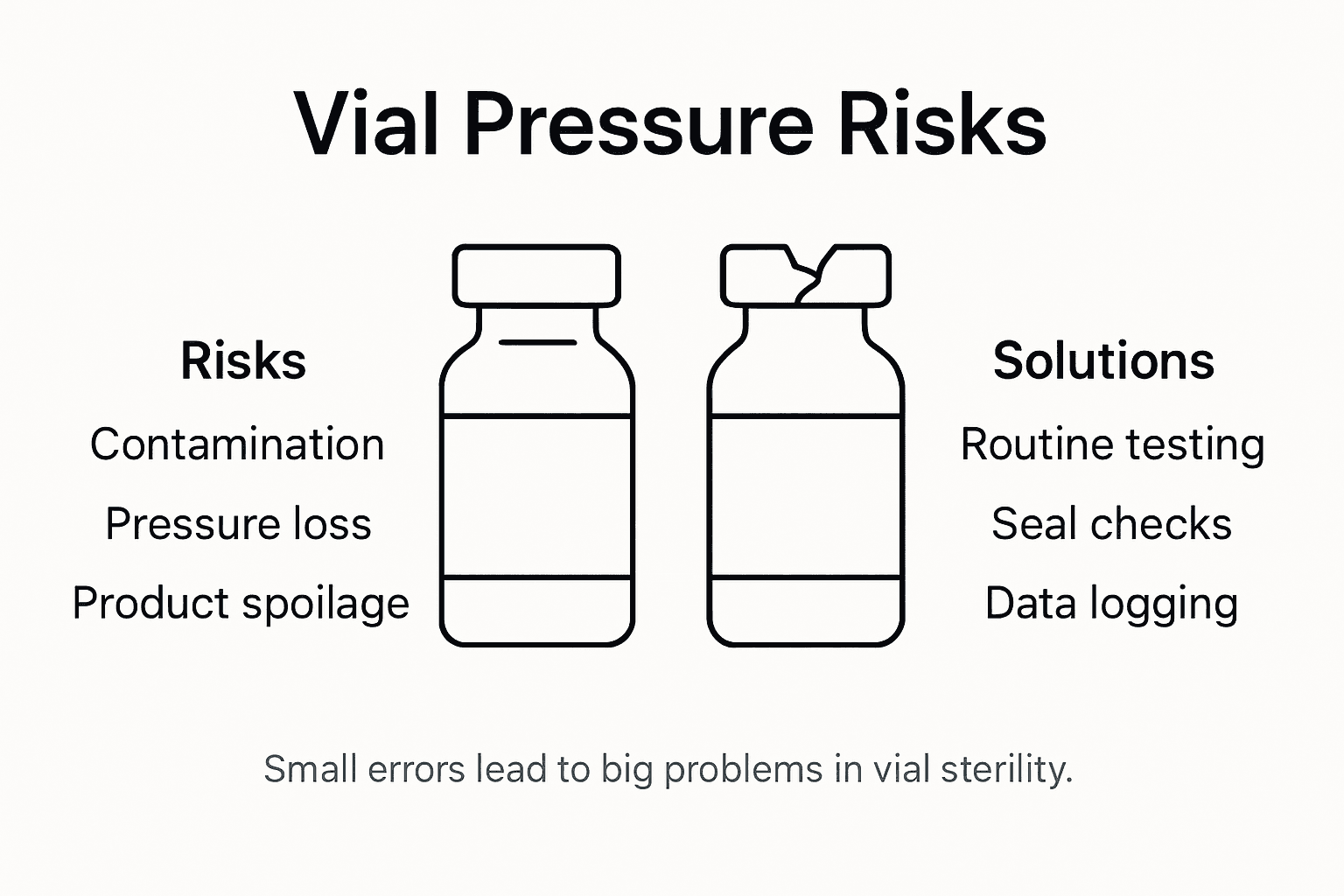
Deep cold storage presents unique challenges that demand meticulous pressure management. Container closure integrity under extreme storage conditions demonstrates how temperature fluctuations can induce structural stress, potentially compromising vial seal integrity. Root causes often stem from inadequate material selection, poor manufacturing tolerances, and insufficient quality control protocols. Sophisticated researchers recognize that maintaining consistent internal pressure requires a holistic approach involving precise engineering, rigorous testing, and continuous monitoring.
Pro Tip: Implement routine pressure differential testing and maintain detailed environmental logs to proactively identify potential vial integrity risks before they escalate.
Industry Standards For Vial Sterility Assurance
Sterility assurance in laboratory research represents a complex, multilayered ecosystem of regulatory frameworks and precision engineering. Global principles for sterility management reveal a sophisticated landscape where international agencies collaborate to establish rigorous standards that protect research integrity across diverse scientific domains.
Multiple regulatory bodies—including the International Standards Organization (ISO), United States Pharmacopeia (USP), World Health Organization (WHO), European Union (EU), and Food and Drug Administration (FDA)—contribute to a comprehensive standardization framework. These organizations continuously refine protocols that mandate exhaustive testing, process validation, and documentation requirements. Critical aspects include precise leak rate limitations, comprehensive package assembly guidelines, and stringent method validation procedures that ensure vial sterility throughout their entire lifecycle.
Package integrity evaluation standards represent the cornerstone of modern pharmaceutical and research quality control. The USP <1207> guideline, in particular, provides an authoritative benchmark for container closure integrity testing. These standards demand meticulous documentation, systematic testing protocols, and continuous monitoring to guarantee that every vial maintains its sterile barrier against potential contamination vectors. Sophisticated researchers understand that meeting these standards is not just a regulatory checkbox but a fundamental commitment to scientific reliability.
Pro Tip: Develop a comprehensive tracking system that documents each stage of vial production, testing, and storage to ensure consistent compliance with industry sterility standards.
The following table summarizes major regulatory bodies and what each contributes to vial sterility standards:
| Organization | Scope of Standardization | Key Contribution |
|---|---|---|
| ISO | International laboratory standards | Baseline sterility benchmarks |
| USP | United States pharmaceutical norms | Container closure test guidelines |
| WHO | Global medical product regulations | Safety and sterility protocols |
| EU | European Union pharma regulations | Regional package requirements |
| FDA | United States drug approval | Compliance and validation rules |
Unlock Sterile Vial Confidence with Area 15 Labs
The article breaks down how vacuum pressure keeps vials sterile by creating a near-perfect seal that guards against microscopic contamination. If you are serious about flawless research results, you know that controlling internal pressure and vial integrity is mission critical. Common risks like headspace pressure variation or seal breaches can ruin samples before your work even begins.
At Area 15 Labs, we get it. We built our reputation on precision purity and lightning-fast shipping from Texas to make sure your research compounds arrive exactly as promised. No sketchy overseas delays no gray-area quality. Just rigorously tested, high-purity materials packed with that unmistakable alien swagger. We combine science with a rebellious spirit to give Citizen Scientists a no-nonsense partner they can count on for high-purity compounds and verified research tools.
Take control of your vial sterility assurance today. Explore our trusted research lineup and experience the speed and transparency that sets us apart from the rest at Area 15 Labs. The future of research waits for no one so start your journey with the “No-BS” choice from Texas now.
Frequently Asked Questions
What is vacuum pressure in sterile vials?
Vacuum pressure in sterile vials refers to a low-pressure environment created by removing air molecules. This process helps prevent contamination of sensitive compounds by maintaining a controlled internal atmosphere.
How does vacuum pressure protect against contamination?
Vacuum pressure protects against contamination by creating a negative pressure environment that eliminates potential pathways for bacterial or fungal infiltration. This ensures that external contaminants cannot penetrate the sealed vial, preserving the integrity of the contents.
What types of tests are used to ensure vial integrity?
Common testing methods for vial integrity include microbial challenge tests, liquid tracer methods, vacuum decay analysis, electrical conductivity assessments, tracer gas detection, and headspace analysis. Each method is used to identify potential vulnerabilities in the vial’s sealing system.
What are the risks associated with poor vacuum pressure in vials?
Poor vacuum pressure can lead to headspace pressure variations that compromise vial sterility, making them susceptible to contamination. Common mistakes such as improper capping and inconsistent environmental conditions can create invisible pathways for contaminants to enter the sealed environment.