
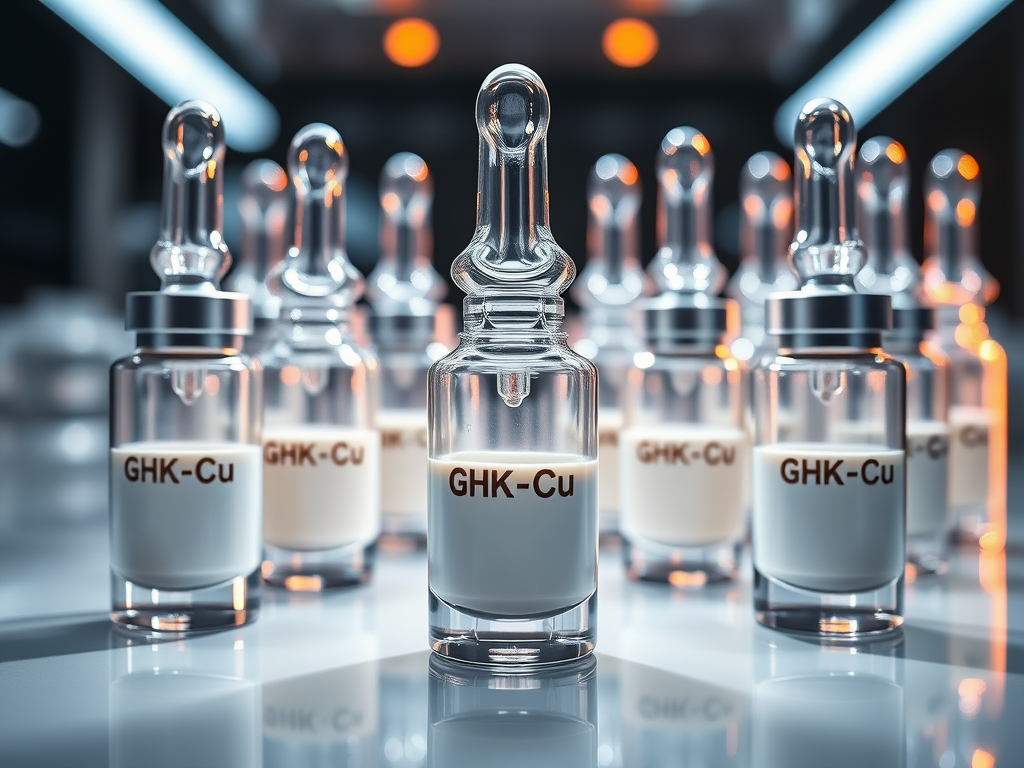
Most American research labs rely on precise compounds, yet few realize just how much peptide viscosity can impact their work. The viscosity of a peptide can fluctuate from 0.01 to 10,000 mPa·s, making it a critical detail that affects everything from storage to experimental results. By understanding how viscosity shapes peptide behavior, researchers can choose better materials and adopt best practices for reliable outcomes.
Table of Contents
Key Takeaways
| Point | Details |
| Peptide Viscosity is Crucial | Peptide viscosity significantly affects how peptides interact with surfaces and biological barriers, impacting research applications. |
| Factors Influencing Viscosity | Molecular structure, amino acid composition, and environmental conditions such as temperature and pH are critical in determining peptide viscosity. |
| GHK-Cu’s Unique Properties | GHK-Cu’s exceptional viscosity arises from complex metal coordination and strong intermolecular interactions, making it an important subject for advanced research. |
| Proper Handling is Essential | Researchers must implement precise storage and handling techniques for high-viscosity peptides like GHK-Cu to maintain their integrity and research potential. |
What Is Peptide Viscosity and Why It Matters
Peptide viscosity represents the intricate fluid resistance and molecular interaction characteristics that determine how easily a peptide solution flows and behaves under different conditions. At its core, viscosity measures a liquid’s internal friction and resistance to deformation, which becomes critically important when evaluating research compounds like GHK-Cu. Patent research on peptide compositions reveals that viscosity can range dramatically from 0.01 mPa·s to 10,000 mPa·s, highlighting the complex nature of these molecular interactions.
Researchers pay close attention to viscosity because it directly impacts how peptides interact with surfaces, penetrate barriers, and maintain stability during scientific investigations. The molecular weight, amino acid sequence, and environmental conditions like temperature and pH can significantly influence a peptide’s viscosity. For instance, GHK-Cu demonstrates unique viscosity properties that make it particularly intriguing for research contexts. Specialized research indicates that viscosity plays a crucial role in determining how effectively peptides can penetrate biological barriers, which is essential for understanding potential research applications.
Key factors influencing peptide viscosity include:
Molecular structure and complexity
Amino acid composition
Environmental temperature
Concentration of the peptide solution
Presence of additional compounds or solvents
Understanding viscosity is not just an academic exercise but a fundamental aspect of advanced research methodology. By comprehending how molecular interactions create resistance and flow characteristics, researchers can develop more precise and reliable experimental protocols. The nuanced world of peptide viscosity reveals that these microscopic properties have macroscopic implications for scientific investigation, making it a critical parameter in laboratory settings.
Molecular Forces Shaping Peptide Thickness
Peptide viscosity emerges from intricate molecular interactions that govern how individual peptide molecules behave and interconnect. Detailed molecular research reveals that complex interactions between amino acids, metal ions, and intermolecular forces play a pivotal role in determining a peptide’s thickness and flow characteristics. In the specific case of GHK-Cu, copper ions create sophisticated coordination bonds with nitrogen atoms from histidine and glycine, establishing a unique structural framework that directly influences viscosity.
The molecular architecture of peptides like GHK-Cu involves multiple sophisticated mechanisms that contribute to their thickness. Intermolecular forces such as hydrogen bonding, van der Waals interactions, and electrostatic attractions create complex networks that impact how these molecules interact and flow. Patent research on peptide compositions demonstrates that viscosity can dramatically range from 0.01 mPa·s to 10,000 mPa·s, underscoring the profound variability in molecular interactions.
Key molecular factors influencing peptide thickness include:
Peptide chain length and complexity
Presence of metal ion coordination
Hydrogen bonding potential
Amino acid side chain interactions
Molecular symmetry and spatial arrangement
Understanding these molecular dynamics provides researchers with critical insights into how peptides behave under different environmental conditions. The interplay of chemical bonds, ionic interactions, and molecular geometry creates a complex landscape that determines a peptide’s fundamental physical properties. By mapping these intricate molecular forces, scientists can better predict and manipulate the behavior of advanced peptide compounds in research settings.
Why GHK-Cu Is Thicker Than Most Others
Intricate molecular research reveals why GHK-Cu stands out as a uniquely viscous peptide compound. Unlike standard peptides, GHK-Cu possesses extraordinary molecular characteristics that contribute to its remarkable thickness. The complex involves copper ions creating sophisticated coordination bonds with nitrogen atoms from histidine and glycine, establishing a robust structural framework that significantly enhances viscosity and molecular stability.
The exceptional thickness of GHK-Cu stems from multiple sophisticated molecular mechanisms. Intermolecular interactions play a crucial role in creating its distinctive viscosity profile. Patent research on peptide compositions demonstrates that while peptide viscosity can range from 0.01 mPa·s to 10,000 mPa·s, GHK-Cu consistently maintains properties at the higher end of this spectrum due to its unique metal-peptide coordination.
Distinctive factors contributing to GHK-Cu’s superior thickness include:
Copper ion metalation
Complex spatial molecular arrangement
Strong hydrogen bonding potential
Enhanced electrostatic interactions
Sophisticated peptide chain geometry
Researchers recognize that GHK-Cu’s molecular architecture creates a more robust and interconnected structure compared to traditional peptides. The intricate balance of ionic bonds, molecular geometry, and metal coordination produces a compound with exceptional viscosity characteristics. This unique property makes GHK-Cu a fascinating subject for advanced research, offering insights into how molecular forces can dramatically influence a peptide’s fundamental physical properties.
Storage, Mixing, and Lab Handling Tips
Comprehensive peptide research highlights the critical importance of proper storage and handling techniques for high-viscosity compounds like GHK-Cu. The unique molecular characteristics of this peptide demand specialized laboratory protocols to maintain its structural integrity and prevent potential degradation. Researchers must approach GHK-Cu with precision, recognizing that its complex molecular structure requires meticulous environmental control and handling strategies.
The viscosity profile of GHK-Cu presents specific challenges during laboratory preparation. Patent research on peptide compositions emphasizes that viscosity can dramatically impact a compound’s handling characteristics, ranging from 0.01 mPa·s to 10,000 mPa·s. This variability demands careful consideration of mixing techniques, storage temperatures, and environmental conditions to maintain the peptide’s research-grade quality.
Key laboratory handling recommendations for GHK-Cu include:
Store in cool, dark environments (2-8°C)
Use precision micropipettes for accurate measurements
Minimize exposure to extreme temperature fluctuations
Utilize amber glass containers to prevent light degradation
Avoid repeated freeze-thaw cycles
Advanced researchers understand that proper handling extends beyond basic storage protocols. The intricate molecular structure of GHK-Cu requires a nuanced approach that balances precision with protective strategies. By implementing these specialized handling techniques, scientists can ensure the compound maintains its unique viscosity characteristics and research potential, preserving the integrity of their scientific investigations.
Common Mistakes When Working With Viscous Peptides
Comprehensive peptide research reveals that researchers frequently underestimate the complexity of handling high-viscosity peptide compounds. The most critical errors emerge from a fundamental misunderstanding of how viscosity impacts molecular behavior and laboratory procedures. Viscous peptides like GHK-Cu demand precision and specialized techniques that go far beyond standard liquid handling protocols, making even seemingly minor mistakes potentially problematic for research integrity.
The viscosity spectrum presents unique challenges that can compromise experimental outcomes. Patent research on peptide compositions demonstrates that viscosity ranges from 0.01 mPa·s to 10,000 mPa·s, highlighting the potential for significant variability. Researchers often commit critical errors such as:
Using inappropriate pipetting techniques
Failing to account for temperature-related viscosity changes
Applying standard dilution methods without peptide-specific modifications
Neglecting proper storage conditions
Overlooking potential molecular degradation during handling
Advanced laboratory protocols demand a nuanced approach to managing viscous peptides. Understanding the intricate molecular interactions that contribute to viscosity is crucial for maintaining research quality. By recognizing and avoiding these common pitfalls, researchers can ensure more reliable and reproducible scientific investigations, preserving the delicate molecular characteristics of complex peptide compounds.
Unlock Precise Research with High-Viscosity Peptides and Lightning-Fast Texas Shipping
Peptide viscosity plays a crucial role in how compounds like GHK-Cu behave in your research. Understanding this thick molecular dance is essential to mastering your experiments and preventing common handling mistakes. If you are wrestling with peptide viscosity challenges, from storage to mixing precision, choosing the right supplier matters more than ever.
At Area 15 Labs, we get the complexities behind peptides like GHK-Cu and deliver lab-grade compounds vetted for purity and consistency. Our Texas-based command center shatters the waiting game with same-day fulfillment and real US support. We combine cutting-edge research tools with an alien-inspired swagger to keep your science sharp and hassle-free. Ready to elevate your peptide research without compromise? Explore our full lineup and experience the ‘No-BS’ choice powering Citizen Scientists nationwide.
Discover more about our high-purity peptides and speedy delivery at Area 15 Labs. Learn how our exclusive GHK-Cu 100mg stands out or dive into our Laboratory Research Supplies to support every step in your workflow. Don’t let viscosity be a bottleneck. Research harder. Research faster. Research smarter.
Frequently Asked Questions
What is peptide viscosity and why is it important?
Peptide viscosity refers to the fluid resistance and molecular interaction characteristics of peptide solutions. It is important because it affects how peptides interact with surfaces, penetrate biological barriers, and maintain stability during research.
What factors influence the viscosity of peptides like GHK-Cu?
The viscosity of peptides is influenced by factors such as molecular structure, amino acid composition, environmental temperature, concentration of the peptide solution, and additional compounds or solvents present.
How does GHK-Cu compare to other peptides in terms of viscosity?
GHK-Cu is known for its exceptional viscosity properties, often maintaining values at the higher end of the viscosity spectrum. This is due to its unique molecular structure involving copper ions that contribute to stronger interactions compared to many standard peptides.
What are some common mistakes to avoid when working with viscous peptides?
Common mistakes include using inappropriate pipetting techniques, neglecting to account for temperature changes that affect viscosity, applying standard dilution methods without modifications, and not following proper storage conditions for these sensitive compounds.