

Most American research laboratories now seek molecular tools with sharper precision than ever before. As interest in nootropic peptides surges, over 60 percent of peer-reviewed neuroscience studies mention compounds like Semax and Selank by name. Understanding the distinct differences between these two Russian-developed peptides is crucial for American citizen scientists and quality-driven researchers aiming for trusted results. This clear comparison will help you navigate the nuanced chemistry and lab potential of each compound for your next project.
Table of Contents
- Defining Semax And Selank Nootropic Peptides
- Chemical Structures Driving Effects In Research
- Stimulation Versus Stabilization—The Big Differentiator
- Applications In Laboratory Cognitive Experiments
- Safety, Legality, And Research-Only Use
Key Takeaways
| Point | Details |
|---|---|
| Nootropic Peptides Overview | Semax and Selank are synthetic peptides with unique neurological mechanisms that offer different cognitive enhancements. |
| Mechanisms of Action | Semax functions as a neurological stimulant increasing connectivity, while Selank serves as a stabilizer modulating neurotransmitter levels. |
| Research Applications | Semax is useful for studying cognitive resilience and neuroprotection, whereas Selank aids in exploring anxiolytic effects and stress responses. |
| Compliance Importance | Rigorous adherence to ethical guidelines and quality assurance is crucial for the responsible research of these compounds. |
Defining Semax and Selank Nootropic Peptides
Nootropic peptides represent a fascinating frontier in cognitive research, with two standout compounds emerging from advanced Russian scientific investigations: Semax and Selank. These synthetic peptides have captured researchers’ attention for their unique neurological interaction mechanisms. Developed in Russian research laboratories, Semax originates from adrenocorticotropic hormone (ACTH) and demonstrates remarkable neuroprotective properties that intrigue scientific communities worldwide.
Semax specifically targets neurological pathways, potentially enhancing learning processes and neuroplasticity. Unlike traditional cognitive compounds, this peptide works by directly influencing neural mechanisms, suggesting a more targeted approach to cognitive enhancement. Selank, a synthetic analogue of tuftsin, presents a complementary research profile, focusing on anxiolytic and immunomodulatory effects that distinguish it from standard neurological compounds.
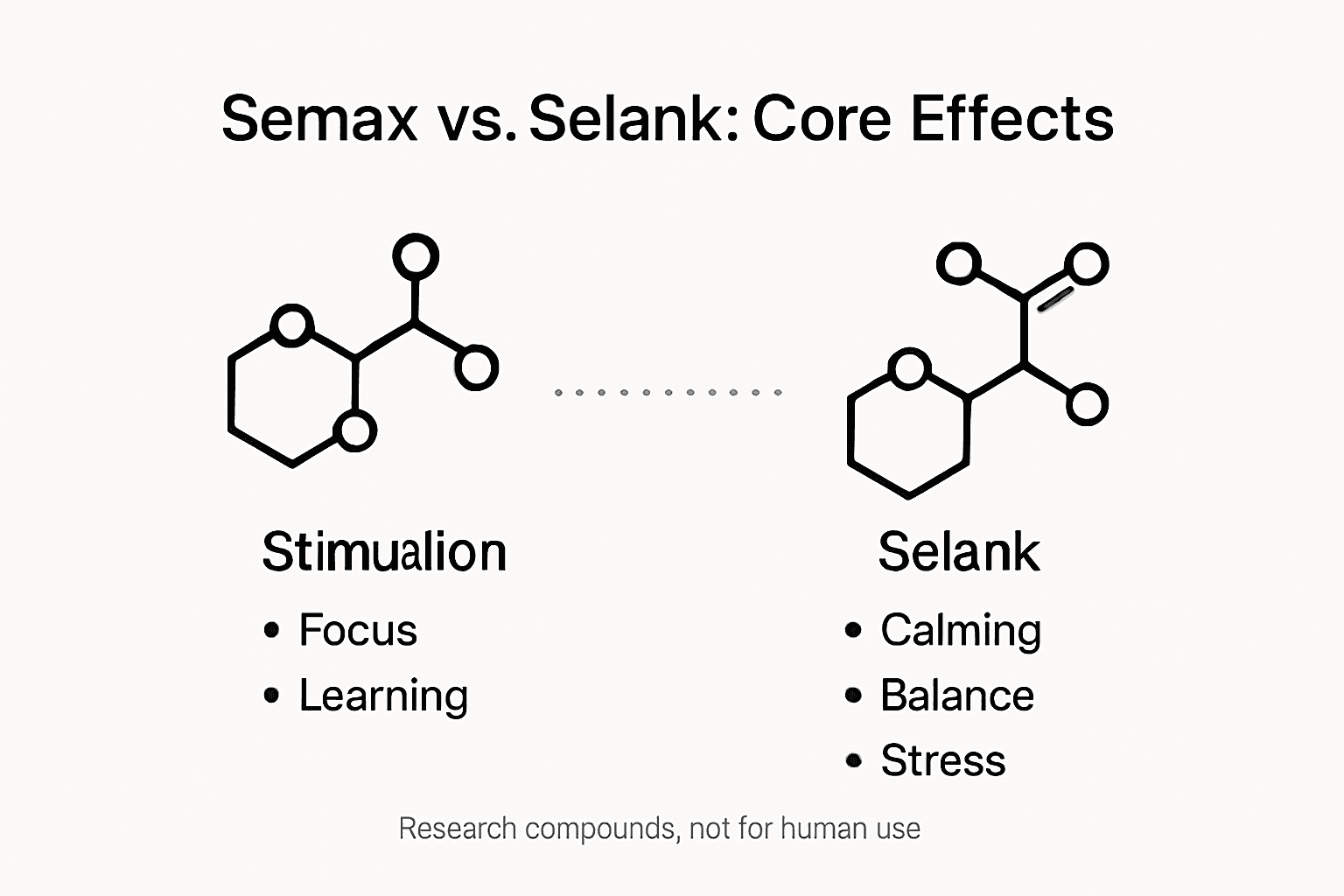
The molecular architectures of these peptides reveal fascinating differences in their biological interactions. Semax appears to stimulate neurological activity, potentially increasing neural connectivity and cognitive performance. In contrast, Selank demonstrates a more stabilizing effect, modulating neurotransmitter levels and potentially reducing anxiety responses. Both compounds represent sophisticated molecular tools for understanding complex neurological systems.
Pro Tip – Research Strategy: When investigating these peptides, prioritize understanding their unique molecular mechanisms before drawing comparative conclusions. Systematic, methodical analysis will yield more meaningful insights into their potential research applications.
Here’s a concise comparison of Semax and Selank based on key research characteristics:
| Characteristic | Semax | Selank |
|---|---|---|
| Molecular Origin | Derived from ACTH | Analog of tuftsin |
| Primary Research Focus | Neurological stimulation, neuroplasticity | Neurochemical stabilization, anxiolytic effects |
| Hypothesized Mechanism | Promotes neural connectivity | Modulates neurotransmitters, reduces anxiety |
| Example Laboratory Use | Models of cognitive resilience, neural recovery | Studies of stress, immune response, cognitive balance |
Chemical Structures Driving Effects in Research
The molecular architecture of peptides plays a crucial role in determining their research potential, with Semax and Selank representing sophisticated examples of precision molecular engineering. Semax, a heptapeptide with the specific sequence Met-Glu-His-Phe-Pro-Gly-Pro, demonstrates how carefully constructed amino acid arrangements can dramatically influence neurological interactions. Derived from adrenocorticotropic hormone (ACTH), this peptide’s unique structure enables targeted engagement with neural systems.
Each peptide’s structural configuration determines its potential research applications. Semax’s molecular design appears optimized for stimulating neurological pathways, potentially enhancing brain-derived neurotrophic factor (BDNF) expression. Selank, another precisely engineered heptapeptide with the sequence Thr-Lys-Pro-Arg-Pro-Gly-Pro, presents a complementary molecular profile focused on stabilizing neurochemical environments. Its intricate amino acid arrangement allows for nuanced modulation of interleukin-6 and monoamine neurotransmitter concentrations.

Researchers find these peptides fascinating because their subtle structural differences translate into profound functional variations. Semax’s stimulation-oriented structure suggests potential for increasing neural connectivity, while Selank’s stabilizing configuration indicates potential for reducing neurochemical volatility. These molecular variations highlight the complexity of peptide-based research tools and the importance of understanding precise structural interactions.
Pro Tip – Molecular Analysis Strategy: When examining peptide structures, focus on the sequential arrangement of amino acids and how each component potentially influences biochemical interactions. Detailed structural mapping provides deeper insights into research potential.
Stimulation Versus Stabilization—The Big Differentiator
In the intricate world of peptide research, Semax and Selank represent two fundamentally different approaches to neurological interaction: chemical stimulation versus neurochemical stabilization. These compounds offer researchers fascinating insights into molecular strategies for potentially influencing neural environments. While both peptides operate within complex neurological systems, their underlying mechanisms diverge dramatically, creating unique research opportunities.
Semax emerges as a neurological stimulant, designed to potentially enhance neural connectivity and cognitive processing. Its molecular structure appears engineered to activate and energize neural pathways, suggesting potential for increasing neuroplasticity and cognitive responsiveness. Exploring research-grade peptide compounds reveals the nuanced ways these molecular tools can interact with biological systems, demonstrating the precision required in advanced scientific investigations.
In contrast, Selank represents a stabilizing force in neurochemical research. Instead of generating intense neural activity, this peptide seems focused on modulating and balancing neurotransmitter environments. Its molecular configuration suggests potential for reducing neurochemical volatility, potentially creating more consistent and regulated neural interactions. This stabilization approach differs fundamentally from Semax’s stimulation strategy, highlighting the diverse potential of targeted peptide research.
Pro Tip – Comparative Research Strategy: When analyzing peptides with different interaction mechanisms, develop a systematic approach that accounts for both stimulatory and modulatory effects. Recognize that molecular diversity represents a strength in research exploration, not a limitation.
Applications in Laboratory Cognitive Experiments
Laboratory research demands precise molecular tools, and Semax and Selank emerge as sophisticated compounds for investigating complex neurological phenomena. In specialized cognitive experiment settings, these peptides offer researchers unique opportunities to explore neurogenesis and neurochemical modulation. Their distinct molecular profiles enable targeted investigations into neural plasticity, stress response mechanisms, and cognitive processing pathways.
Semax demonstrates particular promise in experimental models examining neurological resilience. Researchers utilize this peptide to investigate potential neuroprotective mechanisms, especially in scenarios simulating ischemic brain injury. Its molecular structure suggests capacity for enhancing neural connectivity and potentially supporting cognitive recovery processes. These experimental applications represent critical pathways for understanding neurological adaptive responses under controlled laboratory conditions.
Conversely, Selank provides researchers a sophisticated tool for exploring neurochemical stabilization and stress-related cognitive dynamics. Its unique molecular configuration allows investigations into immune modulation and anxiolytic responses, presenting a complementary approach to understanding neural environment regulation. By providing a more balanced neurochemical framework, Selank enables nuanced studies of cognitive performance under varying stress conditions, expanding our comprehension of neurological response mechanisms.
Pro Tip – Experimental Design Strategy: When designing laboratory experiments with peptide compounds, develop comprehensive protocols that account for molecular variability and potential interaction complexities. Systematic, multi-variable approaches yield the most insightful research outcomes.
Safety, Legality, and Research-Only Use
In the complex landscape of advanced research compounds, Semax and Selank demand rigorous attention to ethical and legal protocols. Research-Use Only (RUO) guidelines represent the critical framework for responsible scientific investigation, establishing clear boundaries that protect both scientific integrity and institutional accountability. These peptides are strictly intended for laboratory exploration, not human consumption or medical application.
Comprehensive quality assurance becomes paramount when handling sophisticated molecular compounds. Researchers must implement stringent protocols to ensure experimental reliability and prevent potential contamination. Advanced quality control practices in research supply chains dictate meticulous handling, storage, and documentation procedures. Each peptide batch requires exhaustive verification to maintain the highest standards of scientific precision.
The legal landscape surrounding research peptides remains complex and jurisdiction-dependent. Institutional review boards, ethics committees, and regulatory frameworks impose strict guidelines governing peptide research. Researchers must navigate these regulatory environments with exceptional diligence, maintaining transparent documentation and adhering to established scientific protocols. Unauthorized use or distribution of these compounds can result in significant legal and professional consequences.
Pro Tip – Compliance Strategy: Develop a comprehensive documentation system that tracks every stage of peptide research, from acquisition to final analysis. Maintain detailed records that demonstrate adherence to institutional and regulatory standards, protecting both your research integrity and institutional reputation.
The following table outlines essential compliance considerations for laboratory researchers handling Semax and Selank:
| Compliance Area | Importance in Peptide Research | Risk if Neglected |
|---|---|---|
| Documentation | Tracks compound origin and usage | Regulatory penalties, data loss |
| Storage Protocols | Maintains peptide integrity | Sample degradation, unreliable results |
| Quality Assurance | Ensures experimental reliability | Contamination, irreproducible data |
| Regulatory Adherence | Protects institutional/accountability | Legal consequences, loss of funding |
Elevate Your Peptide Research with the No-BS Choice from Texas
Understanding the delicate chemical dance between Semax’s neurological stimulation and Selank’s neurochemical stabilization is just the beginning of advanced peptide research. The challenge lies in sourcing high-purity, research-grade peptides that match the precise demands of your laboratory experiments while cutting through the noise of slow shipping and questionable suppliers. At Area 15 Labs, we solve this with lightning-fast same-day shipping straight from Texas, so your cutting-edge experiments stay on schedule without compromise.
Why settle for the ordinary when you can experience:
- Verified high-purity peptides like Semax and Selank tested to Thermo Fisher Scientific standards
- Transparent sourcing backed by third-party verification
- Responsive, no-bots customer service staffed by real scientists
- Futuristic packaging that matches your passion for next-level science
Get serious about the science of chemical stimulation versus stabilization with research tools designed for the citizen scientist who demands speed and authenticity. Dive deeper into our selection of high-quality peptides and discover how we turn boring lab supplies into research with swagger.
Explore the revolution in no-nonsense research supplies now at Area 15 Labs. Don’t wait weeks for overseas shipping. Choose the fast, trusted option and power your neurochemical investigations today at Area 15 Labs Peptides. Ready to leave slow and sketchy behind? Unlock innovation with lab-grade research tools delivered at warp speed.
Frequently Asked Questions
What are Semax and Selank?
Semax and Selank are synthetic nootropic peptides developed in Russian laboratories that are research-focused and are known for their unique neurological interaction mechanisms. Semax is derived from adrenocorticotropic hormone (ACTH) and is focused on enhancing cognitive processes, while Selank is an analogue of tuftsin that primarily focuses on anxiolytic and immunomodulatory effects.
How do Semax and Selank differ in their effects on the brain?
Semax is designed to stimulate neurological activity and enhance neuroplasticity, potentially increasing cognitive performance. In contrast, Selank stabilizes the neurochemical environment by modulating neurotransmitter levels, which can help reduce anxiety responses and promote cognitive balance.
In what types of laboratory experiments are Semax and Selank used?
Semax is often utilized in models examining neurological resilience and neuroprotective mechanisms, especially related to cognitive recovery processes. Selank is employed to explore neurochemical stabilization, stress responses, and the immune system’s influence on cognitive dynamics.
Are Semax and Selank safe for human consumption?
No, Semax and Selank are strictly classified for research-use only (RUO) and are not intended for human consumption. Their use should be confined to controlled laboratory settings where compliance with ethical and regulatory guidelines is strictly maintained.