

Over 42 million American adults face metabolic disorders linked to appetite and glucose regulation. The interest in advanced research compounds like CagriSema has surged as researchers seek tools to unravel these complex mechanisms. With its innovative combination of cagrilintide and semaglutide, CagriSema offers a cutting-edge approach that is reshaping metabolic research and unlocking new scientific possibilities.
Table of Contents
- What Is CagriSema and Why Stack It?
- How Cagrilintide and Semaglutide Interact
- Research Uses and Mechanisms of Action
- Comparing CagriSema to Other Agonist Stacks
- Risks, Safeguards, and Legal Considerations
Key Takeaways
| Point | Details |
|---|---|
| CagriSema as a Research Innovation | CagriSema combines cagrilintide and semaglutide, enhancing research into metabolic pathways related to appetite and glucose management. |
| Synergistic Molecular Interaction | The dual action of cagrilintide and semaglutide allows for nuanced exploration of complex physiological processes in metabolic science. |
| Sophisticated Research Tool | CagriSema’s dual-compound architecture enables comprehensive investigations, revealing insights that single-compound studies may overlook. |
| Commitment to Safety and Ethics | Ongoing clinical trials emphasize safety assessments and ethical standards, ensuring responsible progress in metabolic research. |
What Is CagriSema and Why Stack It?
CagriSema represents a next-level research combination targeting metabolic science with unprecedented precision. This innovative dual-molecule approach combines cagrilintide and semaglutide into a single powerful research framework designed to explore complex physiological interactions. Clinical research demonstrates significant potential in understanding metabolic pathway modulation.
At its core, CagriSema is a strategic molecular stack featuring two complementary investigational compounds. Cagrilintide, a long-acting amylin analogue, works synergistically with semaglutide, a glucagon-like peptide-1 (GLP-1) receptor agonist. This combination targets two critical metabolic pathways related to appetite regulation and glucose management, offering researchers a sophisticated tool for exploring metabolic complexity.
Key Research Characteristics of CagriSema:
- Investigational dual-molecule combination
- Once-weekly administration protocol
- Targets appetite and metabolic signaling pathways
- Designed for advanced metabolic research scenarios
The scientific intrigue behind CagriSema lies in its potential to provide unprecedented insights into metabolic interactions. By combining two distinct molecular mechanisms, researchers can explore nuanced physiological responses that might not be observable through single-compound investigations. The strategic molecular engineering opens fascinating avenues for understanding complex biological systems with remarkable precision.
While current research remains strictly in laboratory settings, the molecular design of CagriSema represents a quantum leap in metabolic science exploration. Researchers are drawn to its sophisticated approach of simultaneously engaging multiple physiological regulatory mechanisms—a testament to the cutting-edge molecular engineering driving modern scientific discovery.
How Cagrilintide and Semaglutide Interact
The molecular interaction between cagrilintide and semaglutide represents a sophisticated biochemical partnership that transforms metabolic research strategies. These compounds work synergistically to modulate complex physiological processes related to appetite regulation and metabolic control. Their combined mechanism creates a powerful research framework for exploring intricate biological signaling pathways.

At the neurological level, cagrilintide and semaglutide target distinct yet complementary brain regions responsible for metabolic signaling. Semaglutide specifically binds to GLP-1 receptors, influencing appetite control centers, while cagrilintide mimics amylin—a peptide co-secreted with insulin—to enhance satiety signals. This dual-action approach allows researchers to investigate nuanced metabolic interactions with unprecedented precision.
Key Interaction Mechanisms:
- Semaglutide targets GLP-1 receptors in appetite regulation zones
- Cagrilintide mimics amylin to modulate satiety signals
- Combined compounds slow gastric emptying
- Synergistically suppress hunger response
- Enhance metabolic pathway understanding
The strategic molecular engineering behind this interaction opens fascinating research avenues. By simultaneously engaging multiple physiological regulatory mechanisms, researchers can explore complex metabolic responses that might remain obscured when studying individual compounds. The intricate interplay between cagrilintide and semaglutide provides a sophisticated lens for examining the nuanced world of metabolic science, promising groundbreaking insights into biological regulation and potential future research applications.
Research Uses and Mechanisms of Action
CagriSema emerges as a groundbreaking research tool with sophisticated molecular targeting capabilities for metabolic investigations. Preclinical trials have demonstrated its potential in exploring glycemic control mechanisms, offering researchers an unprecedented approach to understanding complex metabolic interactions. The compound’s unique design allows for nuanced exploration of physiological signaling pathways related to appetite regulation and metabolic response.
Researchers utilize CagriSema to investigate intricate biological mechanisms by leveraging its dual-compound strategy. Advanced clinical trials have revealed significant potential in metabolic research scenarios, particularly in understanding how molecular interactions influence metabolic processes. The compound’s sophisticated engineering enables precise examination of neurological and metabolic signaling networks.
Key Research Investigation Areas:
- Neurological appetite regulation mechanisms
- Metabolic signaling pathway dynamics
- Glycemic control molecular interactions
- Comprehensive metabolic response mapping
- Advanced physiological response tracking
The strategic molecular framework of CagriSema provides researchers with a sophisticated lens for dissecting complex biological systems. By simultaneously engaging multiple regulatory mechanisms, scientific investigators can explore nuanced metabolic responses that might remain obscured when studying individual compounds. This innovative research approach represents a quantum leap in understanding the intricate dance of molecular interactions governing metabolic health, promising groundbreaking insights into the fundamental processes driving physiological regulation.
Comparing CagriSema to Other Agonist Stacks
The landscape of metabolic research agonist stacks reveals CagriSema as a sophisticated molecular framework with distinct advantages over traditional single-compound approaches. Advanced clinical investigations demonstrate remarkable cardiovascular benefits, setting it apart from conventional agonist strategies. By combining cagrilintide and semaglutide, researchers unlock a more nuanced approach to understanding metabolic pathway interactions.
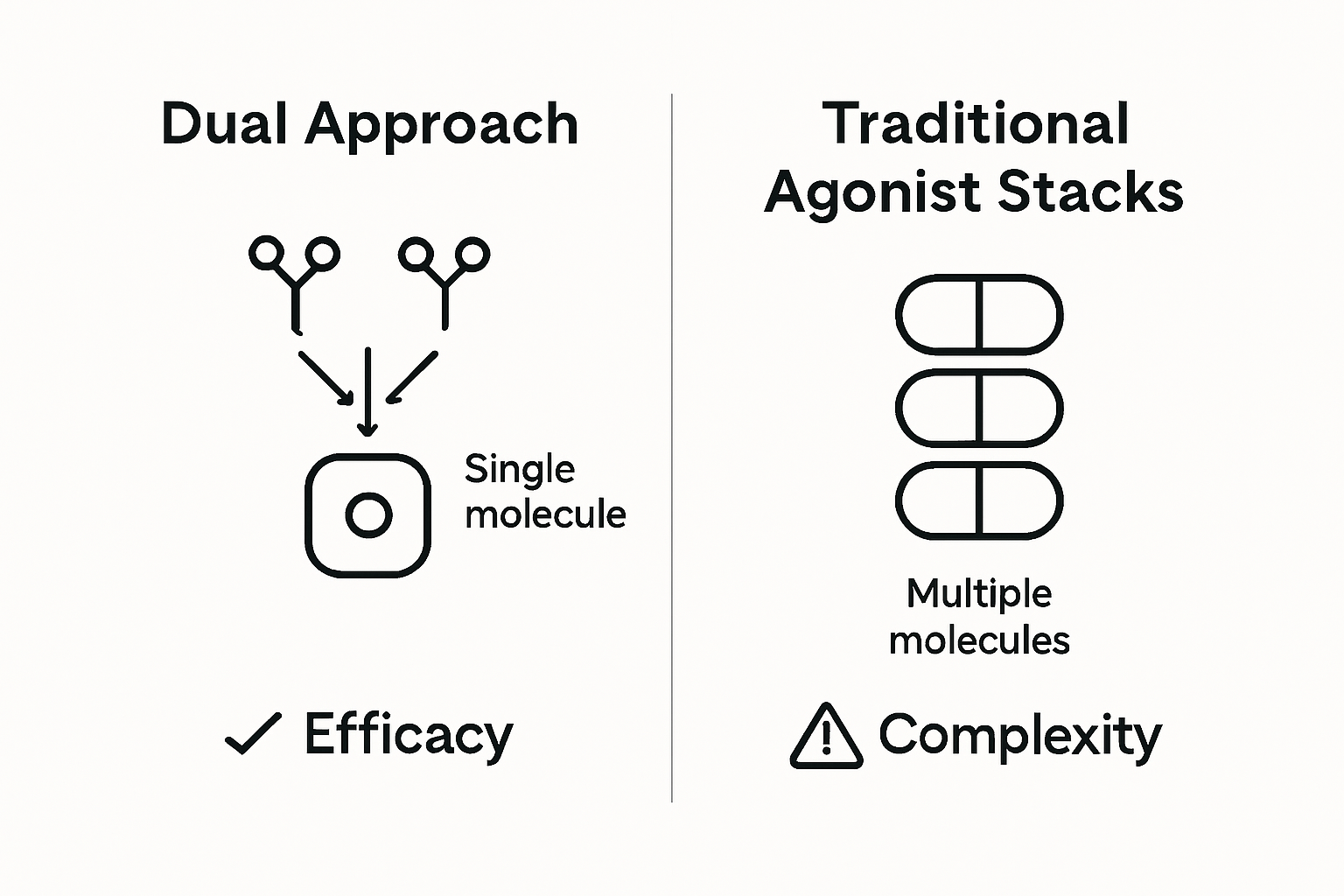
Unlike single-molecule agonists, CagriSema’s dual-compound architecture provides a multifaceted research platform with enhanced signaling potential. Comparative trials suggest superior metabolic investigation capabilities, indicating its potential to revolutionize metabolic research methodologies. The strategic molecular engineering allows for more comprehensive exploration of complex physiological responses that traditional single-compound approaches might overlook.
Key Comparative Advantages:
- Enhanced multi-pathway molecular targeting
- Superior cardiovascular response markers
- More comprehensive metabolic signal investigation
- Advanced physiological interaction mapping
- Increased research flexibility and insight potential
The intricate molecular interplay within CagriSema represents a quantum leap in agonist stack research. By simultaneously engaging multiple regulatory mechanisms, researchers gain unprecedented insights into the complex biological systems governing metabolic responses. This innovative approach transcends traditional research limitations, offering a more sophisticated lens for understanding the intricate molecular interactions that drive physiological regulation.
Risks, Safeguards, and Legal Considerations
Navigating the complex landscape of research protocols requires meticulous attention to scientific and regulatory frameworks. Novo Nordisk continues refining its research approach through strategic trial design, demonstrating a proactive commitment to understanding potential research implications. This approach underscores the critical importance of comprehensive safety assessments in advanced molecular research.
Research safeguards represent a multifaceted strategy involving rigorous protocols, systematic documentation, and transparent evaluation processes. Ongoing clinical investigations focus on long-term efficacy and potential variability, ensuring that potential research limitations are thoroughly examined before broader implementation. The scientific community demands comprehensive risk assessment to maintain the highest standards of investigative integrity.
Key Research Safeguard Considerations:
- Systematic documentation protocols
- Comprehensive risk assessment frameworks
- Transparent reporting mechanisms
- Rigorous peer review processes
- Continuous monitoring of research outcomes
The intricate balance between scientific exploration and responsible research practices demands an unwavering commitment to ethical standards. Researchers must navigate complex regulatory landscapes, maintaining a delicate equilibrium between innovative investigation and stringent safety protocols. This approach ensures that molecular research progresses with the highest levels of scientific rigor, protecting both the integrity of the research and the potential future applications of groundbreaking molecular insights.
Elevate Your Metabolic Research with Area 15 Labs
The article “CagriSema Explained: Science of Cagrilintide + Semaglutide” dives into the cutting-edge dual-molecule synergy unlocking new paths in metabolic signaling and appetite regulation. CagriSema’s complexity demands precision compounds with verified purity and swift availability to keep your research on the frontier. If you are exploring nuanced physiological pathways and craving a trustworthy partner that understands the urgency of advanced metabolic studies, Area 15 Labs is your no-nonsense Texas command center.
We deliver high-purity cagrilintide, semaglutide, and next-gen stacks with lightning-fast shipment directly from the heart of Texas. Our alien-inspired aesthetic makes the lab experience exciting without sacrificing scientific rigor or transparency. For researchers serious about dissecting complex metabolic interactions with unmatched speed and reliability, we offer more than compounds — we provide a research partnership that matches your ambition.
Ready to push the boundaries of metabolic exploration with the “No-BS” choice that ships fast and delivers purity you can trust? Check out our latest offerings at Area 15 Labs for your advanced research needs. Discover the difference Texas speed and swagger bring to your lab. Research harder now and secure your materials before supply moves on to the future.
Frequently Asked Questions
What is CagriSema?
CagriSema is an innovative dual-molecule combination targeting metabolic science, combining cagrilintide and semaglutide into a single research framework to explore complex physiological interactions related to appetite regulation and glucose management.
How do cagrilintide and semaglutide interact in CagriSema?
Cagrilintide and semaglutide work synergistically by targeting distinct brain regions related to metabolic signaling. Semaglutide influences appetite control while cagrilintide enhances satiety signals, creating a powerful research framework for understanding metabolic processes.
What are the potential research uses of CagriSema?
CagriSema can be used to investigate complex biological mechanisms, including neurological appetite regulation, metabolic signaling dynamics, and glycemic control, providing a nuanced exploration of physiological responses.
How does CagriSema compare to traditional agonist stacks?
CagriSema offers enhanced multi-pathway targeting and superior cardiovascular response markers compared to traditional single-compound approaches, allowing for a more comprehensive investigation of metabolic signaling and physiological interactions.