

Most American laboratories know that even a small misstep in solvent selection can derail research results. The choice between acetic acid and bacteriostatic water impacts everything from chemical stability to experimental sterility. With over 60 percent of failed synthesis reactions traced back to solubility or compatibility issues, understanding the essentials of solvent performance and interaction is crucial. This guide unpacks the core science of solubility and offers practical strategies for selecting the right solution for every research compound.
Table of Contents
- Solubility Basics For Research Compounds
- Acetic Acid Vs. Bacteriostatic Water Explained
- When To Pick Each Solvent (And Why)
- Risks, Incompatibilities, And Lab Fails
- Lab Legends: Pro Tips For Hassle-Free Mixing
Key Takeaways
| Point | Details |
|---|---|
| Understanding Solubility | Researchers must grasp solubility concepts to effectively select solvents for chemical interactions, as different solvents impact experimental outcomes. |
| Solvent Selection Criteria | Choosing between acetic acid and bacteriostatic water depends on factors like pH stability, antimicrobial properties, and molecular interactions. |
| Preliminary Testing Importance | Conducting small-scale solubility and compatibility tests is essential to verify solvent performance before larger experiments. |
| Managing Risks | Awareness of potential molecular incompatibilities and environmental variables can prevent major experimental failures and ensure accurate results. |
Solubility Basics For Research Compounds
Understanding solubility is critical for researchers working with complex chemical compounds. At its core, solubility represents a substance’s ability to dissolve into a solvent, creating a homogeneous molecular mixture. Chemical dissolution processes involve intricate interactions between molecular structures that determine how effectively one substance can blend with another.
Several key factors influence solubility in research settings. Temperature plays a significant role – higher temperatures typically increase dissolution rates by providing additional molecular energy. Molecular polarity determines how readily compounds mix, with polar substances dissolving more easily in polar solvents like water. Molecular size and intermolecular forces also impact dissolution efficiency, creating complex interactions that researchers must carefully consider.
Research compounds require precise solubility understanding to ensure accurate experimental outcomes. Different solvents create varying dissolution environments, which can dramatically impact research results. Water, ethanol, and dimethyl sulfoxide (DMSO) represent common solvents with unique dissolution characteristics. Researchers must strategically select solvents based on compound properties, experimental goals, and potential chemical interactions.
Pro Tip – Solvent Selection: Always perform small-scale solubility tests before committing to large-volume experiments to verify dissolution efficiency and prevent potential chemical instability.
Acetic Acid Vs. Bacteriostatic Water Explained
Researchers navigating solvent selection face critical decisions when choosing between acetic acid and bacteriostatic water for laboratory applications. Understanding the unique acid strength characteristics of these solvents is paramount to ensuring experimental precision and molecular stability. Acetic acid, a weak organic acid, presents distinct chemical properties that differentiate it from traditional aqueous solutions.
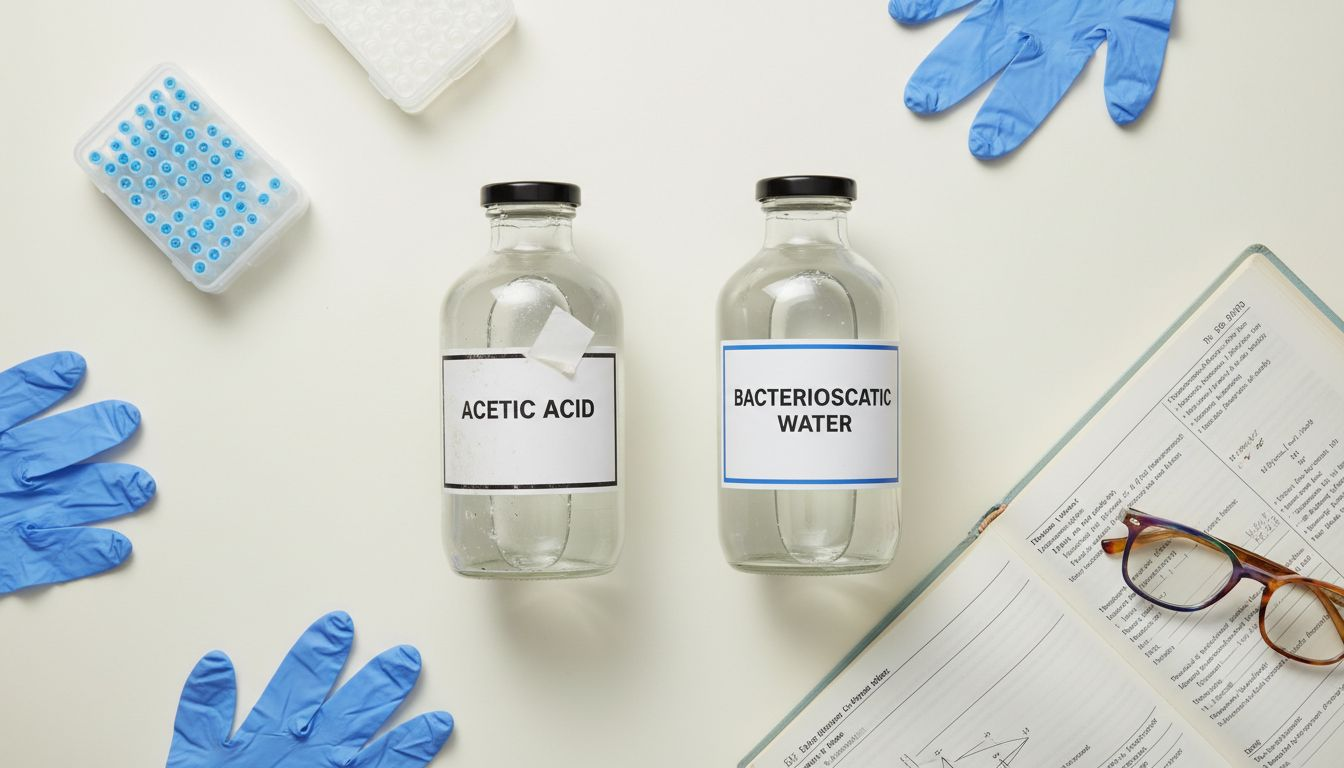
Bacterial inhibition represents a key consideration in solvent selection. Bacteriostatic water contains antimicrobial agents designed to prevent bacterial growth, making it ideal for research environments requiring sterile conditions. In contrast, acetic acid offers unique molecular interaction capabilities that can be advantageous in specific research protocols. Biomedical applications involving poly(3-hydroxybutyrate)-based gels demonstrate the complex interactions possible with acetic acid as a specialized solvent.
Chemical compatibility emerges as another crucial factor in solvent selection. Bacteriostatic water provides a neutral, stabilized environment suitable for sensitive research compounds, while acetic acid introduces potential pH modifications that might impact molecular structures. Researchers must carefully evaluate their specific experimental requirements, considering factors like molecular polarity, potential chemical reactions, and the desired interaction between solvent and research compound.
Pro Tip – Solvent Matching: Conduct preliminary compatibility tests to determine the optimal solvent for your specific research compound, as molecular interactions can vary significantly between different chemical environments.
Here’s a quick comparison of acetic acid and bacteriostatic water for laboratory research:
| Attribute | Acetic Acid | Bacteriostatic Water |
|---|---|---|
| Chemical Nature | Weak organic acid | Sterile water with preservative |
| pH Impact | Can significantly lower pH | Maintains neutral pH |
| Antimicrobial Properties | Lacks antimicrobial protection | Inhibits bacterial growth |
| Best Research Use | pH modulation, active molecular roles | Sterility, sensitive compounds |
| Interaction Risk | Potential for structural disruption | May react with some compounds |
When To Pick Each Solvent (And Why)
Selecting the appropriate solvent is a critical decision that can dramatically impact research outcomes. Cosolvent strategies play a crucial role in determining which solution best supports specific research compounds. Bacteriostatic water and acetic acid each offer unique advantages that make them suitable for different experimental contexts, requiring researchers to carefully evaluate their specific molecular requirements.
In sterile research environments demanding bacterial prevention, bacteriostatic water emerges as the superior choice. Its antimicrobial properties create a controlled environment that minimizes contamination risks. Conversely, biomedical applications involving specialized gel structures might benefit from acetic acid’s unique molecular interaction capabilities. Researchers working with compounds requiring precise pH modulation or specific molecular interactions will find acetic acid more advantageous.
The selection process hinges on several critical factors: molecular polarity, desired chemical interactions, temperature sensitivity, and experimental sterilization requirements. Bacteriostatic water provides a neutral, consistent environment ideal for sensitive compounds that cannot tolerate pH fluctuations. Acetic acid, with its ability to modify molecular structures, becomes preferable when researchers need to induce specific chemical transformations or require a more reactive solvent environment.
Pro Tip – Solvent Matching: Always conduct small-scale compatibility tests to validate solvent performance, as molecular interactions can vary significantly between different chemical environments and research protocols.
Risks, Incompatibilities, and Lab Fails
Researchers must navigate a minefield of potential complications when selecting solvents for experimental protocols. Understanding acid strength variations becomes critical in preventing catastrophic chemical interactions that could compromise entire research projects. Molecular incompatibility represents a significant risk factor that can transform a promising experiment into a complete laboratory disaster.
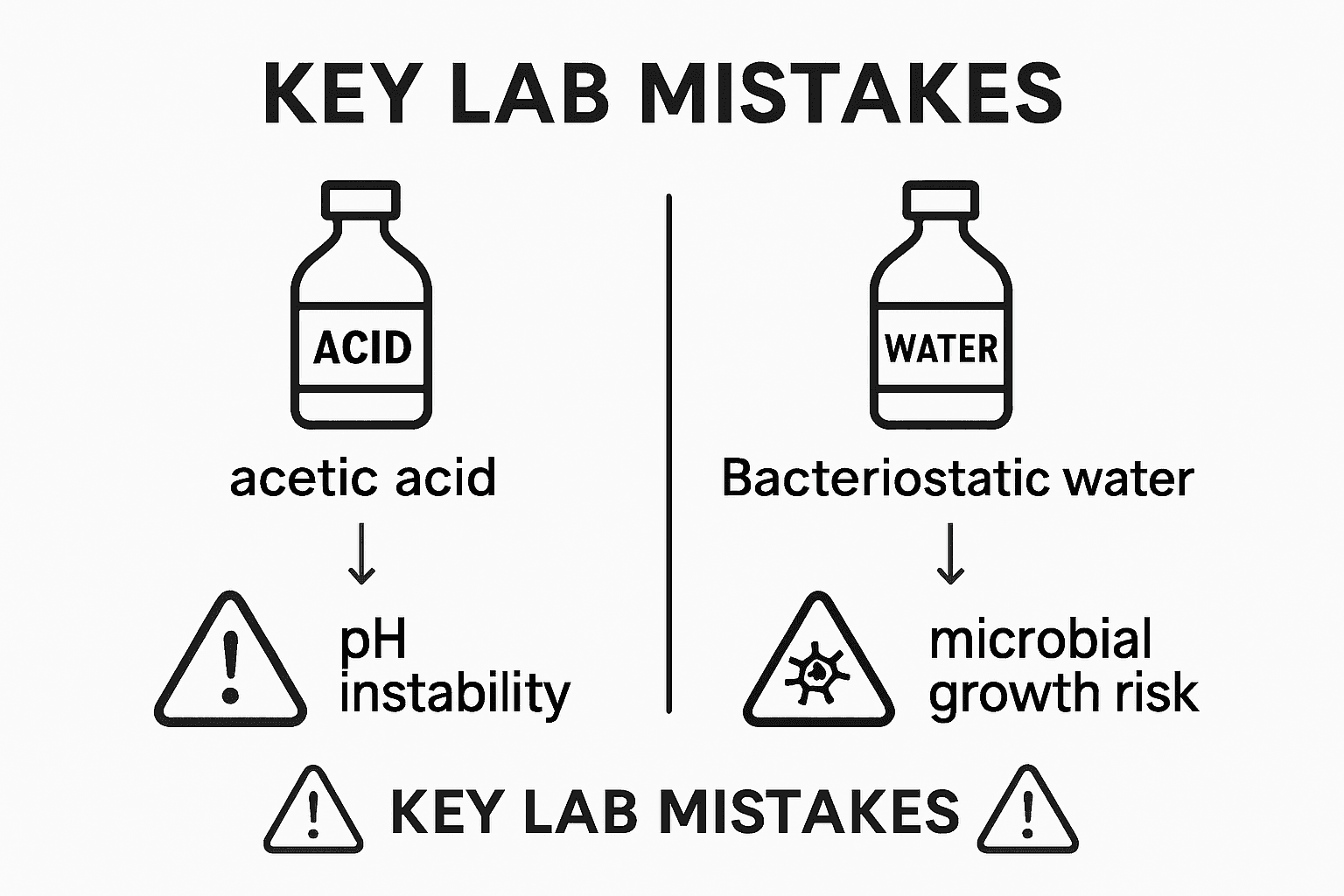
Acetic acid introduces particularly nuanced challenges due to its potential for unexpected molecular interactions. The acid’s variable pH can destabilize sensitive compounds, leading to structural mutations or complete chemical degradation. Cosolvent selection strategies become paramount in mitigating these risks, requiring researchers to meticulously evaluate potential chemical interactions before proceeding with experimental protocols.
Critical failure points often emerge from seemingly minor solvent selection oversights. Bacteriostatic water, while appearing neutral, can introduce antimicrobial agents that interact unpredictably with certain research compounds. Temperature fluctuations, molecular polarity mismatches, and trace contaminants can trigger cascading chemical reactions that render months of research completely invalid. Researchers must develop a comprehensive understanding of solvent properties, potential interaction mechanisms, and the subtle molecular dynamics that can transform a controlled experiment into an unpredictable chemical environment.
Pro Tip – Chemical Compatibility: Always perform small-scale preliminary tests and document every molecular interaction to build a comprehensive reference database for future solvent selection protocols.
This table summarizes typical research risks based on solvent choice:
| Common Issue | With Acetic Acid | With Bacteriostatic Water |
|---|---|---|
| Unexpected Reactions | High risk from acidic pH | Lower, but possible with additive |
| Stability Concerns | May destabilize molecules | Generally stable environment |
| Contamination Risk | Low, but not antimicrobial | Very low due to bacteriostat |
| Chemical Compatibility | Must be confirmed for each | Also requires compatibility check |
Lab Legends: Pro Tips For Hassle-Free Mixing
Mastering solvent mixing requires a combination of scientific precision and strategic approach. Cosolvent techniques provide crucial insights into creating optimal molecular environments for research compounds. Mixing protocols demand meticulous attention to detail, with researchers needing to understand the intricate dance of molecular interactions that occur during solvent combination.
Temperature emerges as a critical factor in successful solvent mixing. Researchers must maintain consistent environmental conditions to prevent unexpected molecular restructuring. Different solvents respond uniquely to temperature variations, with acetic acid and bacteriostatic water exhibiting distinct behavioral characteristics. Gentle, controlled mixing techniques help minimize potential chemical disruptions, ensuring the integrity of research compounds remains uncompromised.
Advanced researchers develop a nuanced approach to solvent preparation. Critical considerations include using sterile equipment, maintaining precise measurement techniques, and understanding the specific molecular properties of each solvent. Gradual introduction of solvents, careful monitoring of chemical interactions, and documenting every step of the mixing process become essential strategies for preventing potential experimental contamination or molecular instability.
Pro Tip – Mixing Mastery: Always use freshly calibrated micropipettes and clean glassware, and perform small-scale test mixes to validate solvent compatibility before scaling up experimental protocols.
Solve Your Solubility Challenges with Area 15 Labs
Struggling to choose between acetic acid and bacteriostatic water for your research compounds? You are not alone. The article highlights the headaches of solvent selection — from pH impacts and molecular incompatibilities to risks of chemical instability and contamination. Those nuances can make or break your experiments. That’s where Area 15 Labs steps in.
We provide high-purity, rigorously tested compounds and laboratory essentials shipped fast straight from Texas. No overseas delays or boring medical supplier vibes. Whether you need reliable bacteriostatic water or specialized reagents like acetic acid, our products support flawless solubility testing and solvent matching — saving you time and lab mishaps. Plus, our transparent quality and responsive US-based support let you research harder without the guesswork.
Ready to ditch the solubility nightmares and get materials that match your exact research needs? Explore our full catalog and experience the no-BS Texas advantage starting today at Area 15 Labs. Don’t let solvent risks slow you down — check out our offerings and step up your lab game now.
Frequently Asked Questions
What factors should I consider when choosing between acetic acid and bacteriostatic water?
Consider factors like molecular polarity, desired chemical interactions, temperature sensitivity, and the need for sterility in your experiment when selecting a solvent.
How does temperature affect the solubility of acetic acid and bacteriostatic water?
Higher temperatures typically increase the dissolution rates of both solvents. However, acetic acid may introduce changes in pH that can destabilize sensitive compounds.
What are the potential risks of using acetic acid in laboratory experiments?
Acetic acid can destabilize sensitive compounds due to its variable pH, leading to structural mutations or chemical degradation, which requires careful consideration before use.
When is bacteriostatic water the preferred solvent for research compounds?
Bacteriostatic water is preferred in sterile environments that require bacterial prevention, providing a neutral and stable environment ideal for sensitive research compounds.