
Most American citizen scientists hear wild claims about peptide shelf life, yet over 60 percent of American lab enthusiasts admit they don’t trust the 30-day rule for reconstituted compounds. When you’re investing in research-grade peptides, every day counts and misinformation can cost you more than just money. This article cuts through confusion with blunt facts, honest lab insights, and practical guidance for getting the best longevity and performance from your peptide samples.
Table of Contents
- The 30-Day Rule Defined And Debunked
- Types Of Reconstituted Peptides And Stability
- What Actually Impacts Peptide Shelf Life
- How To Spot Degradation And Loss Of Potency
- Mistakes To Avoid With Reconstituted Compounds
- Lab-Verified Storage Protocols And Best Practices
Key Takeaways
| Point | Details |
|---|---|
| Nuanced Storage Requirements | Peptides require individualized storage protocols based on their unique properties, not a one-size-fits-all rule like the 30-day myth. |
| Critical Environmental Factors | Temperature, light exposure, and humidity significantly affect peptide stability and shelf life, necessitating close monitoring and control. |
| Detection of Degradation | Researchers must develop a systematic approach to detect signs of peptide degradation through both visual inspections and advanced analytical techniques. |
| Best Practices for Preservation | Implementing strict handling and storage protocols, including aliquoting and gas protection, is essential to maintain peptide integrity throughout the research process. |
The 30-Day Rule Defined And Debunked
The infamous “30-day rule” in peptide research has been circulating through underground forums and lab chatter like a stubborn urban legend. Researchers whisper about storage timelines like they’re sharing forbidden knowledge, but Area 15 Labs is here to blast some truth rockets into those murky misconceptions. 🚀
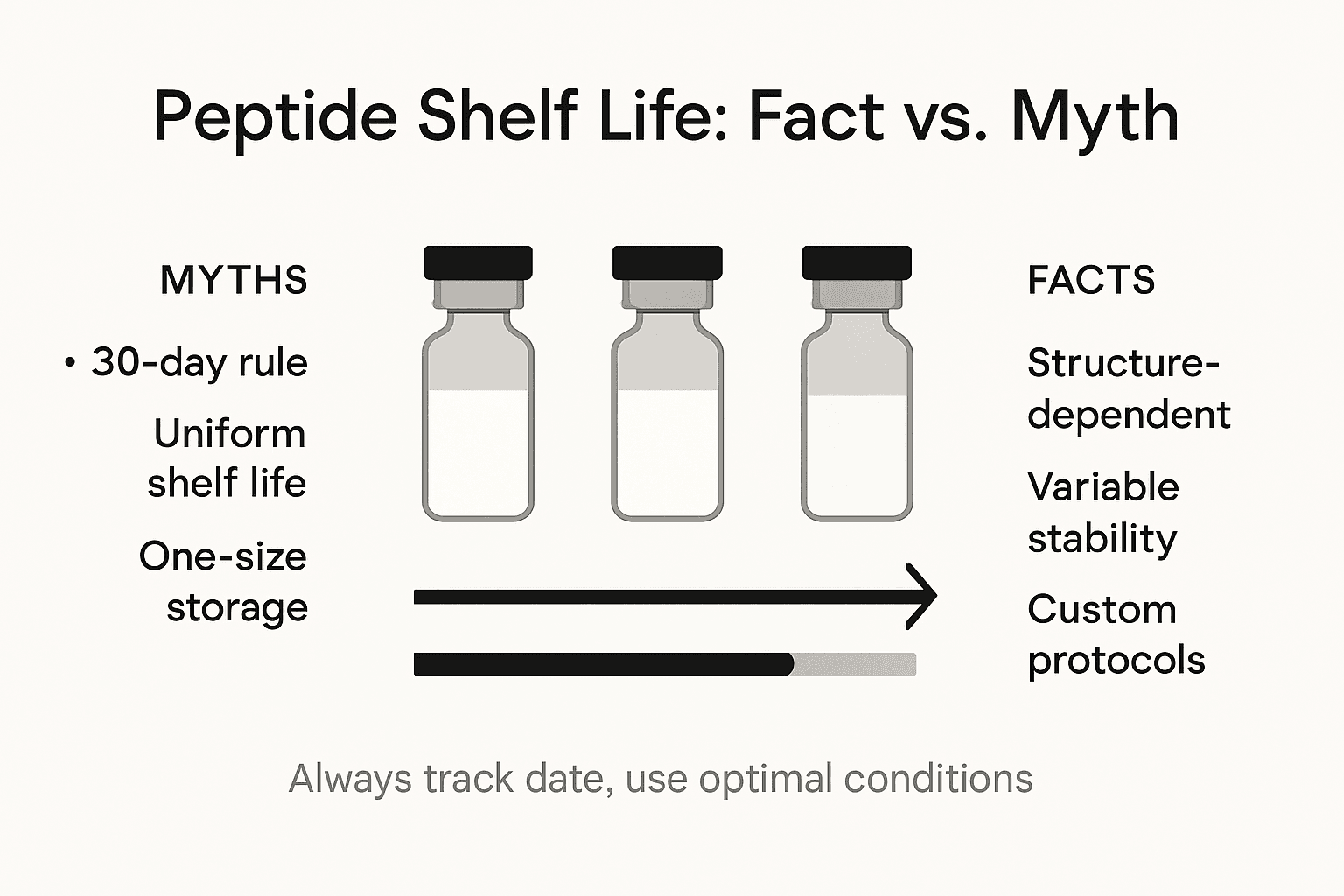
At its core, the 30-day rule suggests that peptides become essentially useless after 30 days of reconstitution. This widespread belief has researchers panicking about potential degradation and wasting precious research compounds. However, our Texas-based lab has discovered that this blanket statement is about as accurate as a conspiracy theory floating around a sketchy internet forum. Peptide stability is far more nuanced and depends on multiple critical factors like storage conditions, peptide composition, and handling protocols.
Understanding peptide degradation requires looking beyond simplistic time-based assumptions. Different peptides have wildly different molecular structures that influence their chemical stability and storage requirements. Some research compounds maintain remarkable integrity for months when stored properly, while others might experience faster molecular breakdown. Factors like temperature, light exposure, reconstitution method, and initial powder quality dramatically impact longevity. Professional researchers know that a standardized approach doesn’t work across all peptide varieties.
To demystify these myths, our lab recommends treating each peptide research compound as a unique molecular entity with specific preservation needs. Proper storage isn’t about hitting an arbitrary 30-day deadline but understanding each compound’s individual characteristics. Store your research materials in controlled environments, minimize temperature fluctuations, and always use sterile techniques during handling. The goal is creating a consistent, reliable research environment that preserves molecular integrity.
Pro tip: Always label your reconstituted peptides with the exact date of preparation and potential degradation indicators to maintain meticulous research documentation.
Types Of Reconstituted Peptides And Stability
Peptide research requires understanding the complex world of molecular stability, where each compound behaves like a unique chemical fingerprint with its own preservation rules. Not all peptides are created equal – some are molecular divas that demand pristine storage conditions, while others are surprisingly resilient research workhorses. 🧪
Specifically, certain peptide types exhibit dramatically different stability profiles. Peptides containing sulfur-rich amino acids like cysteine and methionine are particularly vulnerable to rapid degradation. These delicate molecules can oxidize quickly, transforming their molecular structure and potentially compromising research integrity. Professional researchers must recognize that a one-size-fits-all approach to peptide storage is about as useful as a screen door on a submarine.
Understanding peptide stability requires a nuanced approach that considers multiple environmental factors. Handling guidelines emphasize the critical importance of temperature, atmospheric conditions, and solvent selection. Peptides stored at 4°C might maintain integrity for a week, while others could potentially degrade within hours depending on their specific molecular composition. Factors like light exposure, humidity, and even the type of storage container can significantly impact a peptide’s molecular stability.
To maximize research reliability, lab professionals must develop a systematic approach to peptide preservation. This means creating individualized storage protocols for different peptide types, investing in proper refrigeration, and maintaining meticulous documentation of reconstitution dates and storage conditions. Implementing rigorous quality control measures ensures that your research compounds remain as pristine and reliable as the moment they were first prepared.
Pro tip: Create a detailed tracking system that logs each peptide’s reconstitution date, specific storage conditions, and potential signs of molecular degradation to maintain research precision.
What Actually Impacts Peptide Shelf Life
Peptide stability isn’t some mystical laboratory phenomenon – it’s a complex molecular dance with multiple critical variables spinning around each other like unpredictable atomic partners. Understanding these factors is like decoding a secret molecular blueprint that determines how long your research compounds will remain viable and reliable. 🧪
At the molecular level, peptide shelf life depends on intricate interactions between chemical composition and environmental conditions. Two primary degradation pathways – oxidation and hydrolysis – act like molecular saboteurs, slowly breaking down peptide structures. Amino acid composition plays a crucial role, with certain molecular configurations being more vulnerable than others. Sulfur-rich peptides, for instance, are particularly susceptible to oxidative damage, while peptides with more stable amino acid sequences can withstand environmental challenges more effectively.
Environmental factors transform from background noise to critical research variables when considering peptide preservation. Temperature fluctuations can trigger molecular instability faster than a chemistry lab explosion. Humidity levels, exposure to light, and even the pH of the storage environment can dramatically accelerate or decelerate peptide degradation. Professional researchers understand that storage isn’t just about putting a vial in a refrigerator – it’s about creating a precisely controlled microenvironment that minimizes molecular stress and prevents unintended chemical transformations.
Research-grade peptide preservation requires a holistic approach that treats each compound as a unique molecular entity. This means developing customized storage protocols, investing in high-quality refrigeration systems with consistent temperature control, and maintaining meticulous documentation of environmental conditions. By understanding the nuanced factors that impact peptide shelf life, researchers can extend the viability of their compounds and maintain the highest standards of scientific integrity.
Here’s a summary of key peptide degradation factors and their impact:
| Factor | Impact on Stability | Recommended Control |
|---|---|---|
| Temperature | Increases degradation rate | Store at 4°C to -20°C |
| Light Exposure | Promotes oxidation and breakdown | Use opaque containers |
| Humidity | Accelerates hydrolysis | Maintain dry storage conditions |
| Amino Acid Composition | Alters susceptibility | Identify at-risk sequences |
Pro tip: Invest in digital temperature and humidity monitoring systems that provide real-time data logging for your peptide storage environments to ensure consistent preservation conditions.
How To Spot Degradation And Loss Of Potency
In the high-stakes world of peptide research, identifying molecular decay isn’t just a technical skill – it’s a molecular detective game where every visual clue and chemical signal tells a story of potential compromise. Think of yourself as a forensic scientist for microscopic compounds, where the tiniest changes can signal significant molecular shifts. 🔬
Advanced analytical techniques reveal multiple indicators of peptide degradation, each acting like a warning light on your research’s dashboard. Physical transformations are often the first red flags – unexpected precipitation, color changes, or subtle shifts in solution clarity can signal molecular breakdown. Researchers must develop a keen eye for these visual mutations, understanding that what might seem like a minor aesthetic change could represent significant structural compromise.
Molecular degradation follows specific pathways that sophisticated researchers learn to track systematically. Chemical modifications like oxidation and deamidation act as silent destroyers of peptide integrity. High-performance liquid chromatography and spectroscopic analysis become your molecular microscopes, revealing structural shifts invisible to the naked eye. Professional researchers don’t just look – they measure, comparing current molecular configurations against pristine baseline samples to detect even the most subtle signs of potential potency loss.
Creating a robust degradation detection protocol requires a multifaceted approach that combines visual inspection, advanced analytical techniques, and meticulous record-keeping. Consistent environmental monitoring, precise storage conditions, and regular molecular assessment form the holy trinity of maintaining research-grade peptide compounds. By developing a systematic approach to tracking molecular health, researchers transform potential risk into a manageable, predictable scientific process.
Pro tip: Develop a standardized tracking log that documents visual, chemical, and structural changes for each peptide batch, creating a comprehensive molecular history.
Mistakes To Avoid With Reconstituted Compounds
In the precision-driven universe of peptide research, one misstep can transform promising compounds into molecular waste faster than you can say “contamination.” Think of reconstituted peptides like delicate quantum computers – they demand respect, careful handling, and an almost paranoid level of attention to environmental conditions. 🧪
Common handling errors can decimate the integrity of research compounds, turning potentially groundbreaking research materials into scientific paperweights. The most catastrophic mistake researchers make is treating peptides like indestructible superheroes – repeatedly freezing and thawing solutions, exposing them to ambient air and light, or dissolving them in inappropriate pH conditions. These rookie errors accelerate molecular degradation with ruthless efficiency, essentially performing a slow-motion demolition of your research potential.
The molecular minefield of peptide preservation requires a strategic approach that treats each compound like the unique, fragile entity it is. Contamination isn’t just a risk – it’s a molecular assassination waiting to happen. Improper aliquoting can introduce foreign particles that trigger cascading chemical reactions, while inconsistent storage conditions transform your carefully prepared compounds into unpredictable chemical cocktails. Professional researchers understand that every interaction with a peptide solution is a potential threat to its molecular integrity.
Building a bulletproof protocol for reconstituted compounds means embracing a mindset of radical precision. This involves creating dedicated workspaces, using sterile techniques, minimizing exposure to environmental contaminants, and developing systematic storage strategies. Temperature control, protection from light, and maintaining an inert gas environment aren’t optional luxuries – they’re fundamental requirements for maintaining research-grade compound quality.
Pro tip: Create a dedicated “peptide handling station” with controlled temperature, minimal light exposure, and pre-sterilized equipment to minimize contamination risks during reconstitution and storage.
Lab-Verified Storage Protocols And Best Practices
In the high-stakes world of peptide research, storage isn’t just a mundane administrative task – it’s a critical mission that can make or break months of scientific investigation. Treat your peptide compounds like rare alien technology that could unravel at the slightest environmental provocation. 🧪
Laboratory-validated protocols reveal precise requirements for maintaining peptide molecular integrity, transforming storage from a simple preservation effort into a sophisticated molecular defense strategy. The gold standard demands storing lyophilized peptides at temperatures of -20°C or lower, creating a deep-freeze environment that suspends molecular movement and minimizes degradation risks. This isn’t just cold storage – it’s creating a molecular time capsule that preserves your research potential.
Professional researchers understand that peptide preservation is a multifaceted challenge requiring near-paranoid attention to environmental conditions. Aliquoting reconstituted peptides into single-use portions isn’t just a recommendation – it’s a critical strategy to prevent repeated exposure and potential contamination. Creating an inert gas blanket around sensitive peptides acts like a molecular force field, shielding these delicate compounds from oxidative processes that could compromise their structural integrity. Every interaction with a peptide solution is a potential threat, requiring surgical precision and a systematic approach.
Beyond temperature and gas protection, pH control during dissolution represents another crucial frontier in peptide preservation. Professional labs develop comprehensive protocols that map out precise handling procedures, documenting every step from initial reconstitution to final storage. This isn’t about following generic guidelines – it’s about creating a customized preservation strategy that respects the unique molecular characteristics of each specific peptide compound.
Pro tip: Develop a dedicated peptide storage log that tracks temperature, exposure time, and environmental conditions for each batch, creating a comprehensive molecular history for future reference.
Compare typical lab storage protocols for preserving peptides:
| Protocol Aspect | Lyophilized Peptide | Reconstituted Peptide |
|---|---|---|
| Ideal Temperature | -20°C or lower | 4°C or below |
| Container Type | Airtight, opaque vial | Sterile microtube |
| Aliquoting | Not required | Essential for single use |
| Gas Protection | Optional | Inert gas blanket preferred |
Break Free From The 30-Day Myth With Area 15 Labs
Forget the outdated 30-day rule that has researchers tossing peptides too soon and losing precious compounds. The real challenge is mastering peptide stability through precise storage and handling—not arbitrary timers. This article lays it all out from temperature control to oxidative risks and shows how a one-size-fits-all approach just does not cut it. If you want your research to stay killer fresh for longer, you need a partner who gets the science and backs it with lightning-fast Texas shipping and no-BS quality.
At Area 15 Labs, we do not just talk about peptide integrity—we make it happen. With rigorously tested high-purity compounds shipped same-day from Texas, you get trustworthy tools that respect the unique nature of each molecular entity. Whether you need advanced agonists like Retatrutide or essential supplies like bacteriostatic water, we have your back with real U.S. support and a radical transparency you won’t find anywhere else. Ready to upgrade your peptide game with reliable science and research swagger? Dive into our Alien Tech & Next-Gen Stacks and learn how to store your compounds like a pro.
Stop guessing when your peptides expire and start knowing. Visit Area 15 Labs now for no-fluff research materials built for serious discovery. Your next breakthrough deserves nothing less.
Frequently Asked Questions
What is the 30-day rule in peptide research?
The 30-day rule suggests that peptides become ineffective after 30 days of reconstitution. However, this belief is misleading, as peptide stability is influenced by various factors, including storage conditions and peptide composition.
How can I determine the stability of a specific peptide?
The stability of a peptide can be influenced by its molecular structure, storage conditions, and handling protocols. It is essential to consider factors such as temperature, light exposure, and humidity to better understand how long a particular peptide will remain effective.
What factors affect the shelf life of reconstituted peptides?
Peptide shelf life is primarily impacted by temperature fluctuations, light exposure, humidity levels, and the amino acid composition of the peptide. Proper storage in controlled environments can help extend the viability of the peptides.
How can I spot degradation in peptides?
Signs of peptide degradation may include unexpected precipitation, color changes, and shifts in solution clarity. Advanced analytical techniques, such as high-performance liquid chromatography, can also provide insights into molecular changes that indicate potential potency loss.