
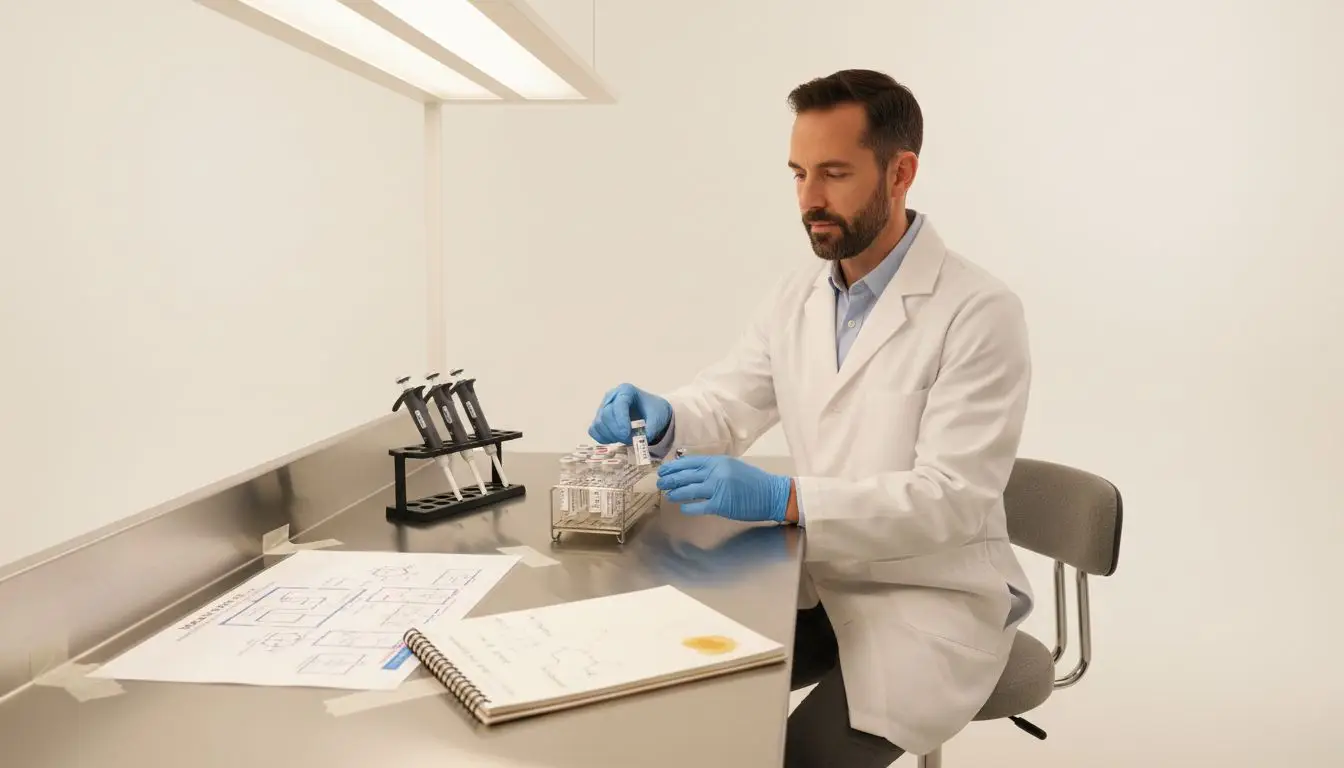
Setting up for peptide research goes way beyond stacking glassware. The challenge is crafting an American lab space with meticulous zones for sterile prep, analytical precision, and digital documentation. From assembling sterile equipment to integrating advanced computational tools, each detail is a power move for protecting sample purity and workflow accuracy. Strategic organization and high-caliber gear form the backbone of every successful peptide experiment—because in modern science, there’s no room for compromise.
Table of Contents
- Step 1: Prepare Lab Workspace And Gather Research Tools
- Step 2: Inspect Peptide Vial For Purity And Integrity
- Step 3: Reconstitute Peptides With Sterile Solution
- Step 4: Label And Secure Research Samples Precisely
- Step 5: Verify Quality With Purity Testing Protocols
- Step 6: Store Peptides For Future Analysis And Safety
Quick Summary
| Key Point | Explanation |
|---|---|
| 1. Set Up Organized Lab Workspace | Create a designated space for sterile preparation, analytical equipment, and digital documentation to enhance research efficiency. |
| 2. Perform Thorough Peptide Vial Inspection | Conduct visual and analytical inspections to ensure peptide purity and integrity before proceeding with experiments. |
| 3. Follow Precise Peptide Reconstitution Techniques | Use gentle handling and proper solvents to reconstitute peptides while preserving their molecular integrity for accurate results. |
| 4. Implement Robust Sample Labeling System | Ensure clear and accurate labeling of research samples to prevent mix-ups and facilitate precise documentation and tracking. |
| 5. Utilize Effective Storage Solutions | Store peptides at appropriate temperatures in moisture-resistant containers to maintain stability and prevent degradation over time. |
Step 1: Prepare lab workspace and gather research tools
Transforming your workspace into a peptide research command center requires strategic planning and precision. In this step, you’ll set up a clean, organized environment that meets the rigorous standards for advanced computational peptide design.
First, map out your workspace with deliberate intention. Creating a lab environment isn’t just about arranging equipment – it’s about establishing a zone of scientific possibility. Your workspace should include dedicated areas for:
- Sterile preparation zone: A controlled area for handling sensitive compounds
- Analytical equipment station: Space for precision instruments and testing gear
- Digital documentation center: Location for computational design software and research logs
When selecting your research tools, prioritize quality and compatibility. Your toolkit should include:
- High-precision micropipettes
- Analytical balances
- Personal protective equipment
- Digital temperature monitoring devices
- Computational design software
Pro tip: Always calibrate your equipment before beginning research to ensure maximum accuracy and reproducibility.
Maintaining an organized, methodical workspace is crucial for successful peptide research. Each tool should have a designated home, and your workflow should minimize potential contamination risks.
Here’s a summary of workspace zones and their unique benefits for peptide research:
| Workspace Zone | Key Benefit | Typical Equipment |
|---|---|---|
| Sterile preparation zone | Prevents contamination risks | Laminar flow hood, autoclave |
| Analytical equipment station | Enables accurate measurements | Spectrometer, balances |
| Digital documentation center | Facilitates data capture & review | Computer, software, lab notebook |
Pro tip: Create a laminated workspace layout map to help maintain consistent organization and quickly identify where each tool belongs.
Step 2: Inspect peptide vial for purity and integrity
Ensuring the quality of your peptide vial is a critical first step in maintaining research integrity. In this phase, you’ll learn how to conduct a comprehensive visual and analytical inspection that meets rigorous scientific standards for peptide quality assessment.
Begin your inspection with a systematic visual examination. Look for these key indicators of peptide vial quality:
- Color consistency: Any unusual discoloration could signal degradation
- Seal integrity: Check for any breaks or compromises in the vial’s seal
- Crystalline formation: Unexpected crystal structures might indicate instability
- Physical damage: Inspect for cracks, chips, or deformations in the glass
For a more precise evaluation, employ these technical inspection techniques:
- Examine the vial under bright, indirect lighting
- Use a magnifying glass for detailed surface inspection
- Rotate the vial slowly to check for uniform appearance
- Compare against reference standards for your specific peptide type
Critical impurities can compromise entire research projects – vigilance is your first line of defense.
Beyond visual inspection, advanced researchers utilize sophisticated analytical testing methods to confirm peptide integrity. This might include spectroscopic analysis or chromatographic techniques to detect minute variations in composition.
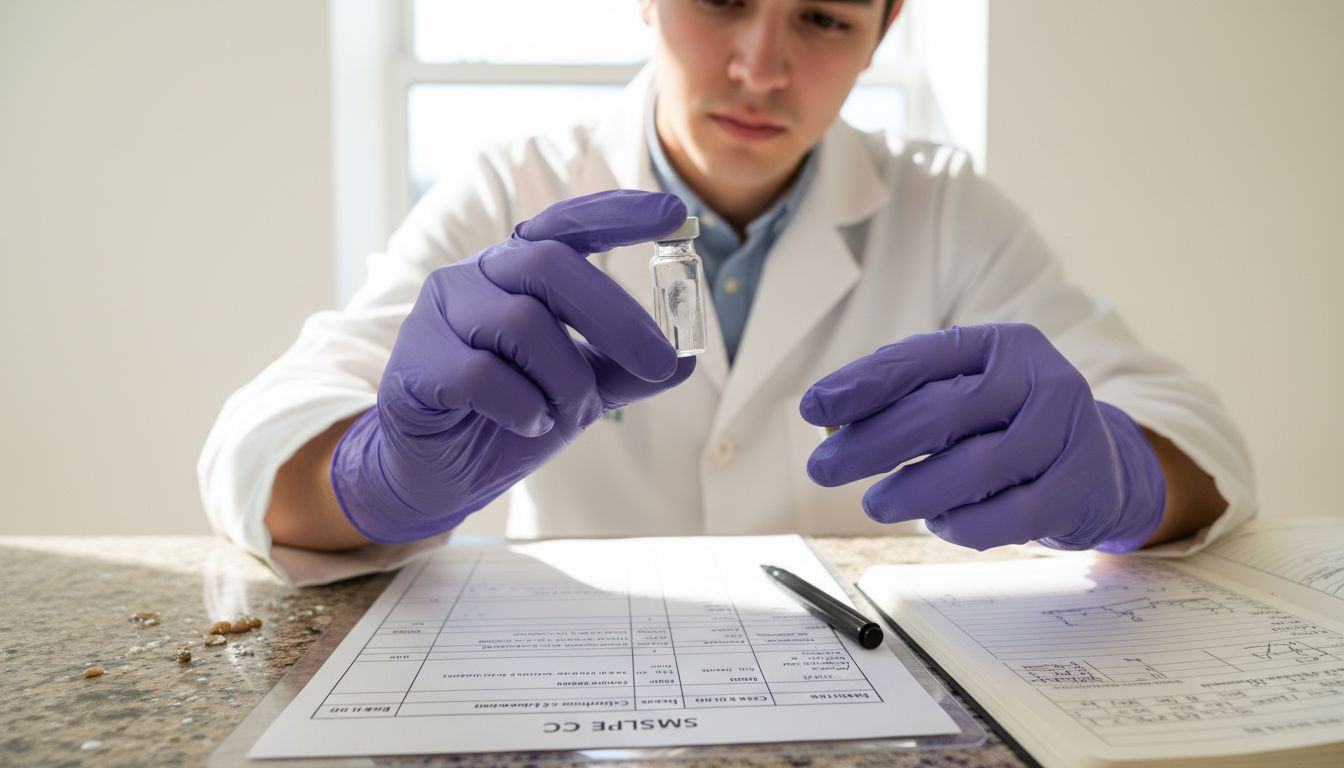
Pro tip: Document every inspection with dated notes and photographs to create a comprehensive tracking record for your research materials.
Step 3: Reconstitute peptides with sterile solution
Mastering the art of peptide reconstitution is crucial for maintaining molecular integrity and research accuracy. You’ll learn how to transform lyophilized peptide powder into a usable solution using precise reconstitution techniques.
Prepare your workspace with the following essential materials:
- Sterile solvent: Bacteriostatic water or specialized diluent
- Micropipette: For precise volume measurements
- Sterile gloves: To maintain contamination-free environment
- Vial of lyophilized peptide: Carefully stored at proper temperature
Follow these critical reconstitution steps:
- Allow peptide vial to reach room temperature
- Inspect the vial for any visible damage or irregularities
- Select appropriate sterile solvent based on peptide specifications
- Add solvent gently along the vial wall to minimize foaming
- Rotate or gently swirl the vial to ensure complete dissolution
Gentle handling is key – aggressive mixing can compromise peptide structure.
The USP guidelines recommend precise reconstitution methods that preserve peptide molecular integrity. Avoid rapid temperature changes or aggressive mixing techniques that could potentially denature the compound.
Pro tip: Calculate and record the exact concentration immediately after reconstitution to ensure future research precision.
Step 4: Label and secure research samples precisely
Ensuring accurate documentation and security for your research samples is critical to maintaining scientific integrity. You’ll learn how to create a foolproof labeling system that meets rigorous documentation standards.
Prepare for precise sample documentation with these essential materials:
- Waterproof permanent markers: For clear, lasting labels
- Tamper-evident seals: To prevent unauthorized access
- High-quality label stickers: With sufficient writing space
- Chain-of-custody forms: To track sample movements
Execute your labeling protocol using these critical steps:
- Select a consistent labeling format
- Include these mandatory details on each label:
- Unique sample identifier
- Date of collection
- Research project code
- Specific storage conditions
- Apply labels carefully to avoid bubbles or misalignment
- Double-check all written information for accuracy
- Photograph labels as a backup documentation method
Your documentation is as critical as the sample itself – treat it with scientific precision.
The FDA guidelines emphasize meticulous sample tracking to maintain research credibility. Consistent, clear labeling prevents mix-ups and ensures your research remains reproducible and trustworthy.
Pro tip: Create a digital backup of your sample log immediately after physical labeling to provide an additional layer of documentation security.
Step 5: Verify quality with purity testing protocols
Ensuring the highest level of peptide quality requires systematic and precise analytical testing. You’ll master the critical techniques for comprehensive purity verification using advanced analytical methods.
Prepare your analytical toolkit with these essential components:
- High-resolution mass spectrometer: For detailed molecular analysis
- Liquid chromatography system: To separate and identify peptide components
- Reference standards: For comparative quality assessment
- Calibration equipment: To ensure instrument accuracy
- Detailed log sheets: For documenting testing procedures
Execute your purity testing protocol through these systematic steps:
- Calibrate all analytical instruments
- Prepare reference and sample standards
- Perform liquid chromatography high-resolution mass spectrometry
- Analyze impurity profiles and molecular structures
- Compare results against established reference standards
- Document and validate testing outcomes
Precision in testing determines the reliability of your entire research workflow.
The USP guidelines recommend comprehensive multi-technique verification to establish peptide identity and quantify potential impurities. This approach ensures your research maintains the highest scientific standards.
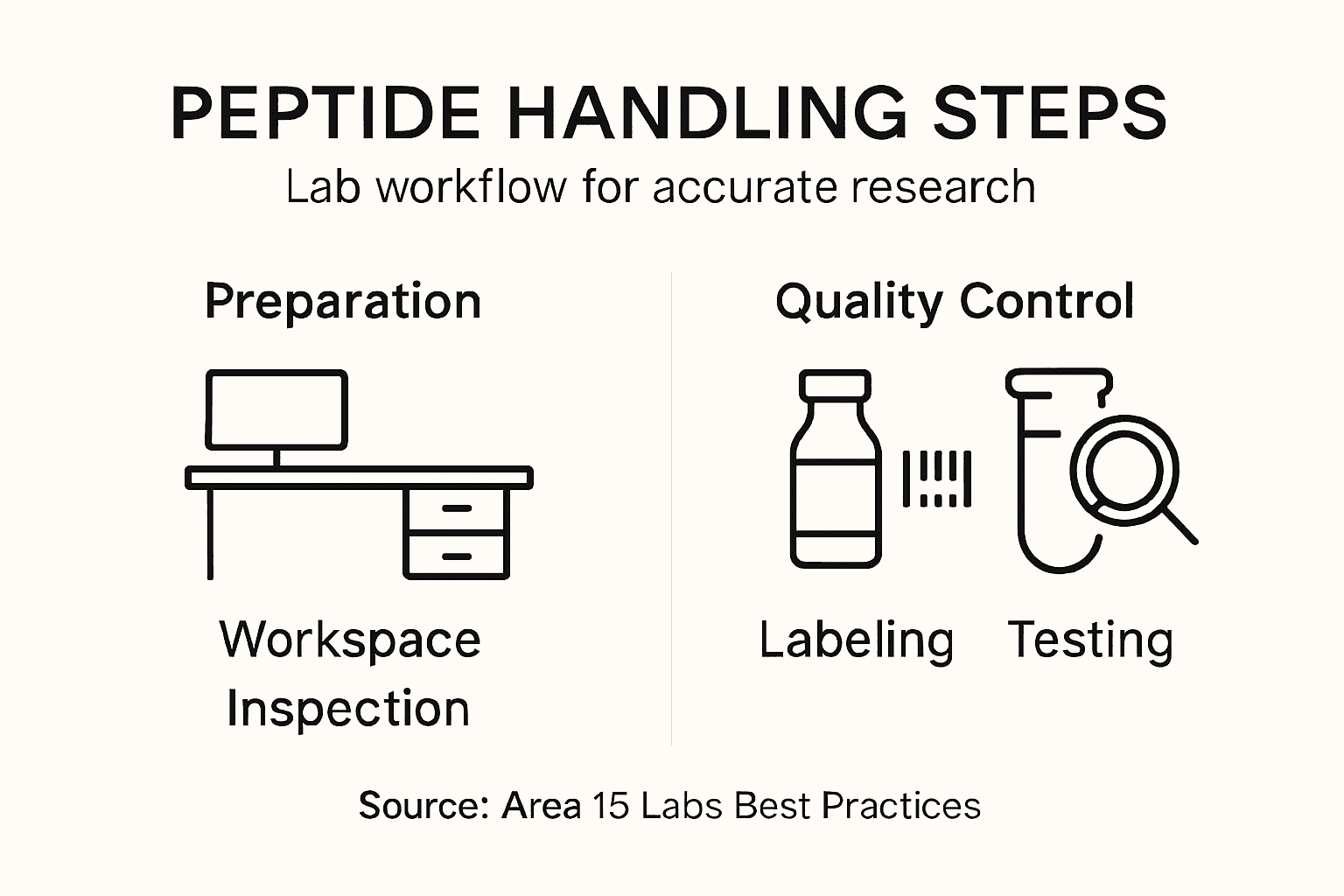
Pro tip: Always run duplicate tests and maintain triplicate samples to validate your analytical findings and enhance research reproducibility.
Step 6: Store peptides for future analysis and safety
Preserving the molecular integrity of your peptide samples requires strategic storage techniques that protect against degradation. You’ll master critical peptide preservation protocols to maintain research quality.
Select your storage infrastructure with these key considerations:
- Temperature-controlled environment: Consistent cooling zones
- Moisture-resistant containers: Chemically inert glass or polypropylene
- Light-blocking storage: Dark or opaque container systems
- Precise labeling system: Detailed tracking for each sample
- Backup documentation: Digital and physical tracking mechanisms
Implement your peptide storage strategy through these systematic steps:
- Choose appropriate storage temperature
- Select compatible storage containers
- Protect samples from light exposure
- Seal containers to prevent moisture infiltration
- Document storage conditions meticulously
- Establish regular monitoring protocol
Proper storage is the silent guardian of research integrity.
The National Institute guidelines recommend specific storage conditions to minimize molecular degradation. Lyophilized peptides thrive at -20°C, while reconstituted samples require more delicate refrigeration protocols.
Compare common peptide storage conditions and their long-term effects:
| Storage Type | Ideal Temperature | Preserves For | Risk of Degradation |
|---|---|---|---|
| Lyophilized powder | -20°C to -80°C | Several years | Low |
| Reconstituted liquid | 2°C to 8°C | Several days to weeks | Higher |
| Room temperature | 20°C to 25°C | Hours to days | Very high |
Pro tip: Create a dedicated storage log with temperature, humidity, and timestamp to track potential variations that might impact sample stability.
Take Your Peptide Research to the Next Level with Area 15 Labs
Navigating the detailed steps from workspace setup to peptide storage demands precision, purity, and reliability. Whether you are meticulously inspecting vials for integrity or executing purity testing protocols, your research tools and compounds must deliver consistent, verified quality. At Area 15 Labs, we understand these challenges and answer with lightning-fast Texas shipping, top-grade purity, and a no-nonsense approach crafted specifically for the modern Citizen Scientist.
Forget the waiting game and overseas uncertainty. Our carefully sourced peptides and research supplies arrive same-day from Texas, so you can keep your lab workflow smooth without compromise. Backed by rigorous quality testing like the one outlined in your peptide handling guide and supported by real US-based customer care, we give you the confidence to research harder and smarter. Experience the perfect blend of efficiency and swagger with our unique brand vibe and cutting-edge compounds.
Ready to upgrade your peptide research setup? Explore our premium selection and join the community of researchers who demand speed, purity, and style at Area 15 Labs. Discover how our high-purity peptides and trusted lab essentials complement every step from reconstitution to storage by visiting our landing page. Elevate your lab game now and get what your research really deserves with Area 15 Labs.
Frequently Asked Questions
What is the first step in peptide handling for lab research?
The first step in peptide handling is to prepare your lab workspace and gather essential research tools. Organize your environment by setting up designated areas for sterile preparation, analytical equipment, and digital documentation to ensure a smooth workflow.
How do I inspect a peptide vial for quality before use?
Inspect the peptide vial by conducting a visual examination for signs of color consistency, seal integrity, and any physical damage. Look closely for unusual discoloration or crystalline formations that might indicate issues, and document any findings for future reference.
What techniques should I use to reconstitute lyophilized peptides?
Use gentle techniques to reconstitute lyophilized peptides in a sterile solution. Add the sterile solvent slowly along the vial wall to minimize foaming, and ensure complete dissolution by gentle swirling or rotating the vial without aggressive mixing.
How should I label my peptide samples for accuracy?
Label your peptide samples with waterproof markers, including a unique identifier, date of collection, and relevant project codes. Apply labels carefully to avoid misalignment, and take a photograph of each label as a backup for documentation.
What are the essential purity testing protocols for peptides?
Perform purity testing using high-resolution mass spectrometry and liquid chromatography to verify the quality of peptides. Ensure all analytical equipment is calibrated and document the testing outcomes meticulously for tracking and validation purposes.
How do I store peptides to maintain their integrity?
Store peptides in temperature-controlled environments using moisture-resistant containers, ensuring they are protected from light. Document the storage conditions carefully, and establish regular monitoring protocols to maintain sample integrity over time.