

Sorting through scientific supplies often leaves citizen scientists and online researchers searching for clarity, reliability, and quick delivery. Understanding the true nature of research peptides is vital when experiments depend on precise molecular interactions and careful handling. This guide sheds light on advanced research peptide handling, explaining what sets apart high-quality solutions for American researchers who value fast shipping and transparent protocols from Texas.
Table of Contents
- Research Peptides Defined And Debunked
- Types And Forms Of Research Peptides
- Storage Requirements For Maximum Integrity
- Reconstitution And Preparation Protocols
- Laboratory Safety And Contamination Risks
- Compliance, Documentation, And Avoiding Rookie Mistakes
Key Takeaways
| Point | Details |
|---|---|
| Understanding Research Peptides | Research peptides are specialized molecular compounds designed to investigate complex biological mechanisms with precision. |
| Storage Conditions | Maintaining ultra-low temperatures and low humidity is crucial for preserving peptide integrity during research. |
| Reconstitution Techniques | Precision in selecting solvents and managing pH is essential for effective peptide reconstitution and maintaining stability. |
| Documentation Practices | Comprehensive and consistent documentation is vital for ensuring scientific credibility and regulatory compliance throughout peptide research. |
Research Peptides Defined and Debunked
Research peptides represent specialized molecular compounds designed for scientific investigation, serving as precision tools for understanding complex biological mechanisms. Unlike traditional pharmaceutical compounds, these specialized sequences play a crucial role in decoding cellular interactions and potential research pathways.
At their core, peptides are short chains of amino acids that function as fundamental building blocks in biological systems. Peptide Definition and Function reveals these molecules typically range from 2-50 amino acids in length, forming critical communication bridges between cellular structures. Their compact size allows them to interact with specific molecular targets with remarkable precision.
Key characteristics of research peptides include:
- Highly targeted molecular interactions
- Precise structural configurations
- Rapid cellular signaling capabilities
- Enhanced research specificity compared to broader molecular compounds
- Minimal systemic interference during laboratory studies
Understanding peptide research requires recognizing their inherent complexity. Key Terms in Peptide Research Explained Fast highlights that these molecules aren’t one-size-fits-all solutions but intricate scientific instruments designed for specific investigative purposes. Researchers must approach peptide studies with meticulous attention to environmental conditions, storage protocols, and handling techniques.
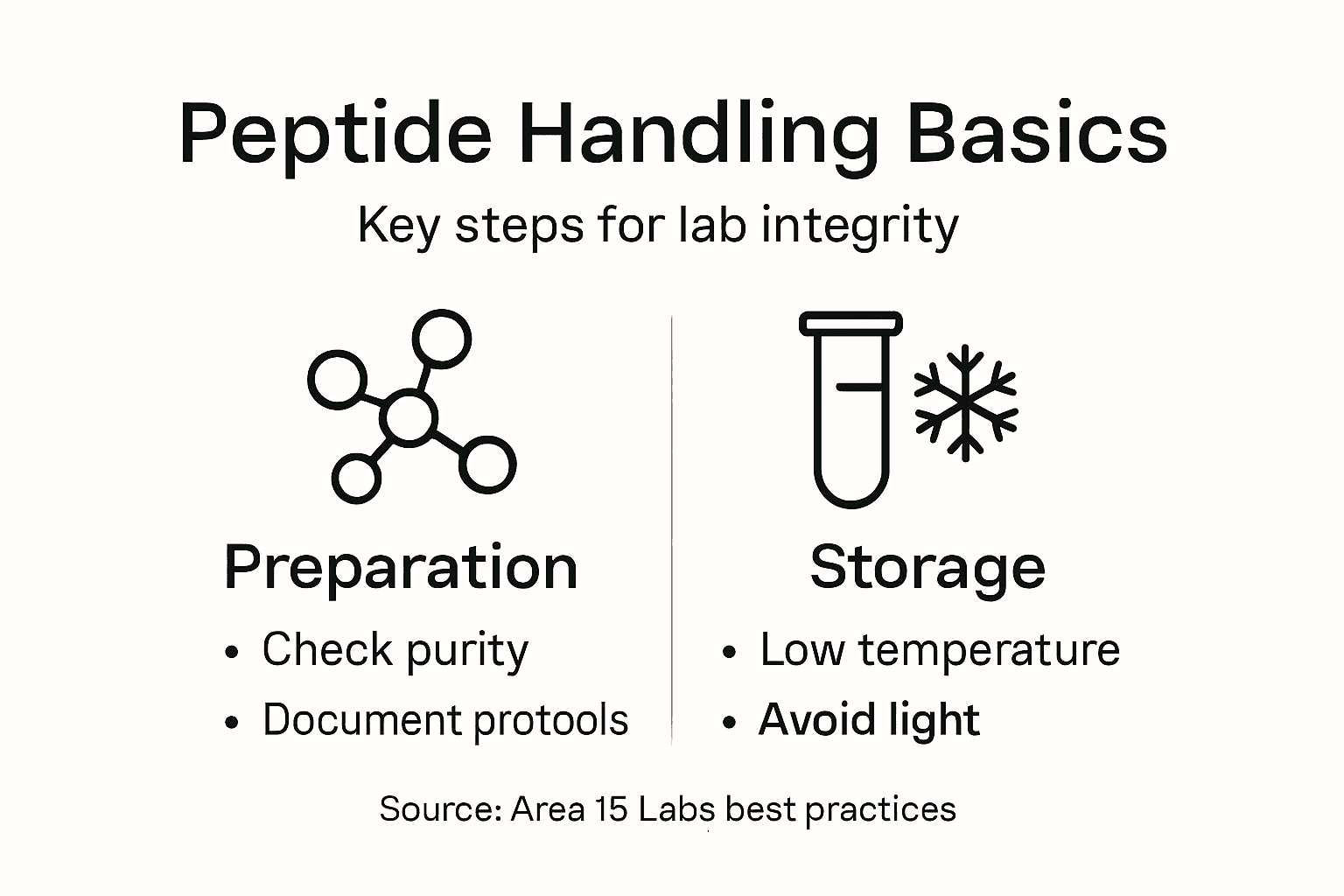
Pro tip: Always verify peptide purity through high-performance liquid chromatography (HPLC) before commencing any research protocol to ensure molecular integrity and consistent experimental outcomes.
Types and Forms of Research Peptides
Research peptides manifest in diverse molecular configurations, each engineered for specific scientific investigations. Peptides 101: The No-BS Guide to What They Actually Are demonstrates the remarkable versatility of these molecular instruments, which can be classified based on their structural complexity, synthesis method, and intended research application.
The primary categories of research peptides include:
- Synthetic Peptides: Artificially created in laboratory settings
- Natural Peptides: Extracted directly from biological sources
- Modified Peptides: Chemically altered to enhance stability or targeting
- Conjugated Peptides: Linked with other molecules to modify behavior
- Cyclic Peptides: Structured in closed loop configurations
Understanding peptide production requires deep insight into molecular engineering. Complete Guide to How Lab Peptides Are Made reveals the intricate processes involved in synthesizing these precise molecular tools. Researchers must consider multiple factors such as amino acid sequence, molecular weight, and potential interactions when selecting appropriate peptide forms for their specific investigative needs.
Here’s a summary of primary research peptide types and their scientific roles:
| Peptide Type | Example Use Case | Unique Feature |
|---|---|---|
| Synthetic | Targeted receptor studies | Customizable amino sequence |
| Natural | Endogenous pathway simulation | Direct biological relevance |
| Modified | Studying enhanced stability | Altered resistance to enzymes |
| Conjugated | Drug delivery model research | Extra targeting capability |
| Cyclic | Binding affinity analysis | Increased structural rigidity |
Advanced research peptides represent precision instruments, not one-size-fits-all solutions. Their effectiveness depends entirely on meticulous design and contextual application.
Peptide research demands sophisticated handling protocols that account for molecular fragility and environmental sensitivity. Different peptide types require unique storage conditions, handling techniques, and preservation strategies to maintain their structural integrity and research potential.

Pro tip: Always document detailed handling protocols specific to each peptide type to ensure consistent molecular stability during research procedures.
Storage Requirements for Maximum Integrity
Peptide research demands exacting storage conditions that preserve molecular integrity and prevent degradation. The “Whoosh” Factor: How Vacuum Pressure Keeps Vials Sterile highlights the critical importance of maintaining precise environmental controls throughout peptide storage and handling.
Key storage parameters for peptide preservation include:
- Temperature Control: Consistent ultra-low temperature storage
- Light Protection: Minimize exposure to direct and ambient light
- Humidity Management: Maintain low-humidity environments
- Oxygen Exclusion: Utilize inert gas or vacuum-sealed containers
- Chemical Stability: Prevent potential contamination or molecular breakdown
Researchers must implement strategic storage protocols that account for peptide-specific molecular characteristics. Different peptide types require nuanced approaches to maintain their structural precision and research potential. Factors such as amino acid composition, molecular weight, and intended research application significantly influence optimal storage methodologies.
Precision in storage is not a luxury—it’s the fundamental foundation of reliable scientific investigation.
Contemporary research facilities increasingly utilize specialized storage systems designed to minimize molecular degradation. These advanced storage solutions incorporate multiple layers of protection, including temperature-controlled environments, specialized containment materials, and sophisticated monitoring technologies that ensure consistent peptide quality.
Pro tip: Invest in high-quality, calibrated storage equipment and maintain detailed logs of environmental conditions to track potential variations that might impact peptide stability.
To help maintain peptide sample quality, here is a practical comparison of essential storage and preparation strategies:
| Factor | Proper Storage Approach | Ideal Preparation Practice |
|---|---|---|
| Temperature Control | Ultra-low freezer or chilled vial | Work quickly to prevent warming |
| Light Exposure | Store in amber vials or dark cabinet | Use shielded lighting if possible |
| Humidity Management | Use sealed containers with desiccants | Limit air exposure during mixing |
| Preventing Degradation | Oxygen-free, vacuum-sealed environment | Prepare solutions just before use |
Reconstitution and Preparation Protocols
Successful peptide research hinges on precise reconstitution techniques that maintain molecular stability and research integrity. Bacteriostatic Water vs. Sterile Water: Lab Vial Breakdown provides critical insights into selecting appropriate solvents for optimal peptide preparation.
Key considerations for peptide reconstitution include:
- Solvent Selection: Choose appropriate liquid based on peptide properties
- pH Sensitivity: Maintain consistent acid-base balance
- Concentration Calculations: Precisely measure molecular dilution
- Contamination Prevention: Use sterile techniques and equipment
- Temperature Management: Control thermal conditions during preparation
Researchers must develop methodical approaches that account for unique molecular characteristics of different peptide compounds. Factors such as peptide polarity, molecular weight, and intended research application dramatically influence reconstitution strategies. Solubility Nightmares: Choosing Acetic Acid or Bacteriostatic Water underscores the complexity of selecting optimal dissolution methods.
Precision in reconstitution is not a technical detail—it’s the fundamental cornerstone of reliable scientific investigation.
Advanced laboratories implement rigorous protocols that minimize potential molecular degradation during preparation. This involves utilizing specialized equipment, maintaining sterile environments, and developing systematic approaches that ensure consistent peptide quality across multiple research iterations.
Pro tip: Always prepare peptide solutions immediately before use and avoid repeated freeze-thaw cycles that could compromise molecular integrity.
Laboratory Safety and Contamination Risks
Research peptide laboratories demand rigorous safety protocols to prevent molecular contamination and maintain experimental integrity. 7 Types of Lab Testing Methods Every Researcher Should Know highlights the critical importance of implementing comprehensive testing strategies to mitigate potential risks.
Primary contamination risks in peptide research include:
- Biological Contamination: Microbial introduction
- Chemical Cross-Contamination: Unexpected molecular interactions
- Environmental Interference: Temperature and humidity variations
- Human Error: Improper handling techniques
- Equipment Compromise: Inadequate sterilization protocols
Researchers must develop multilayered defense strategies that systematically address potential molecular integrity threats. Role of Quality Assurance in Research Supply emphasizes the necessity of implementing strict quality control measures throughout the entire research process.
Contamination is not just a risk—it’s a potential research-destroying catastrophe that demands unwavering vigilance.
Advanced laboratories utilize sophisticated monitoring technologies and standardized protocols to create controlled environments that minimize external interference. This includes implementing sterile work zones, utilizing high-efficiency particulate air (HEPA) filtration systems, and developing comprehensive documentation practices that track potential contamination sources.
Pro tip: Develop a comprehensive contamination log that documents every potential risk encounter, enabling systematic identification and prevention of recurring laboratory safety challenges.
Compliance, Documentation, and Avoiding Rookie Mistakes
Research peptide protocols demand meticulous documentation and unwavering commitment to regulatory standards. 7 Types of Lab Testing Methods Every Researcher Should Know emphasizes the critical importance of systematic record-keeping and compliance tracking in scientific investigations.
Common documentation pitfalls for researchers include:
- Inconsistent Record Maintenance: Gaps in experimental logs
- Poor Traceability: Inadequate sample identification
- Incomplete Protocol Documentation: Missing critical procedural details
- Ineffective Data Storage: Unreliable backup systems
- Regulatory Non-Compliance: Failure to meet standard research protocols
Successful research demands a comprehensive approach to documentation that goes beyond simple record-keeping. Role of Quality Assurance in Research Supply highlights the necessity of creating robust systems that ensure both scientific rigor and regulatory compliance.
Documentation is not bureaucracy—it’s the backbone of scientific credibility and reproducibility.
Advanced laboratories implement multi-layered documentation strategies that integrate digital tracking, comprehensive sample logs, and systematic archiving protocols. These approaches minimize human error, create clear audit trails, and provide researchers with reliable mechanisms for tracking experimental progressions and maintaining research integrity.
Pro tip: Develop a standardized digital documentation template that automatically flags incomplete entries and ensures comprehensive record-keeping across all research stages.
Master Research Peptide Handling With Area 15 Labs
Navigating the fine details of research peptide handling can feel like walking a molecular tightrope. From precise storage and reconstitution protocols to guarding against contamination, the article lays out no-nonsense best practices every researcher must follow. If you’re juggling ultra-low temperature storage, solvent selection for reconstitution, or keeping your peptides pristine without guesswork, you know these are NOT your average lab materials. The risk of degradation or impurity can waste precious time and derail even the most promising experiments.
At Area 15 Labs, we get it. We are the “No-BS” Choice from Texas, shipping high-purity research peptides lightning fast with transparency you can trust. Whether your focus is on maintaining molecular integrity or mastering those delicate storage protocols highlighted in research, our verified compounds and lab supplies are engineered to work with your exacting standards. With a visually bold, alien-themed twist, we make research feel less like a chore and more like discovery with swagger. Access rigorously tested peptides like the BPC-157/TB-500 Blend or cutting-edge triple agonists with confidence backed by the same purity testing standards as industry giants.
Ready to upgrade your peptide handling game? Dive deeper into flawless peptide preparation with our Bacteriostatic Water vs. Sterile Water guide and elevate your storage strategies with insights from The “Whoosh” Factor on vial sterility. For the full experience of fast, honest peptide sourcing designed for modern citizen scientists, visit Area 15 Labs and take the next step in research with supplies shipped same-day from Texas.
Start researching harder today with the lab partner that respects your precision and your hustle.
Frequently Asked Questions
What are research peptides and their primary function?
Research peptides are specialized molecular compounds that serve as tools for scientific investigation, helping researchers decode complex biological mechanisms by interacting with specific molecular targets.
How should research peptides be stored for maximum integrity?
To ensure maximum integrity, research peptides should be stored at consistent ultra-low temperatures, protected from light, kept in low-humidity environments, and ideally in inert gas or vacuum-sealed containers to prevent degradation.
What are the key considerations when reconstituting research peptides?
Key considerations include selecting the appropriate solvent based on the peptide’s properties, maintaining pH sensitivity, accurately measuring concentrations, preventing contamination with sterile techniques, and controlling temperature during preparation.
Why is documentation important in peptide research?
Meticulous documentation is crucial in peptide research for maintaining scientific credibility, ensuring reproducibility of results, and complying with regulatory standards, thus supporting the reliability of scientific findings.