
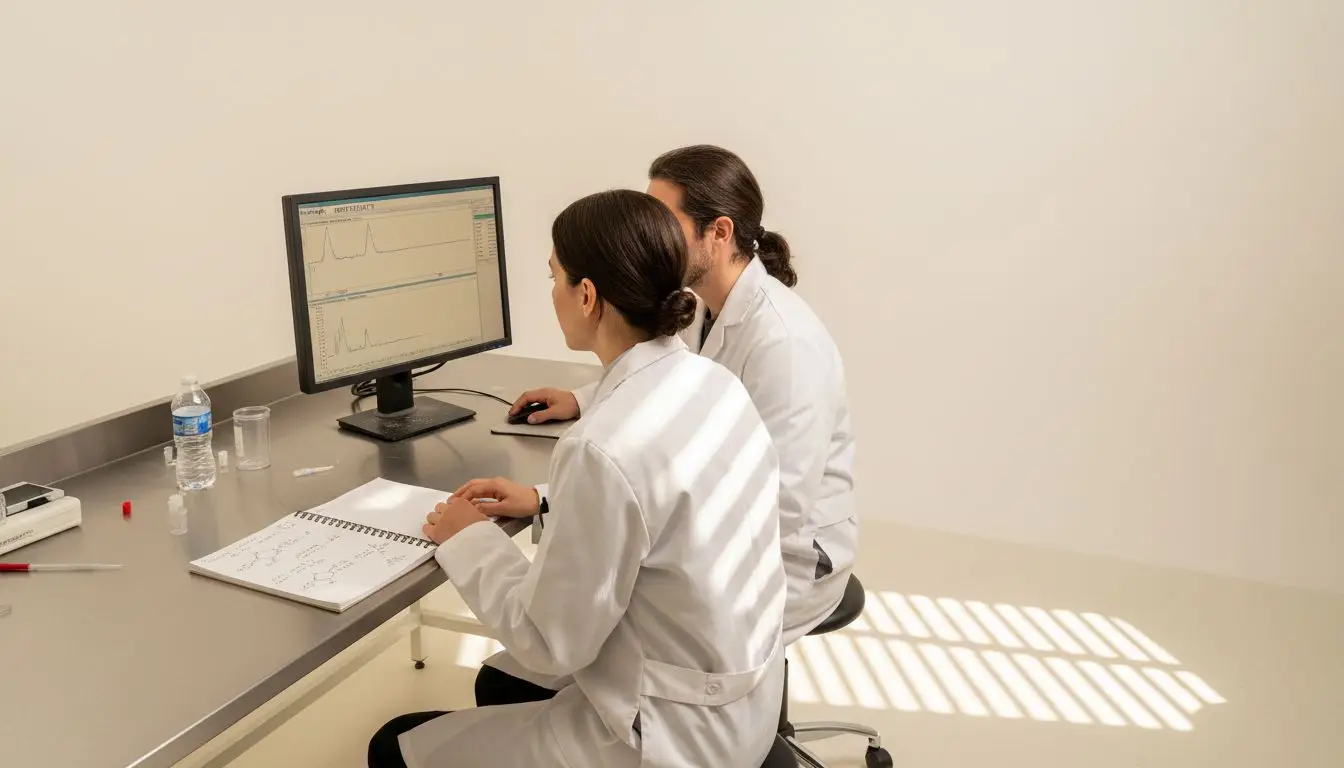
Finding pure peptides for advanced lab research often feels like sorting through endless options with little clarity. For American citizen scientists and online researchers, understanding peptide purity is crucial because even minor contaminants can ruin in-vitro results or derail entire experiments. This guide breaks down what peptide purity really means, how reliable HPLC and Mass Spectrometry testing works, and why documented proof from trusted U.S. suppliers empowers your protocols and saves resources.
Table of Contents
- What Peptide Purity Really Means
- Why Purity Matters For Your Research
- How Purity Gets Measured
- Common Types Of Impurities In Peptides
- Synthesis-Related Impurities
- Degradation And Non-Peptide Impurities
- Why Detection Matters For Your Work
- Testing: How Purity Is Measured
- High-Performance Liquid Chromatography (HPLC)
- Mass Spectrometry (MS) For Structural Verification
- Understanding Certificates Of Analysis (COAs)
- Why Third-Party Testing Matters
- Risks Of Low Purity In Research
- Data Corruption And Unreliable Results
- The Hidden Cost Trap
- Regulatory And Publication Risks
- Glassware And Equipment Degradation
- The Compounding Effect
- How To Verify Purity Before Buying
- Request The Certificate Of Analysis (COA)
- Verify Third-Party Testing
- Check For Red Flags
- Compare Testing Standards Across Suppliers
- Trust Your Instincts
Key Takeaways
| Point | Details |
|---|---|
| Understanding Peptide Purity | Peptide purity refers to the percentage of the actual peptide in a sample, significantly impacting research accuracy and credibility. |
| Importance of High Purity | Using high-purity peptides minimizes contaminants, leading to reliable results and reducing the need for repeated experiments. |
| Verification Through Testing | Always request a Certificate of Analysis (COA) and ensure third-party testing to confirm peptide quality before purchase. |
| Hidden Costs of Low Purity | Low-purity peptides may seem cheaper, but they can lead to increased overall research costs due to unreliable data and wasted resources. |
What Peptide Purity Really Means
Peptide purity is not a vague marketing buzzword. It’s the percentage of your compound that is actually the peptide you ordered, measured down to the molecular level. Everything else—water, salts, byproducts, contaminants—gets stripped away through rigorous testing.
Think of it like buying coffee. You want 100% coffee beans, not 85% coffee and 15% filler. Except with peptides, even a few percentage points of contamination can wreck your research results.
Why Purity Matters for Your Research
Lower purity sounds cheaper. It’s tempting. But contaminated batches create noise in your data, making results unreliable and forcing you to repeat experiments. That’s not saving money—that’s wasting time and resources.
Here’s what purity actually controls:
- Accuracy of observations: Higher purity means your in-vitro outcomes reflect true molecular behavior, not interference from junk.
- Reproducibility: When you run the same experiment twice with pure peptides, you get consistent results. Contaminants introduce unpredictable variables.
- Credibility: If your research depends on clean data, reviewers and peers expect documentation of purity testing.
- Cost efficiency: Yes, really. One batch of 99% pure peptide beats three batches of 92% pure, even if the pure version costs more upfront.
High-purity peptides eliminate hidden variables that derail months of careful research.
How Purity Gets Measured
HPLC (High-Performance Liquid Chromatography) is the gold standard. It separates compounds by molecular weight and polarity, then measures what percentage of your sample is the actual peptide you ordered.
When you see “98% HPLC purity,” that means chromatography confirmed 98% of the sample is your target molecule. The other 2% is everything else—water, salts, organic impurities, or incomplete synthesis byproducts.
Understanding how HPLC affects peptide quality helps you make informed decisions about which batches work best for your protocols.
Here’s how different peptide purity grades compare in terms of use, risk, and cost efficiency:
| Purity Grade | Typical Use | Research Risk | Cost Efficiency |
|---|---|---|---|
| 98% | General lab studies | Moderate | High for basic work |
| 99% | Sensitive protocols | Low | Optimal for accuracy |
| 99.5%+ | Advanced, critical research | Minimal | Highest for demanding protocols |
- 98% purity: Standard for most research applications. Acceptable for in-vitro studies with normal tolerances.
- 99% purity: Premium grade. Used when protocols demand maximum molecular consistency or when trace impurities could skew sensitive observations.
- 99.5%+ purity: Ultra-refined. Reserved for cutting-edge research where even 0.5% contamination matters.
The Real-World Impact
A contaminated batch doesn’t just give you slightly wrong numbers. It introduces variables you can’t control. Your glassware integrity stays solid, but the peptide itself becomes an unknown factor.
This is why we test every batch before shipping. You shouldn’t have to guess whether your research materials are actually what the label says.
Pro tip: Always request the Certificate of Analysis (COA) from third-party testing before starting experiments. Match your purity requirements to your protocol’s sensitivity level—don’t over-pay for 99.5% purity if your research tolerates 98%.
Common Types of Impurities in Peptides
Not all peptide impurities are created equal. Some come from the manufacturing process itself, while others develop during storage or handling. Understanding what you’re actually dealing with is the first step to controlling it.
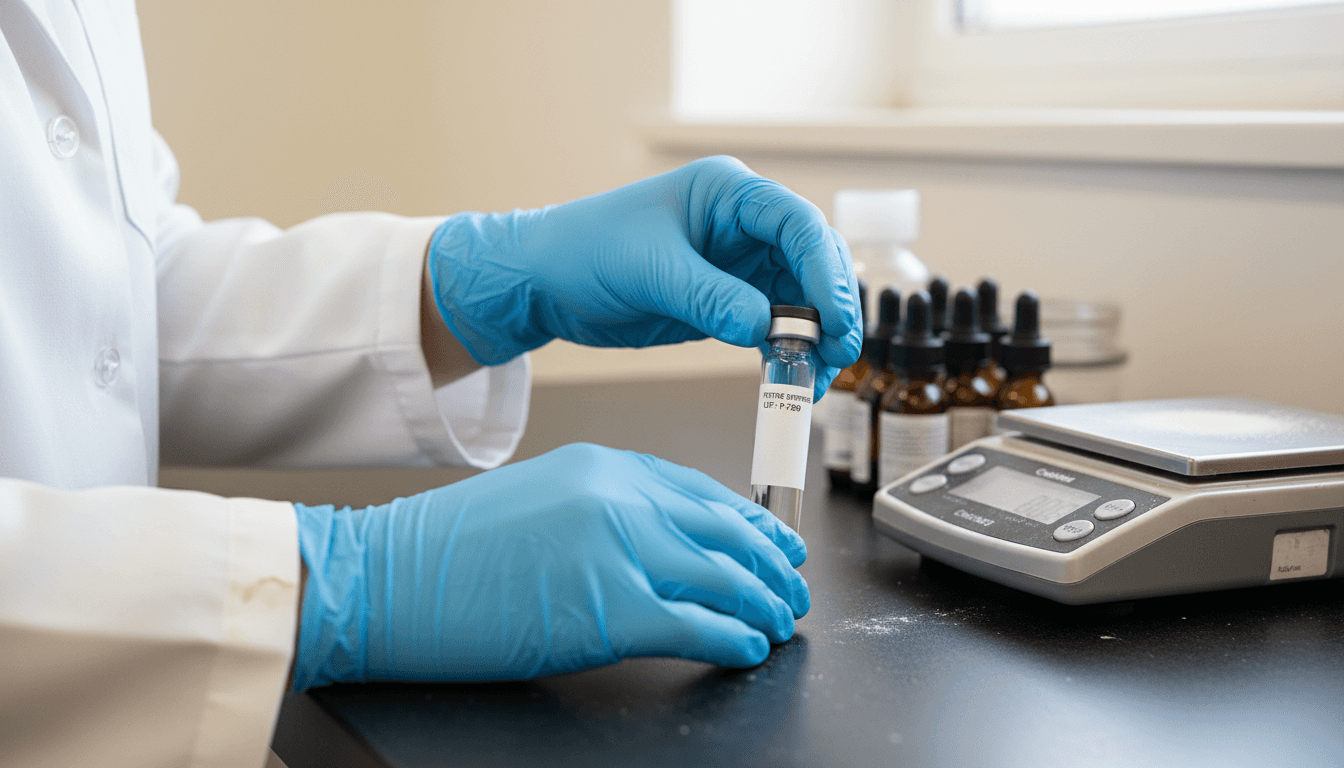
Impurities fall into two main buckets: synthesis-related (born during production) and non-peptide (everything else). Each behaves differently and requires different detection methods.
Synthesis-Related Impurities
These are the byproducts of solid-phase peptide synthesis. When amino acids link together, things don’t always go perfectly.
Common synthesis impurities include:
- Deletion sequences: Amino acids that should have been added get skipped, creating shorter, incorrect chains.
- Insertion sequences: Extra amino acids accidentally get incorporated, making the peptide longer than intended.
- Racemization: The amino acid flips to its mirror-image form (D instead of L), destroying the peptide’s function.
- Incomplete deprotection: Protective chemical groups don’t fully remove, leaving the peptide chemically altered.
- Oxidation products: Susceptible residues like methionine and cysteine oxidize, changing molecular behavior.
Synthesis-related impurities require careful monitoring during manufacturing because even one mistake early in the chain reaction cascades into larger problems downstream.
Degradation and Non-Peptide Impurities
Once your peptide is synthesized, degradation starts. Certain chemical structures naturally break down under heat, light, or humidity.
Degradation impurities include:
- Aspartimide formation: Aspartic acid rearranges into an unwanted cyclic structure.
- Pyroglutamate: Glutamic acid spontaneously forms a five-membered ring, changing the peptide’s properties.
- Aggregate formation: Multiple peptide chains clump together into useless masses.
Non-peptide contaminants like residual solvents, scavenger adducts, and excipient byproducts also accumulate. These are leftover chemicals from the manufacturing process that didn’t fully wash out.
Below is a summary of main impurity types and their potential research impact:
| Impurity Type | Source | Potential Research Impact |
|---|---|---|
| Synthesis byproducts | Manufacturing | Unpredictable results |
| Degradation products | Storage/handling | Reduced activity, assay failure |
| Non-peptide contaminants | Solvents/processing | Toxicity or assay interference |
| Truncated/altered peptides | Faulty synthesis | Loss of function, false negatives |
Detecting hidden impurities requires the right tools. HPLC and Mass Spectrometry work together to expose what’s hiding in your batch.
Why Detection Matters for Your Work
A peptide that looks pure under basic inspection might contain 8-10% impurities once you run rigorous testing. Those hidden contaminants wreck your in-vitro observations without you realizing what went wrong.
You can’t control what you can’t measure. Third-party testing through HPLC and MS gives you the clarity to trust your results.
Pro tip: Request the full Certificate of Analysis listing specific impurity profiles, not just a single purity percentage. Knowing whether your batch contains 2% oxidized residues or 2% truncated sequences changes how you interpret your research outcomes.
Testing: How Purity Is Measured
Peptide purity isn’t guesswork. It’s quantified through analytical chemistry. Without rigorous testing, you’re literally buying blind—trusting a label on a vial instead of data.
Two primary tools dominate purity analysis: HPLC and Mass Spectrometry. They work together to answer the question: Is this actually what you ordered?
High-Performance Liquid Chromatography (HPLC)
HPLC is the workhorse of peptide purity testing. It separates every component in your sample by size and chemical properties, then measures what percentage of the total is your actual target peptide.
Here’s how it works:
- Your peptide sample gets dissolved in a solvent.
- The liquid flows through a pressurized column packed with tiny beads.
- Different molecules stick to the beads for different lengths of time.
- A detector measures each component as it exits, creating a graph called a chromatogram.
- The software calculates the area under each peak relative to the total area.
If your peptide’s peak represents 98% of the total area, you have 98% purity. The remaining 2% is everything else—impurities, degradation products, synthesis byproducts.
HPLC measurements give you precise percentages, but they don’t tell you what the impurities actually are. That’s where Mass Spectrometry comes in.
Mass Spectrometry (MS) for Structural Verification
MS confirms your peptide’s molecular weight and validates that the amino acid sequence is correct. HPLC might show 98% purity, but MS proves those peaks are actually your target molecule.
MS ionizes your peptide and measures its mass-to-charge ratio. If the measured weight doesn’t match the theoretical weight, something’s wrong—wrong sequence, truncation, or oxidation.
HPLC gives you the purity percentage. Mass Spectrometry proves you have the right molecule. Use both together.
Understanding Certificates of Analysis (COAs)
A proper Certificate of Analysis documents everything: purity percentage, test methods used, molecular weight confirmation, and batch number. It’s your proof that the peptide met specifications.
Key items on a legitimate COA:
- HPLC purity percentage (ideally 98% or higher)
- Molecular weight from MS
- Testing date and batch identification
- Signature from third-party lab (not the manufacturer)
- Specific impurities identified, if any
If a supplier can’t provide a COA with HPLC and MS data, stop right there. That’s a red flag.
Why Third-Party Testing Matters
A manufacturer testing their own product has a conflict of interest. Third-party labs have no reason to lie—their reputation depends on accuracy.
When you buy peptides backed by independent testing, you know the data is real. No shortcuts, no inflated purity claims.
Pro tip: Always compare the testing date on the COA to your order date. Peptides degrade over time, especially if stored improperly. A COA from six months ago might not reflect current purity. Request recent test data whenever possible.
Risks of Low Purity in Research
Low-purity peptides don’t just give you slightly worse results. They wreck entire experiments, waste months of work, and destroy your credibility. The hidden costs of cheap peptides far exceed the upfront savings.
When you buy impure peptides, you’re essentially introducing an unknown variable into your research. You can’t control what you don’t know is there.
Data Corruption and Unreliable Results
Contaminants create noise in your observations. Your in-vitro data becomes unreliable because you can’t isolate the true behavior of your target molecule.
Here’s what happens:
- Impurities interfere with molecular interactions, skewing your measurements.
- Results become non-reproducible—you get different outcomes each time, even with identical protocols.
- You spend weeks troubleshooting, only to discover the problem was the peptide, not your methodology.
- You waste reagents, glassware, and time repeating experiments that were doomed from the start.
Low purity doesn’t mean slightly less accurate. It means your entire dataset is compromised.
The Hidden Cost Trap
A batch of 92% pure peptides costs 30% less than 99% pure. The math looks good until you factor in hidden expenses.
One low-purity batch often requires:
- Multiple repeat experiments (time and materials)
- Extended troubleshooting period (your labor)
- Wasted reagents and glassware supplies
- Delayed publication timeline (opportunity cost)
- Loss of peer trust if results can’t be replicated
Understanding why cheap peptides backfire reveals the true math: premium purity saves you money through efficiency.
Regulatory and Publication Risks
If your research contributes to any downstream applications, contaminated data becomes a serious liability. Peer reviewers expect clean methodology and pure materials.
Low-purity peptides can trigger:
- Rejection during peer review (“How did you verify purity?”)
- Requests for full replication with documented COAs
- Questions about your lab’s quality control standards
- Damage to your reputation if results later prove irreproducible
Glassware and Equipment Degradation
Impurities don’t just affect your data—they can degrade your equipment. Certain contaminants corrode glassware, clog pipettes, and create residue buildup.
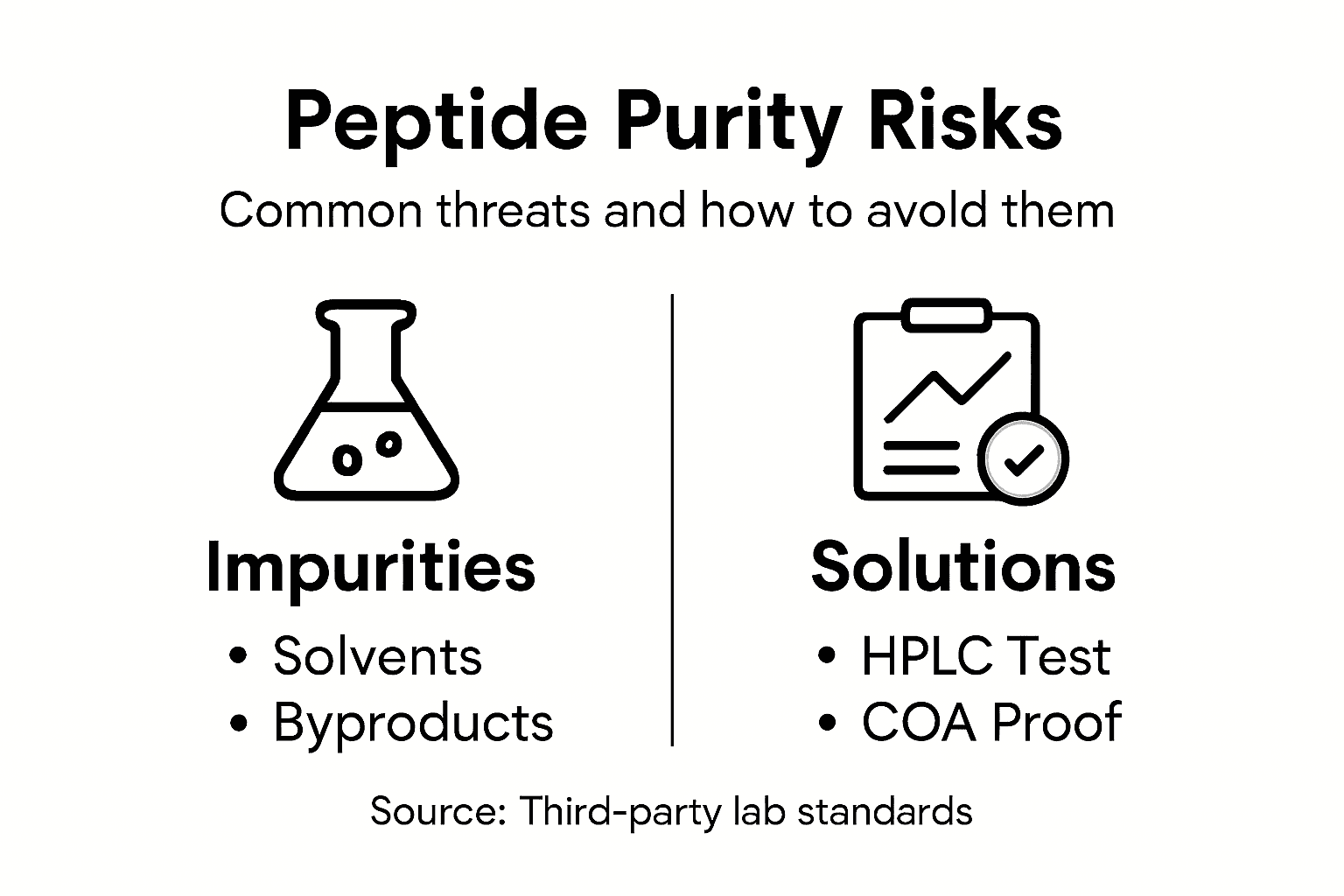
Your lab infrastructure suffers from low-quality inputs, forcing expensive maintenance and replacement.
The Compounding Effect
One bad batch cascades. You lose confidence in your dataset, question your protocols, and invest extra resources validating results that should have been clean from the start.
Higher-purity peptides eliminate this cascade. Your glassware stays clean, your results stay consistent, and you move forward instead of spinning wheels.
Pro tip: Calculate the total cost of one failed experiment—reagents, time, equipment wear—then compare that to the premium paid for 99% purity peptides. You’ll usually find the pure version pays for itself on the first experiment.
How to Verify Purity Before Buying
Don’t just take a supplier’s word for it. Purity claims mean nothing without proof. Before you spend money, demand documentation that proves what you’re buying is actually what the label says.
Verification starts with asking the right questions and reading the fine print. A trustworthy supplier welcomes scrutiny.
Request the Certificate of Analysis (COA)
A Certificate of Analysis is non-negotiable. This document proves third-party testing was performed and documents the exact purity percentage.
Before ordering, ask:
- Can you provide the COA for this batch?
- Who performed the testing? (Must be an independent lab, not the manufacturer)
- When was the testing performed? (Recent is better—peptides degrade over time)
- What methods were used? (HPLC and Mass Spectrometry are standard)
- Can you show me the actual chromatogram data?
If a supplier hesitates or says “We’ll send it after you order,” that’s a red flag. Legitimate suppliers provide COAs upfront. Using testing guides helps you interpret the technical data and spot inconsistencies.
Verify Third-Party Testing
Manufacturers testing their own products have incentive to inflate results. Independent labs don’t.
Legitimate testing labs:
- Are not owned by the peptide supplier
- Publish their accreditations and certifications
- Maintain strict quality standards (ISO 17025 or similar)
- Have no financial stake in the outcome
- Sign off with official documentation
If the COA just says “Tested in-house” or lacks a lab signature, keep shopping.
Check for Red Flags
Certain warning signs indicate a supplier cuts corners:
- No COA available, or COA is vague and undated
- Purity claims that seem impossibly high (99.9%+ without supporting data)
- Pricing dramatically lower than competitors (usually indicates lower quality)
- Supplier can’t explain their testing methodology
- No contact information or response to quality questions
- Generic COAs that apply to multiple batches instead of specific lot numbers
If you can’t verify it before buying, don’t buy it. Period.
Compare Testing Standards Across Suppliers
Not all testing is created equal. Some suppliers use minimal testing, others use comprehensive analysis.
Ask for specifics:
- HPLC purity percentage (the main number)
- Molecular weight confirmation via MS
- Identification of specific impurities detected
- Residual solvent testing
- Microbial contamination testing
- Water content analysis
Suppliers offering comprehensive testing data demonstrate commitment to quality. They have nothing to hide.
Trust Your Instincts
If interactions feel evasive or you get defensive responses to basic quality questions, the supplier isn’t confident in their product. Move on.
Reputable suppliers are transparent and responsive. They understand that purity verification protects both parties.
Pro tip: Create a checklist of verification requirements before contacting suppliers. Consistency in your evaluation criteria helps you compare options fairly and catch quality inconsistencies quickly.
Unlock Research Confidence With No-Nonsense Purity From Texas
You read it right: peptide purity is the secret weapon in clean, reliable research. The article breaks down how even small impurities wreck experiments and waste your time. At Area 15 Labs, we take that pain seriously. We guarantee every batch passes rigorous third-party testing to prove purity percentages and expose hidden synthesis or degradation impurities. No vague claims. No guesswork. Just verified compounds that fuel reproducible data and save you from costly research setbacks.
Why settle for overseas shipping delays and sketchy quality when you can get lightning-fast same-day fulfillment shipped right from Texas? We combine high-purity assurance with a bold alien aesthetic that makes your workspace feel like the future of science. Level up your research with trusted peptides and exclusive next-gen compounds that no boring supplier can match. Check out our high-purity standards and the latest advanced agonists designed for demanding protocols.
Explore how you can stop chasing unreliable results and start shipping from Texas today. Demand transparency, speed, and swagger all in one place at Area 15 Labs. Your research deserves nothing less.
Frequently Asked Questions
What does peptide purity mean?
Peptide purity refers to the percentage of the compound that is actually the peptide you ordered, measured down to the molecular level. It indicates how much of the sample is free from contaminants, byproducts, and other unwanted materials.
Why is peptide purity important for research?
Higher peptide purity ensures accurate observations, reproducible results, and the credibility of your research. Contaminants can introduce noise into your data, leading to unreliable outcomes and potentially wasting your time and resources.
How is peptide purity measured?
Peptide purity is primarily measured using High-Performance Liquid Chromatography (HPLC), which separates the compounds in a sample and determines the percentage of the actual peptide. Mass Spectrometry (MS) is often used alongside HPLC for structural verification.
What are the consequences of using low-purity peptides in research?
Low-purity peptides can compromise the integrity of your data, introducing variables that skew results. This can lead to unreliable observations, the need to repeat experiments, wasted resources, and potential challenges during peer review if your results cannot be replicated.