

Securing reliable peptide compounds feels critical when every lab trial counts. Citizen Scientists across the United States drive longevity research, investigating how microscopic amino acid chains could transform aging studies. The science is evolving as new molecular insights emerge, revealing the bold promise of metabolic peptides and their role in cellular communication. This overview highlights key peptide categories, laboratory methods, and regulatory realities, supporting your pursuit of high-purity research compounds with speed from Texas.
Table of Contents
- Peptide Longevity Explained For Researchers
- Top Categories Of Longevity Peptides
- How Peptide Longevity Works In The Lab
- Regulatory Realities And Research Risks
- Alternatives, Safety, And Best Practices
Key Takeaways
| Point | Details |
|---|---|
| Peptides as Longevity Tools | Peptides play a vital role in biological signaling, influencing aging processes, repair mechanisms, and metabolic health. |
| Key Categories Identified | Major categories of longevity peptides include metabolic, tissue repair, immune modulation, neuroprotective, and mitochondrial peptides, each targeting specific biological functions. |
| Laboratory Research Importance | Understanding peptide longevity involves precise molecular design, stability testing, and functional analysis to explore age-related interventions. |
| Regulatory Considerations | Researchers must navigate complex regulatory frameworks ensuring safety, ethical oversight, and compliance with FDA guidelines for peptide research. |
Peptide Longevity Explained for Researchers
Peptides represent microscopic molecular messengers that play a critical role in biological signaling and regulation. Emerging research highlights their potential in longevity science, revealing fascinating insights into how these amino acid chains might influence aging processes.
At the molecular level, peptides function as precise communication tools within biological systems. They control numerous critical processes including:
- Tissue repair mechanisms
- Metabolic regulation
- Inflammation response
- Immune system coordination
- Hormonal signaling pathways
Researchers are particularly intrigued by metabolic peptides like semaglutide and tirzepatide, which demonstrate promising potential for improving metabolic health. Peptide bioactivity in regulating oxidative stress suggests these molecules could be instrumental in developing targeted anti-aging interventions.
The scientific community recognizes that peptide research represents a frontier in understanding cellular aging. While current evidence remains preliminary, early studies indicate these molecular signals might help restore cellular communication pathways that degrade with time. Ongoing research continues to explore how precisely targeted peptides could potentially modulate biological aging processes.
Pro tip: Approach peptide longevity research with rigorous scientific skepticism and prioritize peer-reviewed, reproducible studies.
Top Categories of Longevity Peptides
Peptide research has unveiled several critical categories that play pivotal roles in potential longevity interventions. Systematic peptide categorization reveals complex anti-aging mechanisms, providing researchers with unprecedented insights into molecular aging processes.
The primary categories of longevity peptides include:
- Metabolic Peptides: Regulate insulin sensitivity and metabolic processes
- Tissue Repair Peptides: Promote cellular healing and regeneration
- Immune Modulation Peptides: Control inflammatory responses
- Neuroprotective Peptides: Support cognitive function
- Mitochondrial Peptides: Enhance cellular energy metabolism
Peptide research highlights fascinating interactions across multiple biological systems. Metabolic peptides like GLP-1 receptor agonists demonstrate particular promise in addressing age-related metabolic dysfunction. These molecular signals can potentially influence insulin sensitivity, reduce inflammatory markers, and support more efficient energy utilization.
Researchers continue to explore the intricate mechanisms of these peptide categories, recognizing that each represents a unique approach to understanding and potentially modulating biological aging processes. The emerging field of peptide science offers glimpses into more targeted, precise interventions for age-related cellular degradation.
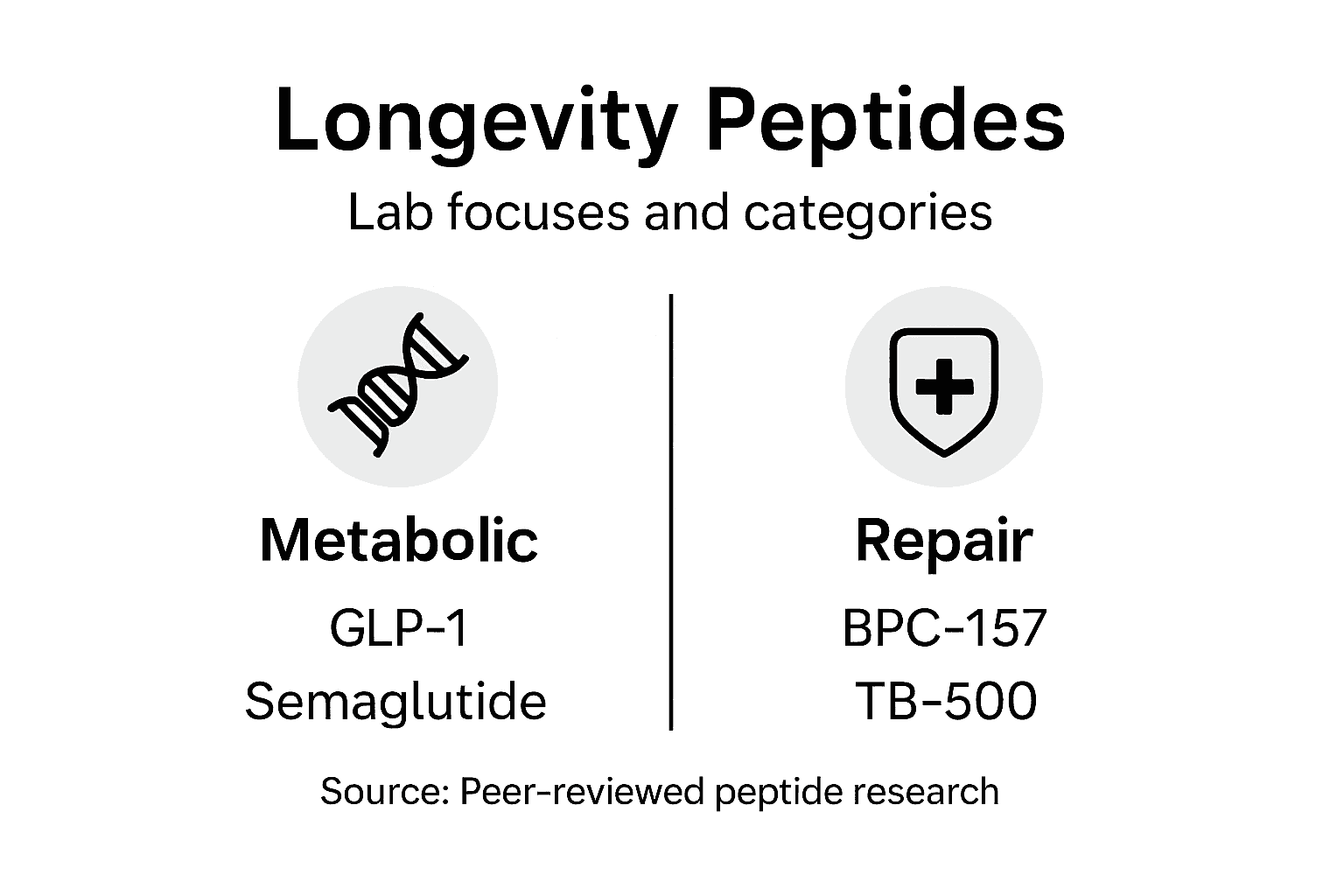
Here’s a comparison of major longevity peptide categories and their potential laboratory applications:
| Peptide Category | Key Lab Focus | Example Research Area |
|---|---|---|
| Metabolic Peptides | Insulin sensitivity assays | Anti-obesity drug evaluation |
| Tissue Repair Peptides | Healing speed measurement | Wound regeneration studies |
| Immune Modulation Peptides | Cytokine activity profiling | Autoimmunity intervention trials |
| Neuroprotective Peptides | Neuron survival analysis | Memory loss prevention research |
| Mitochondrial Peptides | Cellular energy assessment | Age-related fatigue mitigation |
Pro tip: Maintain meticulous documentation of peptide characteristics and always cross-reference multiple research sources to validate preliminary findings.
How Peptide Longevity Works in the Lab
Understanding peptide longevity requires a deep dive into intricate molecular mechanisms that govern cellular processes. Advanced peptide manufacturing techniques provide researchers with unprecedented tools for exploring potential age-related interventions.
In laboratory settings, peptide research involves several critical stages:
- Molecular Design: Precisely engineering specific amino acid sequences
- Synthesis: Creating pure peptide compounds using advanced techniques
- Stability Testing: Evaluating molecular integrity under various conditions
- Functional Analysis: Examining peptides’ interactions with cellular systems
- Preservation Protocols: Developing methods to maintain peptide effectiveness
Molecular Signaling Mechanisms play a crucial role in peptide research. Each peptide acts like a microscopic communication network, transmitting specific instructions to cellular machinery. These molecular signals can potentially influence critical biological pathways related to cellular repair, metabolic regulation, and age-associated degradation.

Researchers utilize sophisticated laboratory techniques to map and understand these intricate interactions. Peptide stacking research continues to reveal complex synergies between different molecular compounds, offering glimpses into potential longevity interventions.
Pro tip: Maintain rigorous documentation of experimental protocols and always validate findings through multiple independent verification methods.
Regulatory Realities and Research Risks
Regulatory considerations shape the complex landscape of peptide research, presenting critical challenges for scientific exploration and innovation. The intricate framework demands meticulous attention to scientific, ethical, and legal dimensions.
Key regulatory considerations for peptide research include:
- Scientific Integrity: Maintaining rigorous research standards
- Ethical Oversight: Ensuring transparent and equitable research practices
- Safety Protocols: Implementing comprehensive risk assessment procedures
- Quality Control: Developing stringent verification mechanisms
- Consent Frameworks: Establishing clear participant protection guidelines
The United States Food and Drug Administration (FDA) plays a pivotal role in overseeing peptide research through the Office of Pharmaceutical Quality. Regulatory frameworks demand comprehensive evaluation of critical parameters such as molecular identity, compound purity, stability testing, and manufacturing controls.
Researchers must navigate a complex ecosystem of evolving guidelines, balancing innovative scientific exploration with robust safety mechanisms. The regulatory landscape continues to adapt, reflecting the dynamic nature of peptide research and the ongoing quest to understand molecular longevity.
Pro tip: Maintain comprehensive documentation of every research protocol and consistently cross-reference regulatory guidelines to ensure compliance.
Alternatives, Safety, and Best Practices
Navigating therapeutic alternatives requires strategic risk assessment, particularly in the evolving landscape of longevity research. Scientists must carefully evaluate potential interventions across multiple safety and efficacy tiers.
Researchers can consider alternative approaches organized into strategic tiers:
- Tier 1 (Low Risk): Over-the-counter supplements
- Berberine
- Curcumin
- Omega-3 fatty acids
- Fiber supplements
- Tier 2 (Moderate Risk): Prescription interventions
- Metformin
- Medically supervised therapies
- Hyperbaric oxygen treatments
- Tier 3 (High Risk): Experimental agents
Best practices emphasize maintaining rigorous scientific standards and prioritizing well-documented, regulated compounds. Researchers must remain vigilant about potential risks, consistently documenting observations and maintaining transparent research protocols.
Safety demands a comprehensive approach that balances innovative exploration with methodical caution. This means continuously updating knowledge, cross-referencing multiple sources, and implementing robust verification mechanisms throughout the research process.
For a better understanding, here’s a summary of risk tiers for longevity research alternatives:
| Risk Tier | Example Interventions | Typical Oversight |
|---|---|---|
| Low | Common supplements, like omega-3s | Minimal, general safety review |
| Moderate | Prescription therapies, like metformin | Physician and ethical oversight |
| High | Unapproved experimental agents | Intensive regulatory monitoring |
Pro tip: Always maintain detailed documentation of research protocols and systematically cross-reference safety guidelines from multiple authoritative sources.
Unlock Peptide Longevity Research With Area 15 Labs
The article breaks down the complexities of peptide longevity research, revealing the challenges of sourcing pure, high-quality peptides that reliably impact metabolic regulation, tissue repair, and immune modulation. If you are looking to advance your exploration of metabolic peptides like semaglutide or cutting-edge triple-agonists such as retatrutide, the frustration of slow shipping and questionable purity can stall your momentum. Area 15 Labs offers the “No-BS” Texas-based solution designed specifically for the demanding researcher who values speed, transparency, and verified compound integrity.
Skip overseas delays and sketchy suppliers. Every batch at Area 15 Labs undergoes rigorous third-party verification so you get high-purity peptides with lightning-fast same-day fulfillment right from Texas. Research with swagger using next-gen stacks, including exclusive blends like BPC-157/TB-500 and advanced metabolic compounds, backed by our radical transparency and community-driven R&D. Ready to take your peptide longevity studies to warp speed and confidence? Explore our verified research tools and join the future of peptide science at Area 15 Labs. Discover our latest drops and learn why the citizen scientist chooses Area 15 Labs at The Science of Peptides. Act now to access pure peptide compounds, rapid Texas shipping, and unmatched support while supplies last.
Frequently Asked Questions
What are peptides and how do they relate to longevity?
Peptides are tiny molecular messengers that play significant roles in biological signaling and regulation. Research indicates they may influence aging processes and cellular communication pathways that degrade over time.
What are the main categories of longevity peptides?
The primary categories of longevity peptides include metabolic peptides, tissue repair peptides, immune modulation peptides, neuroprotective peptides, and mitochondrial peptides. Each category addresses different aspects of biological aging.
How do researchers evaluate the effectiveness of longevity peptides in the lab?
Researchers evaluate the effectiveness of longevity peptides through several stages, including molecular design, synthesis of pure compounds, stability testing, functional analysis, and preservation protocols to maintain peptide effectiveness.
What regulatory challenges do peptide researchers face?
Peptide researchers face regulatory challenges concerning scientific integrity, ethical oversight, safety protocols, quality control, and establishing consent frameworks to protect participants in studies and ensure compliance with safety standards.