

Most american research labs rely on precision tools that drive medical innovation, and peptides are proving to be key players in this field. These tiny chains of amino acids shape crucial experiments in drug discovery and biomedical studies. In fact, over 60 percent of published lab research now involves peptide technology. Understanding what lab peptides are and how they work helps researchers and anyone following scientific progress appreciate their rising influence in modern biology.
Table of Contents
- Lab Peptides Explained: What They Are
- Key Steps in Peptide Synthesis
- Purity Testing and Quality Control
- Legal Rules for Laboratory Use Only
- Top Mistakes in Lab Peptide Research
Key Takeaways
| Point | Details |
|---|---|
| Understanding Peptides | Lab peptides are essential short chains of amino acids that play crucial roles in biological systems and scientific research. |
| Synthesis Methods | Peptide synthesis primarily uses solid-phase peptide synthesis (SPPS) and requires precise techniques for amino acid selection and chemical coupling. |
| Quality Control | Rigorous quality control methods, such as HPLC and mass spectrometry, are vital to verify the identity and purity of synthesized peptides. |
| Legal Compliance | Research peptides must adhere to strict legal regulations, ensuring they are used solely for approved scientific purposes, with proper tracking and documentation. |
Lab Peptides Explained: What They Are
Lab peptides are fundamental organic compounds that serve as critical building blocks in scientific research. Peptide Definition and Function reveals these molecules are essentially short chains of amino acids connected through specialized chemical bonds called amide linkages. Unlike complex proteins, peptides are smaller molecular structures that play pivotal roles in biological systems.
Scientific research indicates that peptides are synthesized through specialized chemical techniques like solid-phase peptide synthesis (SPPS). According to research from MDPI, these organic compounds are instrumental in drug development and understanding biological functions. The precision of peptide manufacturing allows researchers to create targeted molecular sequences with specific potential research applications.
Understanding peptide composition involves recognizing their core structural characteristics. Each peptide consists of amino acids linked together, forming chains that can range from just a few amino acid units to more complex configurations. Peptides 101: The No-BS Guide to What They Actually Are highlights that these molecules act as critical communication and signaling tools within biological systems, making them essential for advanced scientific investigations.
Peptide research continues to evolve, with scientists constantly developing more sophisticated synthesis methods. Researchers can now generate peptides with extraordinary precision, enabling groundbreaking studies across multiple scientific disciplines. The ability to design and produce custom peptide sequences opens remarkable possibilities for understanding molecular interactions and potential research applications.
Key Steps in Peptide Synthesis
Peptide synthesis involves a complex, precise process of creating short amino acid chains for research purposes. Peptide Stacking Research: Hype, Synergy, & Lab Reality highlights the intricate techniques researchers use to develop these molecular structures. The primary methods include solid-phase peptide synthesis (SPPS) and solution-phase synthesis, each offering unique advantages for generating specific peptide sequences.
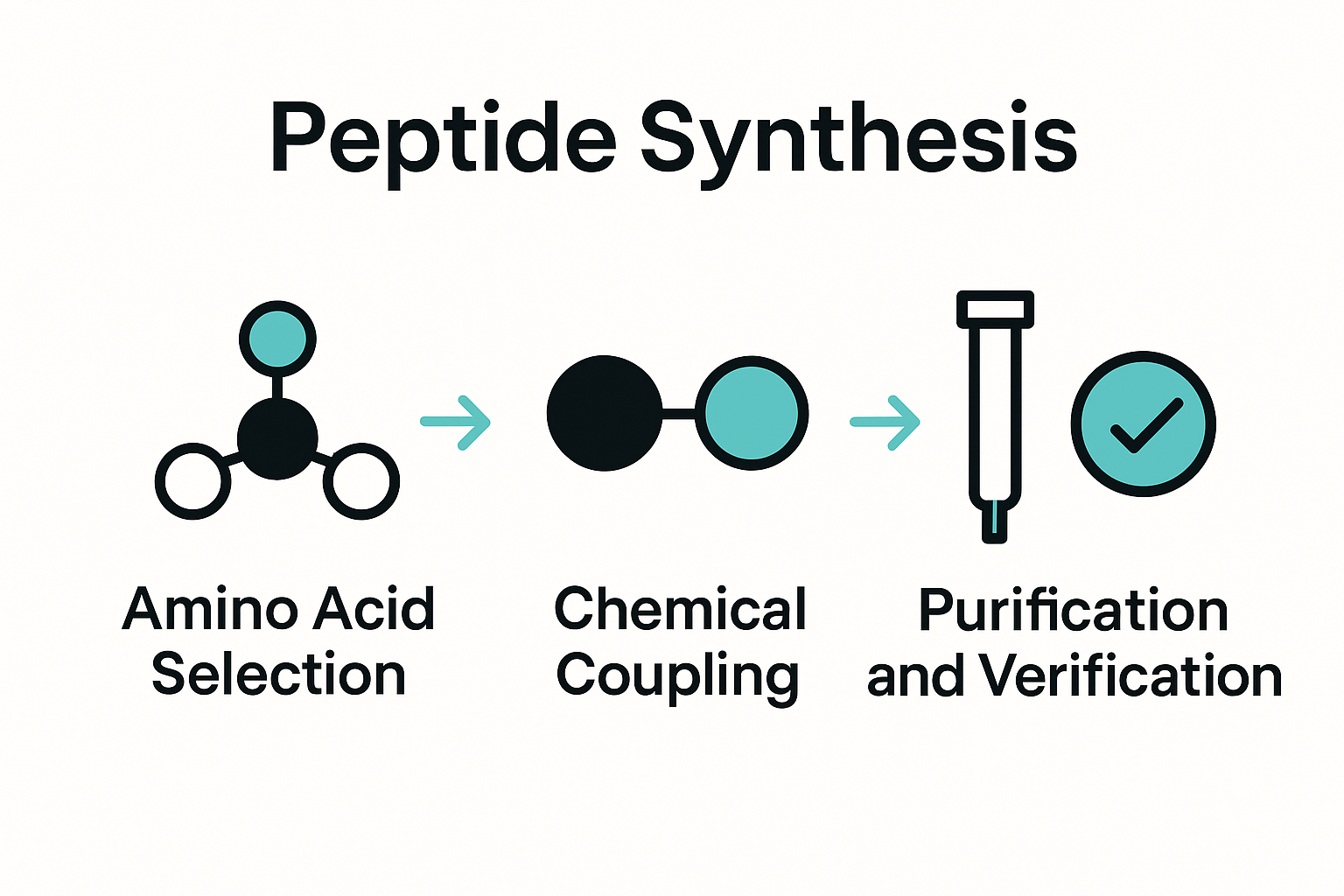
The first critical step in peptide synthesis is amino acid selection. Researchers carefully choose individual amino acids that will form the desired peptide chain. These building blocks are strategically arranged to create molecular structures with specific potential research applications. Advanced laboratories use computer-aided design and precise chemical techniques to map out the exact sequence and configuration of peptide molecules.
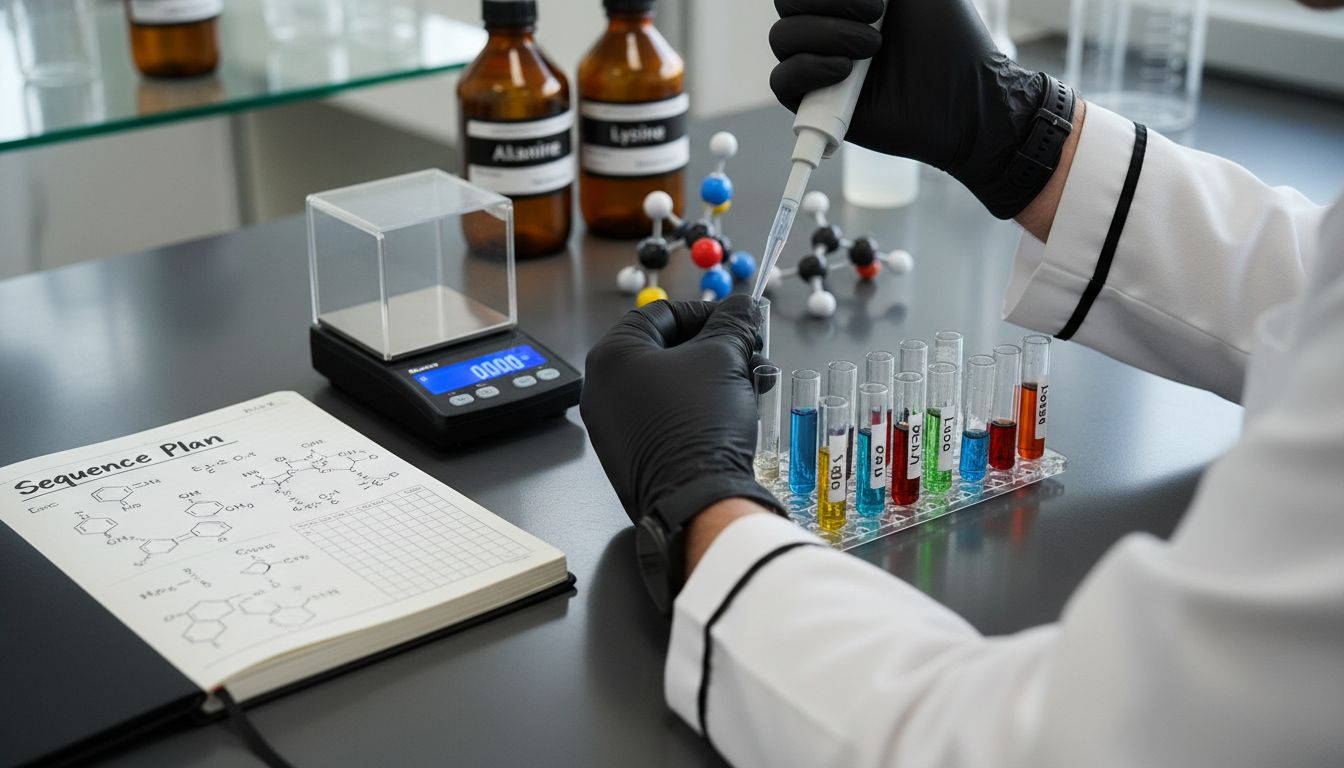
Chemical coupling represents another crucial phase in peptide production. During this stage, amino acids are connected through specialized chemical reactions that form amide bonds. Researchers must control reaction conditions with extreme precision, managing factors like temperature, pH levels, and reaction time. Specialized equipment and techniques ensure that each amino acid is correctly linked, creating a pure and accurate peptide sequence.
The final stages of peptide synthesis involve purification and verification. Sophisticated analytical techniques like high-performance liquid chromatography (HPLC) and mass spectrometry allow researchers to confirm the peptide’s exact molecular structure. These quality control methods ensure that the synthesized peptide matches the intended design, maintaining the highest standards of scientific research and experimental accuracy.
Purity Testing and Quality Control
Ensuring the highest standards of peptide research requires rigorous quality control methods that verify every molecular detail. New Peptide Trends: What’s Hot on Social Media Peptides highlights the critical importance of precise analytical techniques in modern peptide research. Laboratories employ sophisticated strategies to confirm the identity, purity, and structural integrity of synthesized peptides.
High-performance liquid chromatography (HPLC) stands as the primary analytical technique for peptide purity assessment. Researchers use this method to separate and quantify individual molecular components with exceptional precision. The process involves passing the peptide sample through a specialized column, allowing scientists to detect and measure the concentration of different molecular fragments and potential impurities.
Mass spectrometry serves as another crucial validation technique in peptide quality control. This advanced analytical method enables researchers to determine the exact molecular weight and confirm the precise chemical composition of synthesized peptides. By generating a detailed molecular profile, mass spectrometry provides an unparalleled level of verification, ensuring that the peptide matches the intended design with remarkable accuracy.
The final stage of quality control involves comprehensive amino acid analysis. Researchers meticulously examine the peptide’s structural composition, confirming that each amino acid is present in the correct sequence and proportion. These multi-layered verification processes guarantee that peptides meet the most stringent scientific standards, providing researchers with reliable molecular tools for advanced scientific investigations.
Legal Rules for Laboratory Use Only
Research peptides are subject to strict legal regulations that govern their use exclusively within controlled scientific environments. RUO – Area 15 Labs emphasizes the critical importance of understanding and adhering to research-use-only (RUO) guidelines. These regulations ensure that peptides remain strictly confined to legitimate laboratory research purposes, preventing any unauthorized or potentially dangerous applications.
Regulatory frameworks establish clear boundaries for peptide usage. The European Medicines Agency (EMA) provides explicit guidelines stating that peptides designated for research must never be used in human subjects or as medicinal products. Researchers must maintain meticulous documentation, ensuring that all peptide samples are tracked, stored, and utilized solely within approved scientific research protocols.
Laboratory facilities must implement comprehensive compliance protocols to maintain legal standards. This involves creating robust tracking systems, securing storage environments, and establishing strict access controls. Researchers are required to maintain detailed records of peptide acquisition, experimental use, and disposal, creating a transparent audit trail that demonstrates adherence to regulatory requirements.
Violations of research-use-only guidelines can result in severe consequences, including legal penalties, research funding withdrawal, and institutional sanctions. Scientists must approach peptide research with the highest level of professional integrity, recognizing that these molecular compounds are tools for scientific discovery, not for human consumption or medical treatment. Responsible research practices protect both the scientific community and potential future applications of peptide research.
Top Mistakes in Lab Peptide Research
Peptide research demands precision and careful attention to detail. Blogs from Area 15 Labs highlight the complex challenges researchers encounter when working with these delicate molecular structures. Common mistakes can significantly compromise experimental outcomes, making it crucial for scientists to understand and avoid potential pitfalls in peptide synthesis and analysis.
One of the most critical errors involves inadequate quality control during peptide manufacturing. Researchers sometimes overlook subtle variations in amino acid sequencing or fail to implement rigorous purity testing protocols. These oversights can introduce molecular inconsistencies that render entire research projects unreliable. Precise characterization requires comprehensive analytical techniques, including high-performance liquid chromatography and mass spectrometry, to verify each peptide’s exact structural composition.
Storage and handling represent another significant area prone to research mistakes. Peptides are extremely sensitive to environmental conditions, and improper storage can rapidly degrade their molecular integrity. Researchers must maintain consistent temperature control, protect samples from moisture and light exposure, and use specialized preservation techniques. Failing to establish strict handling protocols can introduce molecular degradation that compromises research validity.
Methodological inconsistencies frequently undermine peptide research credibility. Scientists must maintain meticulous documentation, follow standardized research protocols, and implement robust quality assurance processes. Reproducibility depends on eliminating variables, controlling experimental conditions, and ensuring that each step of the research process meets the highest scientific standards. Attention to detail separates exceptional research from potentially flawed scientific investigations.
Get Lab Peptides You Can Trust for Your Research
You just learned how crucial purity and precision are when it comes to lab peptides. The process can be complex with quality control and legal rules closely guarding every step. Don’t let uncertainty slow your research down. At Area 15 Labs, we take the guesswork out of peptide sourcing by testing every product for purity and accuracy so you focus on what matters – your experiments.

Explore our range of research peptides made for laboratory use only. With lightning-fast shipping from Texas and a trusted name seen across social media, we deliver the reliability you need for advanced peptide synthesis and analysis. Ready for seamless peptide research with zero hassle? Visit Area 15 Labs to get started today.
Frequently Asked Questions
What are lab peptides?
Lab peptides are short chains of amino acids linked by amide bonds, serving as essential building blocks for scientific research and biological systems.
How are lab peptides synthesized?
Lab peptides are synthesized primarily through methods like solid-phase peptide synthesis (SPPS) and solution-phase synthesis, allowing for the precise arrangement of amino acids into specific sequences.
What quality control measures are taken in peptide research?
Quality control involves techniques like high-performance liquid chromatography (HPLC) and mass spectrometry to ensure the purity and structural integrity of peptides, confirming they meet stringent scientific standards.
What are the legal regulations surrounding the use of lab peptides?
Lab peptides are strictly regulated for research use only, prohibiting their application in human subjects or as medicinal products, with strict guidelines for tracking and documentation in laboratory settings.

[…] specific cellular responses, making them invaluable for understanding complex biological pathways. Advanced peptide manufacturing techniques enable researchers to synthesize increasingly precise molecular configurations for targeted […]
[…] longevity requires a deep dive into intricate molecular mechanisms that govern cellular processes. Advanced peptide manufacturing techniques provide researchers with unprecedented tools for exploring potential age-related […]