

Finding reliable peptide analysis tools can quickly become overwhelming when every detail matters for your research outcomes. For Citizen Scientists and professional researchers in the United States, the need for precise chemical characterization and transparent reporting drives the search for high-performing solutions, especially from trusted Texas-based suppliers. This guide unpacks what peptide analysis truly involves, highlights key scientific techniques, and explains why clarity and speed are vital for trustworthy results.
Table of Contents
- What Peptide Analysis Really Means
- Key Methods For Analyzing Peptides
- Major Types Of Peptide Research Studies
- Common Mistakes In Lab Analysis
- How Fast, Transparent Labs Win Trust
Key Takeaways
| Point | Details |
|---|---|
| Importance of Peptide Analysis | Peptide analysis reveals significant biological insights and applications, highlighting its role in understanding molecular behavior. |
| Key Analytical Techniques | Techniques like Mass Spectrometry, HPLC, and NMR are essential for accurate peptide characterization and structural analysis. |
| Risks of Common Mistakes | Researchers must be vigilant about potential errors such as incomplete removal of protecting groups and misinterpreting mass spectrometry data. |
| Building Trust in Labs | Transparent processes, rapid reporting, and thorough documentation are crucial for establishing credibility in peptide analysis. |
What Peptide Analysis Really Means
Peptide analysis represents a sophisticated scientific process that explores the intricate world of short amino acid chains. By examining these molecular structures, researchers can uncover critical insights into biological mechanisms, technological applications, and advanced scientific research. The complexity of this field goes far beyond simple chemical examination.
At its core, peptide analysis involves several key components:
- Chemical characterization of amino acid sequences
- Understanding molecular interactions and structural properties
- Identifying potential side reactions during synthesis
- Mapping precise mass shifts and structural changes
Researchers utilize advanced techniques to study peptide molecular structures, including high-performance liquid chromatography (HPLC), mass spectrometry, and nuclear magnetic resonance (NMR) spectroscopy. These methods allow scientists to decode the intricate details of peptide composition with remarkable precision.
The significance of peptide analysis extends across multiple domains. In biological research, understanding peptide structures helps explain critical processes like hormone signaling, cellular communication, and potential therapeutic interventions. Peptides play essential roles as fundamental building blocks that bridge the gap between individual amino acids and complex protein structures.
Pro tip: When conducting peptide analysis, always verify instrument calibration and use multiple analytical techniques to cross-validate your results.
Key Methods for Analyzing Peptides
Peptide analysis requires sophisticated techniques that help researchers decode complex molecular structures with precision and reliability. Modern scientific approaches have revolutionized our ability to understand these intricate amino acid chains, providing unprecedented insights into molecular behavior and potential applications.
Researchers rely on several critical methods for comprehensive peptide analysis:
- Edman Degradation: A classic chemical sequencing technique
- Mass Spectrometry: Advanced molecular identification method
- High-Performance Liquid Chromatography (HPLC): Separation and quantification technique
- Nuclear Magnetic Resonance (NMR): Structural mapping technology
Mass spectrometry techniques/26%3A_Biomolecules-_Amino_Acids_Peptides_and_Proteins/26.06%3A_Peptide_Sequencing-_The_Edman_Degradation) like electrospray ionization and MALDI-TOF provide researchers with remarkable capabilities to determine precise peptide sequences. These methods allow scientists to break down complex molecular structures into measurable components, revealing intricate details about peptide composition and potential interactions.
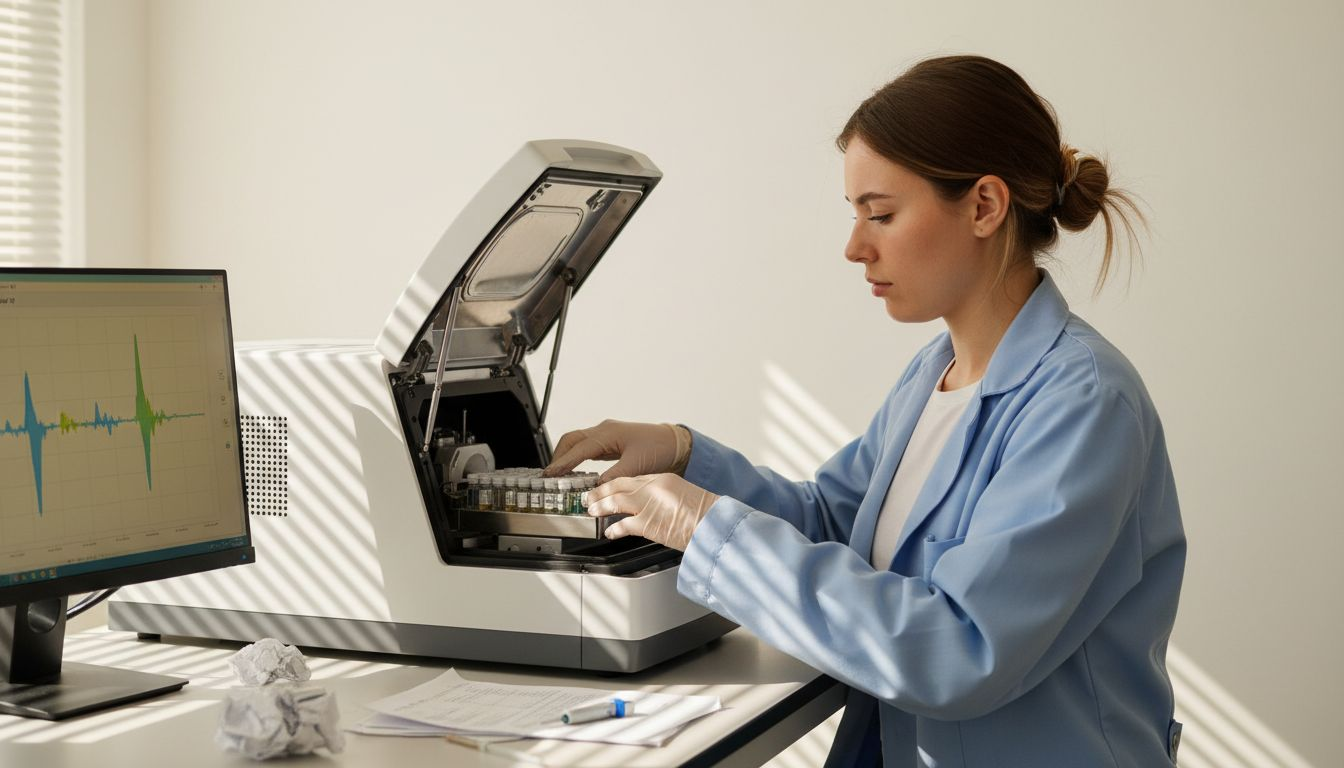
Advanced spectral libraries developed by research institutions enhance peptide identification accuracy. Peptide mass spectral libraries enable researchers to match fragmentation patterns, improving sensitivity and providing robust molecular profiling across various scientific domains.
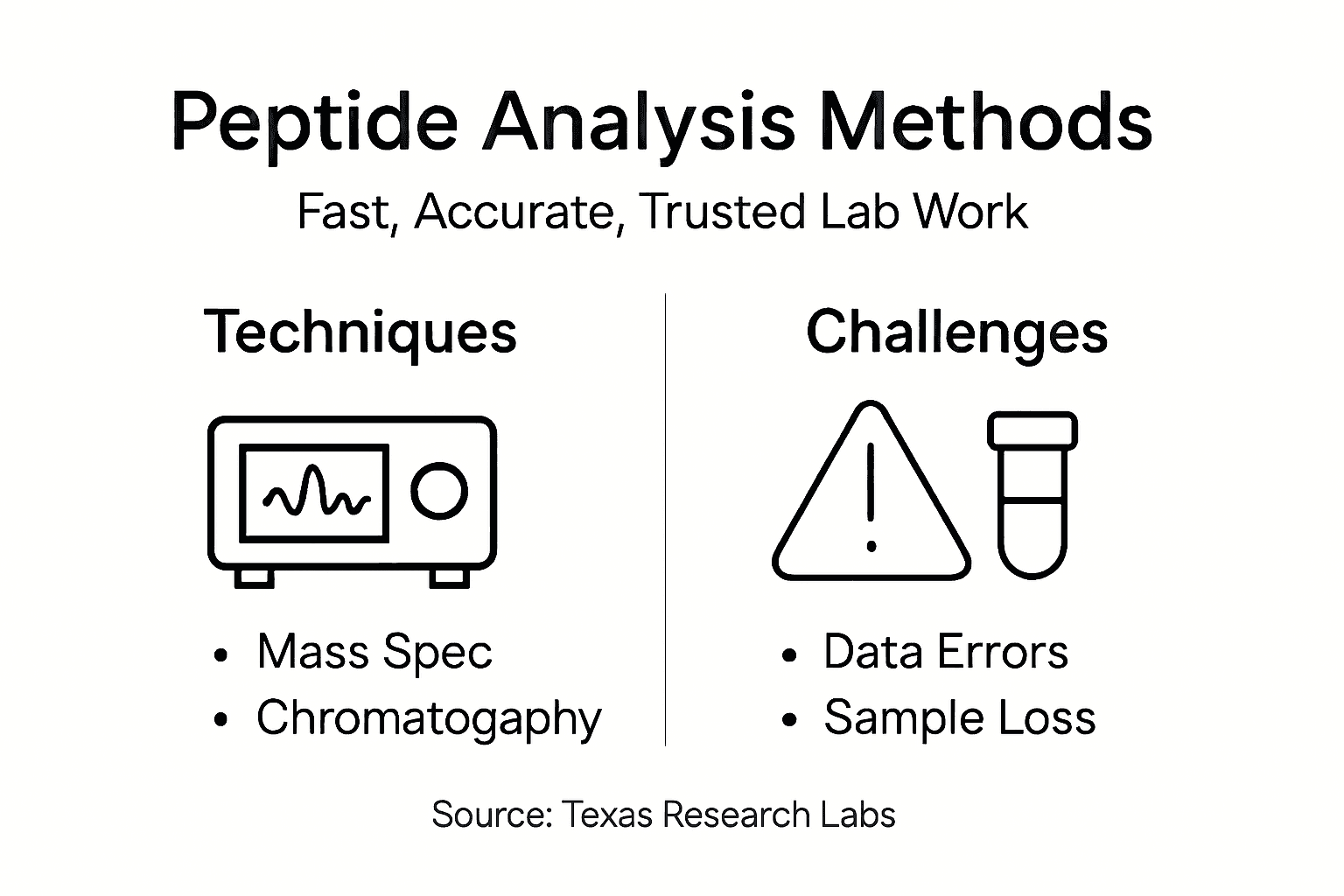
Pro tip: Always cross-validate peptide analysis results using multiple complementary techniques to ensure maximum accuracy and reliability.
Here’s how leading peptide analysis methods differ:
| Method | Key Advantage | Main Limitation | Typical Application |
|---|---|---|---|
| Edman Degradation | Precise sequence order | Slow for long peptides | Sequence determination |
| Mass Spectrometry | High sensitivity | Detects isobaric overlap | Molecular weight analysis |
| High-Performance Liquid Chromatography | Excellent separation | Less structural information | Purity and quantity assessments |
| Nuclear Magnetic Resonance | 3D structure details | Requires large sample amounts | Conformational studies |
Major Types of Peptide Research Studies
Peptide research represents a cutting-edge frontier in scientific exploration, spanning multiple disciplines and offering unprecedented insights into molecular interactions. Researchers across diverse fields leverage advanced analytical techniques to unlock the potential of these fascinating amino acid chains, pushing the boundaries of scientific understanding.
Key domains of peptide research include:
- Metabolic Disorder Studies: Investigating peptide interactions with metabolic processes
- Drug Discovery: Developing targeted therapeutic peptide compounds
- Molecular Signaling: Analyzing cellular communication mechanisms
- Synthetic Peptide Design: Creating novel molecular structures
Peptide research studies encompass a wide range of scientific investigations, from exploring metabolic disorder treatments to developing innovative peptide-based drug strategies. These studies represent a critical intersection between medicinal chemistry, biological systems, and cutting-edge molecular engineering.
Advanced research approaches focus on understanding complex molecular interactions, developing targeted delivery mechanisms, and exploring potential applications across multiple scientific domains. Researchers continuously push the boundaries of peptide science, seeking breakthrough insights that could revolutionize our understanding of biological systems and potential therapeutic interventions.
Pro tip: Maintain meticulous documentation and cross-reference multiple analytical techniques to ensure the highest level of research integrity in peptide studies.
The following table summarizes key research areas in peptide science and their main impacts:
| Research Area | Main Focus | Example Impact |
|---|---|---|
| Metabolic Disorders | Peptide interaction in metabolism | Diabetes peptide therapies |
| Drug Discovery | Peptide-based drug development | New antibiotics |
| Molecular Signaling | Cell communication pathways | Improved cancer diagnostics |
| Synthetic Peptide Design | Custom molecule engineering | Targeted delivery systems |
Common Mistakes in Lab Analysis
Peptide analysis demands precision and meticulous attention to detail. Even experienced researchers can fall prey to subtle errors that compromise the integrity of their scientific investigations. Understanding these potential pitfalls is crucial for maintaining high-quality research standards.
Key mistakes researchers frequently encounter include:
- Incomplete Protecting Group Removal: Leaving chemical artifacts during peptide synthesis
- Unexpected Mass Shifts: Misinterpreting spectrometry data
- Impurity Detection Failures: Overlooking subtle molecular contaminations
- Reference Standard Miscalibration: Incorrect value assignment in comparative studies
Common peptide analysis mistakes often stem from complex chemical interactions that can dramatically alter research outcomes. Side reactions like diketopiperazine formation or aspartimide cyclization can introduce unexpected sequence modifications, potentially rendering entire research batches unreliable.
Researchers must develop robust verification protocols to mitigate these risks. Pharmaceutical peptide analysis requires rigorous identity testing, comprehensive stability studies, and careful accounting for potential chiral or isobaric amino acid complexities. Systematic cross-validation and multiple analytical techniques can help identify and prevent these critical errors.
Pro tip: Always maintain a detailed error log and implement redundant verification steps to catch potential molecular discrepancies early in your research process.
How Fast, Transparent Labs Win Trust
Trust in scientific research is built through meticulous attention to detail, rapid communication, and unwavering commitment to methodological transparency. Modern laboratories understand that credibility isn’t just about delivering results—it’s about showing the entire process with crystal-clear precision.
Key strategies for building laboratory trust include:
- Rapid Reporting: Delivering comprehensive results quickly
- Comprehensive Documentation: Providing detailed analytical methodologies
- Sustainability Metrics: Demonstrating ecological responsibility
- Standardized Procedures: Implementing validated research protocols
Fast peptide analysis techniques increasingly leverage innovative technologies that prioritize efficiency and waste reduction. By adopting continuous processes and orthogonal purification methods, laboratories can dramatically improve their credibility and operational effectiveness.
Researchers demand more than just data—they want complete transparency and rigorous verification. Analytical characterization standards now require comprehensive documentation of peptide quality attributes, including stability testing and impurity profiling. This level of detailed reporting transforms raw data into trusted scientific insights.
Pro tip: Create a standardized communication protocol that provides clients with real-time updates and comprehensive documentation throughout the research process.
Experience Peptide Analysis the No-BS Texas Way
Peptide analysis demands precision and speed without the fluff. The article breaks down the complexities of peptide sequencing, mass shifts, and structural mapping while highlighting challenges like impurity detection and method cross-validation. If you want a partner that understands the stakes of rapid, transparent, and accurate peptide research then Area 15 Labs is your go-to resource. We combine lightning-fast same-day shipping from Texas with rigorous purity verification to cut through the noise and deliver exactly what your research needs.
Stop waiting weeks for overseas shipments and start working with the rebellious, modern outpost built exclusively for the Citizen Scientist. Whether you are diving deep into mass spectrometry data or setting up your next metabolic disorder study, our no-nonsense compounds come with the alien-tech swagger and transparency that peers crave. Check out our landing page for the latest on high-purity peptides and essential lab supplies.
Ready to upgrade your peptide research game? Explore how our verified research tools and Texas speed give you the trusted edge others cannot match at Area 15 Labs. Discover more about our commitment to fast, transparent, and reliable peptide analysis that keeps you one step ahead.
Frequently Asked Questions
What is peptide analysis?
Peptide analysis is a scientific process that examines short chains of amino acids, known as peptides, to gain insights into biological mechanisms, technological applications, and advanced research. It involves chemical characterization, understanding molecular interactions, and identifying potential side reactions during synthesis.
What are the main methods used for peptide analysis?
The primary methods for peptide analysis include Edman degradation for sequencing, mass spectrometry for molecular identification, high-performance liquid chromatography (HPLC) for separation and quantification, and nuclear magnetic resonance (NMR) spectroscopy for structural mapping.
What are common mistakes in peptide analysis?
Common mistakes include incomplete removal of protecting groups, unexpected mass shifts due to misinterpretation of data, failing to detect impurities, and miscalibration of reference standards. These errors can significantly impact the reliability of research findings.
How can labs build trust in peptide analysis results?
Labs can build trust by providing rapid reporting of results, comprehensive documentation of methodologies, demonstrating sustainability metrics, and implementing standardized research procedures. Transparency and thorough verification processes enhance credibility in scientific research.

[…] Peptide Analysis Demystified: Fast, Accurate, Texan […]
[…] Peptide Analysis Demystified: Fast, Accurate, Texan […]
[…] Peptide Analysis Demystified: Fast, Accurate, Texan […]