
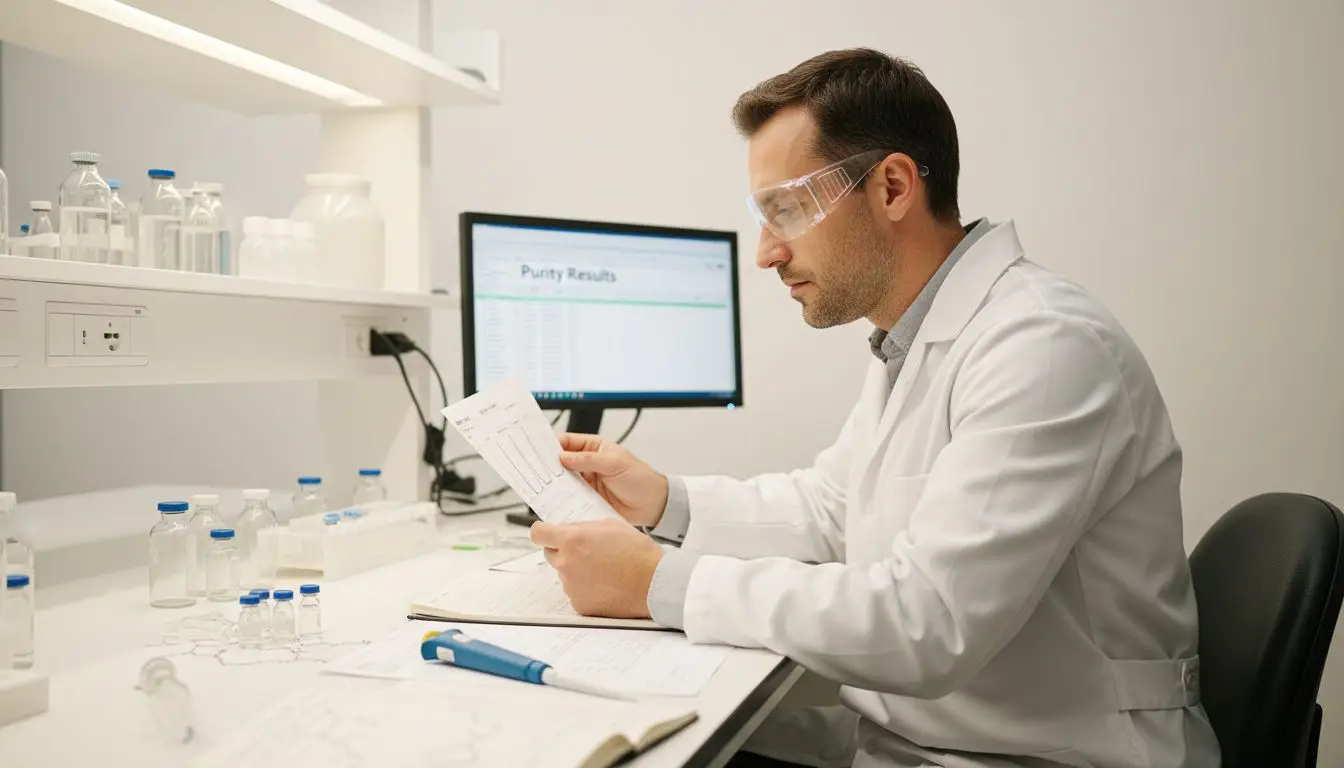
Every research project in Texas depends on the reliability of its building blocks, and for those working with peptides, purity is everything. Minor differences in peptide purity, such as the choice between 98% and 99% standards measured by HPLC, can influence experimental accuracy and reproducibility. For both citizen scientists and molecular researchers, understanding what these benchmarks mean will help drive precise and trustworthy results across a wide range of laboratory studies. Peptide purity sets the baseline for credible scientific outcomes.
Table of Contents
- Peptide Purity Defined For Lab Research
- How HPLC Determines Purity Percentages
- What Distinguishes 98% From 99% Results
- Impurities, Data Integrity, And Lab Risk
- Choosing The Right Purity For Research
Key Takeaways
| Point | Details |
|---|---|
| Peptide Purity Importance | Peptide purity is crucial for reliable scientific research, with 98% and 99% purity as critical benchmarks affecting experimental outcomes. |
| HPLC as a Gold Standard | High-performance liquid chromatography (HPLC) accurately quantifies peptide purity and reveals potential contaminants, ensuring comprehensive molecular analysis. |
| Impact of Purity Variations | A 1% difference in purity can significantly influence data reliability and experimental results, making purity a vital consideration in research design. |
| Choosing Appropriate Purity | Selecting the right peptide purity level should align with research complexity and sensitivity, balancing cost with the necessity for accuracy in results. |
Peptide Purity Defined for Lab Research
In the precision-driven world of molecular research, peptide purity represents the critical baseline for reliable scientific investigation. Researchers demand exacting standards that ensure their experimental materials meet rigorous quality thresholds, with high-performance liquid chromatography (HPLC) serving as the gold standard for quantifying peptide composition and integrity.
Understanding peptide purity involves recognizing multiple key factors that influence research outcomes:
- Chemical composition: Percentage of target molecule present
- Contaminant levels: Presence of unwanted byproducts or synthesis residues
- Molecular integrity: Structural conformity to expected peptide sequence
- Analytical verification: Precise measurement techniques like peptide quality control methods
The primary metrics for assessing peptide quality revolve around percentage purity, with 98% and 99% representing critical benchmarks in laboratory research. These percentages indicate the proportion of the target peptide molecule within a given sample, excluding impurities, fragments, and synthesis byproducts.
Peptide purity isn’t just a number—it’s a gateway to reproducible, credible scientific discovery.
Researchers must understand that even minor variations in purity can significantly impact experimental results. A seemingly small 1% difference between 98% and 99% purity can introduce statistical variations that compromise research integrity. The presence of impurities can alter molecular interactions, binding capabilities, and overall research outcomes.
Pro tip: Always request and review the Certificate of Analysis (COA) for detailed purity specifications before incorporating peptides into your research protocols.
How HPLC Determines Purity Percentages
High-performance liquid chromatography (HPLC) stands as the gold standard for determining peptide purity, offering researchers a precise method to quantify molecular composition with extraordinary accuracy. By exploring advanced lab testing methods, scientists can understand the intricate process of separating and measuring peptide components.
The HPLC process involves several critical stages for assessing peptide purity:
- Sample preparation: Carefully dissolving peptide in appropriate solvent
- Column separation: Passing sample through specialized chromatography column
- Detection: Measuring individual molecular components
- Quantification: Calculating percentage of target peptide
Understanding the technical nuances of HPLC reveals why the 1% difference between 98% and 99% purity represents a significant analytical threshold. The method works by systematically separating molecular components based on their unique interactions with the chromatography column, allowing researchers to identify and measure trace impurities with remarkable precision.
HPLC doesn’t just measure purity—it unveils the molecular landscape of your peptide sample.
Researchers must recognize that HPLC provides a comprehensive view of peptide composition, revealing not just the percentage of the target molecule but also the nature and quantity of potential contaminants. The technique’s sensitivity means that even minute variations can be detected, providing critical insights into peptide quality that cannot be obtained through less sophisticated analytical methods.
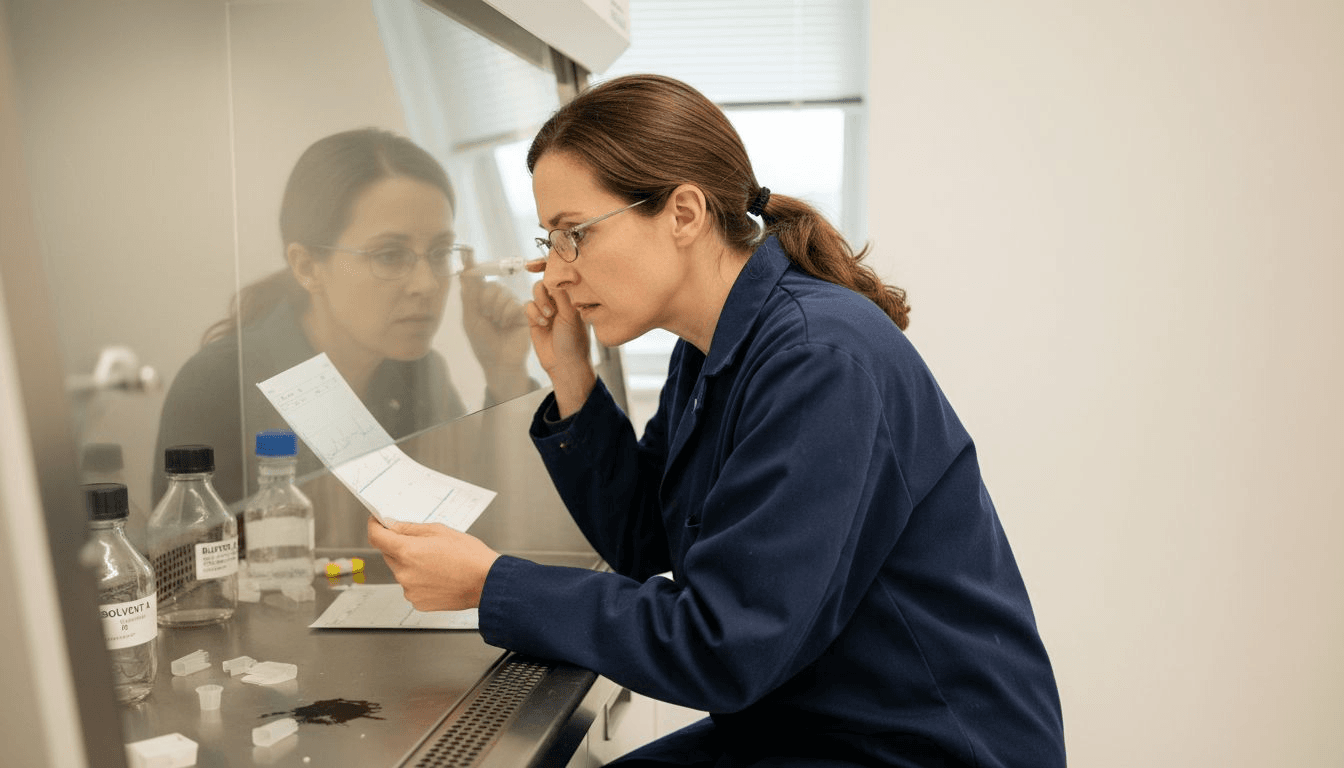
Pro tip: Request a comprehensive HPLC chromatogram alongside purity percentage to gain a complete understanding of your peptide’s molecular profile.
What Distinguishes 98% from 99% Results
In the meticulous world of peptide research, the seemingly minor 1% difference between 98% and 99% purity represents a critical analytical watershed that can dramatically influence experimental outcomes. Advanced lab testing methods reveal the nuanced implications of this marginal percentage shift.
Key distinguishing factors between 98% and 99% purity include:
- Contaminant concentration: Exponentially reduced impurities
- Molecular consistency: Enhanced reproducibility of results
- Potential interaction variability: Minimized background noise
- Research reliability: Increased statistical confidence
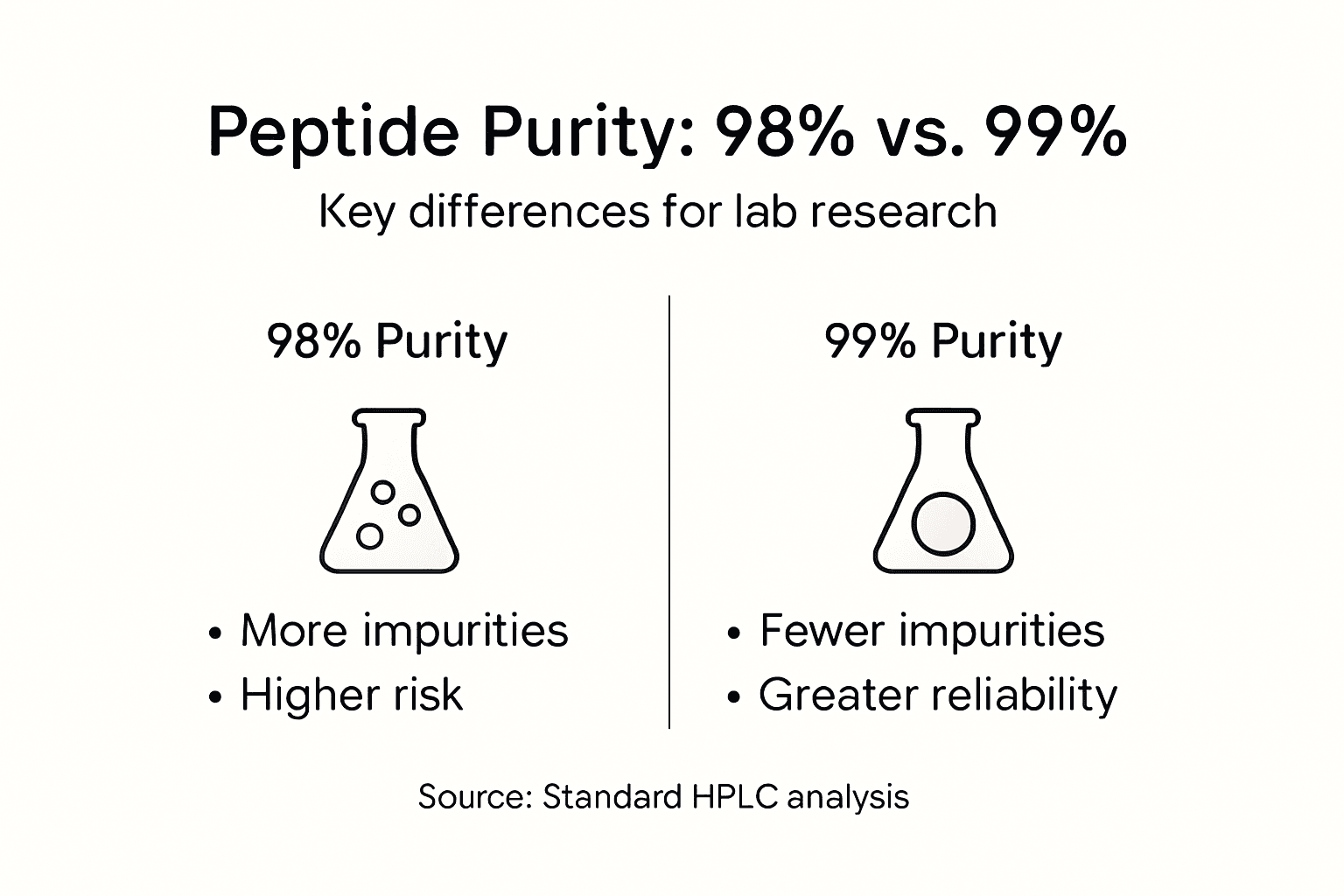
The statistical significance of this 1% differential becomes apparent when considering the exponential reduction in potential molecular interference. At 98% purity, researchers encounter approximately 20,000 molecular impurities per million molecules, whereas 99% purity reduces this to merely 10,000 impurities—effectively cutting contamination potential by nearly half.
Here’s a quick comparison of 98% vs. 99% peptide purity in lab research:
| Aspect | 98% Purity | 99% Purity |
|---|---|---|
| Impurity Molecules | About 20,000 per million | About 10,000 per million |
| Suitability | Early-stage screening | Advanced, sensitive assays |
| Cost Implication | Lower purchase price | Higher purchase price |
| Data Reliability | Good, with some variability | High, minimal background interference |
One percent isn’t just a number—it’s the difference between good science and great science.
Researchers must understand that these seemingly microscopic variations translate into substantial methodological implications. The reduced impurity landscape at 99% purity means more precise molecular interactions, decreased background interference, and ultimately, more reproducible and reliable research outcomes. This precision becomes exponentially more critical in sensitive molecular studies where even trace contaminants can skew experimental results.
Pro tip: Always request comprehensive spectral analysis alongside percentage purity to understand the full molecular composition of your research peptides.
Impurities, Data Integrity, and Lab Risk
In the high-stakes arena of molecular research, peptide impurities represent more than just statistical noise—they are potential landmines that can catastrophically compromise experimental integrity. Peptide research mistakes underscore the critical importance of understanding and mitigating molecular contamination risks.
Key risk factors associated with peptide impurities include:
- Molecular interactions: Unexpected chemical reactions
- Signal interference: Compromised experimental data
- Reproducibility challenges: Inconsistent research outcomes
- Potential immunogenic responses: Unintended biological reactions
The landscape of laboratory risk is particularly complex when considering the nuanced implications of molecular impurities. Trace contaminants can introduce systematic errors that propagate through research protocols, creating cascading effects that may not be immediately apparent during initial data collection.
One impure molecule can transform precise research into a statistical nightmare.
Researchers must recognize that impurities are not merely peripheral concerns but fundamental threats to data integrity. Even minuscule concentrations of unexpected molecular components can generate statistically significant variations, potentially invalidating months or even years of painstaking laboratory work. The precision required in modern scientific investigation demands an almost obsessive approach to molecular purity and contamination control.
Pro tip: Implement rigorous pre-experiment screening protocols to identify and quantify potential molecular impurities before initiating your research workflow.
Choosing the Right Purity for Research
Selecting the optimal peptide purity isn’t a one-size-fits-all decision but a nuanced process that demands careful consideration of research objectives and methodological complexity. Research peptide sourcing strategies reveal critical insights into making informed purity selections.
Key considerations when determining appropriate peptide purity include:
- Research complexity: More intricate studies require higher purity levels
- Experimental sensitivity: Critical for precise molecular interactions
- Budget constraints: Higher purity correlates with increased cost
- Specific research domain: Varies across different scientific disciplines
The decision between 98% and 99% purity hinges on understanding the potential molecular consequences of marginal impurities. While 98% might suffice for broad screening protocols, advanced research requiring precise molecular interactions demands the near-pristine environment of 99% pure peptides.
Purity isn’t just a percentage—it’s the foundation of scientific credibility.
Researchers must develop a strategic approach to purity selection, recognizing that the ideal percentage varies across different experimental paradigms. Biochemical studies investigating delicate protein interactions, for instance, require substantially higher purity thresholds compared to initial exploratory research phases. The incremental cost of achieving higher purity must be balanced against potential gains in data reliability and reproducibility.
The table below summarizes common lab scenarios and the recommended peptide purity level:
| Research Scenario | Recommended Purity | Rationale |
|---|---|---|
| High-throughput screening | 98% | Cost-efficient, moderate rigor |
| Protein-ligand interactions | 99% | Ensures precise binding data |
| Immunological studies | 99% | Reduces unintended immune responses |
| Basic molecular exploration | 98% | Adequate balance of purity/cost |
Pro tip: Consult with your research team and review project-specific protocols to determine the precise purity requirements before procurement.
Elevate Your Research with Texas-Speed Purity and No-Nonsense Integrity
Peptide purity matters. That 1 percent difference between 98 and 99 percent purity can make or break your experiment. The article breaks down how molecular impurities threaten data integrity and how HPLC testing reveals the true composition of your peptides. If you are tired of waiting weeks for overseas shipments or sifting through vague Certificates of Analysis, it is time to experience the Area 15 Labs advantage.
We ship directly from Texas with same-day fulfillment so you get your high-purity peptides lightning fast. Every batch undergoes rigorous third-party verification using top-tier peptide quality control methods to ensure your research compounds meet the strict benchmarks discussed, whether you demand 98 percent or 99 percent purity. Our commitment to transparency and rapid delivery means you can trust your samples are pure, verified, and ready to fuel credible science.
Ready to upgrade your peptide sourcing and research performance? Explore how our advanced lab testing methods set us apart and why thousands of “Citizen Scientists” prefer the No-BS Choice from Texas. Visit Area 15 Labs now to experience purity with precision and speed on your side.
Frequently Asked Questions
What is the difference between 98% and 99% peptide purity?
The primary difference lies in the concentration of impurities. At 98% purity, there are approximately 20,000 impurity molecules per million, while 99% purity reduces this number to about 10,000 impurities, significantly enhancing data reliability and reproducibility.
Why is HPLC important for measuring peptide purity?
High-performance liquid chromatography (HPLC) is crucial as it provides a precise method for quantifying peptide composition. HPLC enables researchers to systematically separate and measure individual molecular components, allowing for accurate assessments of purity and identification of potential contaminants.
How can impurities affect research outcomes?
Impurities can introduce unexpected chemical reactions, compromise data integrity through signal interference, and lead to reproducibility challenges. Even minor contamination can significantly affect experimental results and invalidate research findings.
What should I consider when choosing peptide purity for my research?
Consider the complexity of your research, the sensitivity required for your experiments, budget constraints, and the specific research domain. Higher purity, such as 99%, is typically necessary for advanced studies involving precise molecular interactions, while 98% may suffice for more general screening protocols.

[…] peptide purity benchmarks across storage conditions show that compounds degrade measurably during extended transit periods. Even a few extra days in a […]