

For Texas citizen scientists and research influencers striving to advance metabolic discovery, the search for truly innovative compounds often leads to complex choices. With a spotlight now on triple receptor agonists like Retatrutide, researchers are recognizing a new era in experimental design. By uniquely targeting GLP-1, GIP, and glucagon receptors, Retatrutide delivers a multi-pathway approach that outpaces older options. This introduction highlights what makes Retatrutide a standout in high-purity research applications.
Table of Contents
- Retatrutide Triple-Agonist—What Makes It Unique
- How Glucagon Activation Shifts The Research Game
- Comparing Retatrutide To Dual-Agonist Rivals
- Area 15 Labs: Why The 2026 Focus Is Glucagon
- Risks, Limitations, And The Hype Vs. Reality
Key Takeaways
| Point | Details |
|---|---|
| Retatrutide’s Unique Mechanism | Retatrutide is a triple receptor agonist targeting GLP-1, GIP, and glucagon, offering improved metabolic regulation compared to traditional therapies. |
| Significant Weight Loss Potential | Clinical trials indicate that retatrutide can achieve weight loss exceeding 20%, demonstrating enhanced efficacy in metabolic interventions. |
| Complexities of Glucagon Activation | Recent research redefines glucagon’s role in metabolism, emphasizing its importance beyond being merely a counter-regulatory hormone. |
| Risks and Side Effects | While promising, retatrutide entails potential risks such as gastrointestinal side effects and necessitates careful dosing strategies to mitigate individual variability. |
Retatrutide Triple-Agonist—What Makes It Unique
Retatrutide represents a groundbreaking advancement in metabolic research, distinguished by its unique triple receptor agonist mechanism. Unlike traditional single or dual-receptor therapies, this novel peptide simultaneously targets three critical metabolic receptors: glucagon receptor (GCGR), glucose-dependent insulinotropic polypeptide receptor (GIPR), and glucagon-like peptide-1 receptor (GLP-1R).
The molecular sophistication of retatrutide emerges from its ability to modulate multiple metabolic pathways simultaneously. By engaging these three distinct receptors, the compound achieves a remarkable synergistic effect that conventional treatments cannot replicate. This multi-receptor targeting provides several key advantages:
- Enhanced energy expenditure regulation
- Superior glycemic control
- More comprehensive metabolic intervention
- Potentially more significant weight management outcomes
Structural studies have revealed fascinating insights into retatrutide’s mechanism. The peptide demonstrates differential potency across receptors, with particularly notable activation at the GIPR and GCGR. This nuanced approach allows for more precise metabolic manipulation compared to existing therapies.
Retatrutide’s triple agonism represents a paradigm shift in metabolic research, offering unprecedented potential for comprehensive physiological modulation.
Clinical research has underscored the compound’s remarkable potential. Trials have demonstrated significant weight loss exceeding 20% in adult populations, with a remarkably tolerable safety profile. The multi-receptor approach enables more holistic metabolic regulation, suggesting promising applications in addressing complex metabolic disorders.
Pro tip: When evaluating emerging metabolic research compounds, always consider the complexity of receptor interactions and potential synergistic effects.
How Glucagon Activation Shifts the Research Game
Glucagon receptor activation represents a groundbreaking frontier in metabolic research, challenging traditional understanding of hormonal regulation. Emerging metabolic research reveals that glucagon is far more than a simple insulin counter-regulatory hormone, positioning it as a critical player in complex metabolic processes.
The scientific community is experiencing a paradigm shift in understanding glucagon’s multifaceted role. Unlike previous assumptions, researchers now recognize that glucagon can significantly influence metabolic dynamics through several key mechanisms:
- Increased energy expenditure
- Enhanced metabolic rate regulation
- Potential lipid metabolism modulation
- Complex hormonal interaction pathways
Historically viewed as a simplistic counter-regulatory hormone, glucagon is now understood to have nuanced interactions with other metabolic systems. Cutting-edge NIH-funded studies are uncovering its potential to promote substantial metabolic transformations, particularly in addressing complex metabolic disorders.
Glucagon’s role extends beyond traditional metabolic understanding, representing a sophisticated molecular switch with profound research implications.
The emergence of triple agonists like retatrutide demonstrates the sophisticated potential of targeted glucagon receptor activation. By simultaneously engaging multiple metabolic pathways, these compounds offer unprecedented opportunities for comprehensive metabolic intervention, signaling a new era of precision metabolic research.

Pro tip: When exploring emerging metabolic research, always consider the intricate hormonal interactions that extend beyond traditional single-pathway approaches.
Comparing Retatrutide to Dual-Agonist Rivals
The landscape of metabolic research is experiencing a revolutionary shift with the emergence of advanced receptor agonists. Clinical trials are meticulously comparing retatrutide and tirzepatide, two groundbreaking compounds that represent the cutting edge of metabolic intervention strategies.
Key differences between these innovative compounds highlight the nuanced approach of modern metabolic research:
- Retatrutide: Triple receptor agonist (GLP-1, GIP, Glucagon)
- Tirzepatide: Dual receptor agonist (GLP-1, GIP)
- Receptor targeting complexity
- Potential metabolic interaction mechanisms
The triple agonist mechanism of retatrutide provides a sophisticated approach to metabolic regulation that extends beyond traditional dual-receptor strategies. By simultaneously engaging three distinct receptors, retatrutide offers a more comprehensive metabolic intervention pathway, potentially delivering more nuanced and comprehensive metabolic control.
The future of metabolic research lies not in single-pathway interventions, but in sophisticated multi-receptor engagement strategies.
Researchers anticipate that retatrutide’s expanded receptor targeting could provide superior metabolic outcomes compared to existing dual-agonist approaches. The additional glucagon receptor engagement may unlock unprecedented metabolic flexibility, representing a significant leap forward in precision metabolic research.
Here is a concise overview contrasting retatrutide with its main dual-agonist competitor:
| Feature | Retatrutide | Tirzepatide |
|---|---|---|
| Receptor Targets | GLP-1, GIP, Glucagon | GLP-1, GIP |
| Mechanistic Approach | Triple agonist synergy | Dual agonist synergy |
| Metabolic Potential | Broad, multi-pathway impact | Targeted, moderate range |
| Reported Weight Loss | Exceeds 20% in trials | Up to 15-20% in trials |
| Flexibility for Comorbidities | Potentially higher | Moderate |
| Side Effect Complexity | More complex, multi-factor | Fewer, but still present |
Pro tip: When evaluating emerging metabolic compounds, consider the complexity of receptor interactions rather than focusing solely on single-pathway mechanisms.
Area 15 Labs: Why the 2026 Focus Is Glucagon
Area 15 Labs is positioning itself at the forefront of a metabolic research revolution by zeroing in on glucagon’s transformative potential. Research institutions are prioritizing glucagon’s complex physiological role in understanding metabolic health, moving beyond traditional glucose regulation paradigms.
The strategic focus on glucagon in 2026 centers around several groundbreaking insights:
- Expanded understanding of tissue-specific glucagon signaling
- Recognition of glucagon’s role in energy expenditure
- Potential therapeutic interventions for metabolic disorders
- Advanced multi-receptor engagement strategies
Market dynamics are further validating this research trajectory. Metabolic drug development is experiencing a significant shift, with pharmaceutical research increasingly recognizing glucagon’s multifaceted impact on human metabolism. The global prevalence of metabolic disorders is driving unprecedented investment and scientific curiosity into compounds that can precisely modulate these complex physiological pathways.
Glucagon is no longer a peripheral metabolic hormone, but a central player in understanding and potentially treating complex physiological challenges.
The emerging scientific consensus suggests that glucagon’s potential extends far beyond traditional understanding. Market analysis indicates substantial investment in multi-agonist drugs that leverage glucagon receptor activation, positioning Area 15 Labs at the cutting edge of this transformative research landscape.
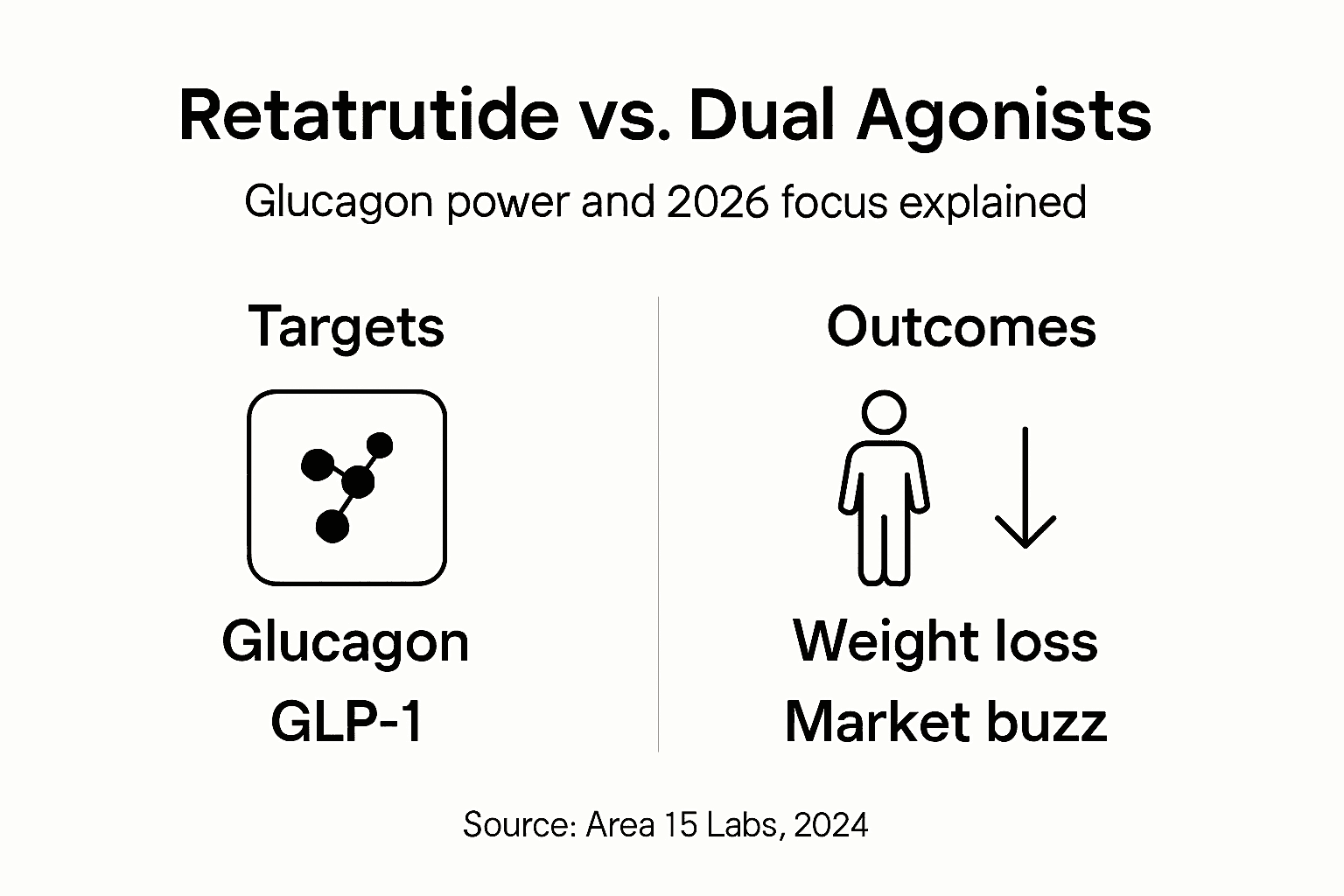
The following table summarizes key scientific and market drivers shaping glucagon-focused research strategies in 2026:
| Driver | Scientific Rationale | Market Impact |
|---|---|---|
| Tissue-Specific Signaling | Enables targeted therapies | Promotes new drug classes |
| Energy Expenditure Insights | Improves metabolic outcomes | Addresses obesity epidemic |
| Multi-Receptor Approaches | Enhances intervention success | Attracts pharma investment |
| Glucagon’s Central Role | Guides holistic metabolic care | Spurs competitive R&D |
Pro tip: When tracking emerging medical research, pay attention to paradigm shifts that challenge existing scientific assumptions about fundamental biological mechanisms.
Risks, Limitations, and The Hype vs. Reality
The transformative potential of retatrutide is matched by equally significant scientific caution. Emerging trial data reveal complex safety considerations that demand rigorous evaluation beyond the initial excitement surrounding this triple-agonist compound.
Key potential risks and limitations include:
- Gastrointestinal side effects
- Sensory abnormalities like dysesthesia
- Potential long-term metabolic adaptations
- Individual variability in receptor response
- Need for careful dose escalation strategies
Incretin-based therapies introduce nuanced physiological challenges that extend beyond simple weight reduction metrics. The triple receptor mechanism, while promising, amplifies potential side effect profiles compared to traditional single or dual-receptor interventions.
Scientific excitement must be carefully balanced against comprehensive safety validation, recognizing that breakthrough compounds require meticulous scrutiny.
Clinical observations indicate notable side effect patterns including nausea, vomiting, and gastrointestinal discomfort. These responses are particularly intense due to the compound’s sophisticated multi-receptor engagement, underscoring the importance of personalized medical supervision during research protocols.
Pro tip: Approach emerging medical research with scientific skepticism, always prioritizing comprehensive data analysis over initial enthusiasm.
Own the Future of Metabolic Research with Area 15 Labs
Retatrutide’s breakthrough triple agonist approach is shaking up metabolic studies by targeting glucagon, GLP-1, and GIP receptors all at once. This complexity demands research partners who match that cutting-edge ambition without slowing you down. If you want pure, potent compounds shipped lightning-fast from Texas with zero hassle you are in the right place.
At Area 15 Labs we serve the Citizen Scientist who refuses to settle for boring or slow. Our high-purity reagents undergo rigorous testing because precision matters when exploring powerful peptides like retatrutide and its competitors like tirzepatide. Plus our unique Texas advantage means same-day fulfillment and real US customer support so you can focus on groundbreaking metabolic discovery rather than waiting on overseas shipping.
Discover why researchers demanding speed and swagger choose us as their go-to source for next-gen metabolic tools. Explore our selection and join the no-BS research revolution now at Area 15 Labs. Ready to elevate your metabolic research with the latest triple agonists Check out our Alien Tech & Next-Gen Stacks for exclusive access to high-purity compounds and lightning-fast shipping that your work deserves.
Frequently Asked Questions
What is retatrutide and how does it work?
Retatrutide is a triple receptor agonist that targets three key metabolic receptors: glucagon, GIP, and GLP-1. Its unique mechanism allows it to modulate multiple metabolic pathways simultaneously, leading to enhanced energy expenditure, improved glycemic control, and potentially greater weight management outcomes.
How does retatrutide compare to tirzepatide?
Retatrutide is a triple receptor agonist, while tirzepatide is a dual receptor agonist. This means retatrutide targets GLP-1, GIP, and glucagon receptors, providing a broader metabolic intervention compared to tirzepatide, which only targets GLP-1 and GIP.
What are the potential risks or side effects associated with retatrutide?
Potential risks of retatrutide include gastrointestinal side effects like nausea and vomiting, sensory abnormalities such as dysesthesia, and possible long-term metabolic adaptations. It’s crucial for individuals to engage in careful dose escalation and personalized medical supervision during trials.
Why is glucagon gaining attention in metabolic research?
Glucagon is being recognized as a critical player in metabolic health beyond its traditional role as a counter-regulatory hormone. Its potential in regulating energy expenditure, influencing metabolic rate, and modulating lipid metabolism makes it a focal point for innovative therapeutic interventions in metabolic disorders.