

Predicting peptide binding affinity in laboratory settings can feel slow and unpredictable, especially when traditional methods demand extensive computational resources and time. With the rise of generative AI models like Peptide-GPT, Texas researchers now gain access to faster, data-driven solutions for efficient peptide design and prediction. This article explores how cutting-edge machine learning techniques are reshaping the peptide research process, highlighting practical strategies to accelerate discovery and improve accuracy.
Table of Contents
- What Is Generative AI in Peptide Research
- Types of Peptide Binding Prediction Methods
- Area 15 Labs’ AI Pipeline Explained
- Advantages of Instant Affinity Prediction
- Risks, Limitations, and Required Safeguards
- Comparing AI-Driven vs. Traditional Approaches
Key Takeaways
| Point | Details |
|---|---|
| Generative AI Accelerates Peptide Research | Advanced machine learning techniques enable rapid design and prediction of peptide sequences, significantly shortening drug discovery timelines. |
| Hybrid Prediction Models Enhance Accuracy | Combining traditional and machine learning methods improves predictive capabilities in peptide binding interactions, allowing for more nuanced understanding. |
| AI-Powered Pipelines Optimize Design | Modular AI pipelines can efficiently generate and filter peptide candidates, resulting in faster validation and prioritization of therapeutic options. |
| Ethical Considerations are Essential | Implementing robust safeguards and ethical guidelines is crucial to address potential biases and risks associated with AI in peptide research. |
What Is Generative AI in Peptide Research
Generative AI represents a groundbreaking frontier in peptide research, enabling scientists to rapidly design and predict novel molecular structures with unprecedented precision. By leveraging advanced machine learning techniques, these sophisticated algorithms can autonomously generate peptide sequences with specific biological properties, dramatically accelerating the discovery process.
The core mechanism of generative AI in peptide research involves complex computational models that process and analyze biological sequence data. Advanced machine learning methods like generative adversarial networks and variational autoencoders can now autonomously predict peptide functionalities by understanding intricate molecular interactions.
Key capabilities of generative AI in peptide research include:
- Designing therapeutic peptides with targeted biological activities
- Predicting molecular structures and potential interactions
- Generating novel peptide sequences with specific characteristics
- Accelerating drug discovery timelines
- Reducing experimental trial-and-error processes
Moreover, specialized language models such as Peptide-GPT have emerged, which utilize natural language processing techniques to generate peptide sequences with precise properties. These models can evaluate complex characteristics like hemolytic activity, solubility, and non-fouling characteristics through sophisticated bioinformatics-driven evaluation pipelines.
Pro tip: When exploring generative AI for peptide research, focus on understanding the underlying machine learning architectures and their specific strengths in molecular prediction.
Types of Peptide Binding Prediction Methods
Peptide binding prediction represents a critical frontier in computational biology, offering researchers innovative approaches to understanding molecular interactions. Computational methods for predicting protein-peptide interactions have evolved dramatically, transitioning from traditional physics-based techniques to sophisticated machine learning algorithms that can rapidly analyze complex molecular landscapes.
Traditionally, researchers relied on two primary categories of peptide binding prediction methods:
Physics-based approaches:
- Molecular docking simulations
- Molecular dynamics calculations
- Detailed structural interaction analyses
Machine learning techniques:
- Sequence data processing
- Structural feature extraction
- Advanced predictive modeling
Modern computational strategies now combine multiple techniques to enhance predictive accuracy. Deep learning models leveraging biological datasets can now address complex challenges like peptide flexibility and limited structural information, dramatically improving researchers’ ability to predict molecular interactions.
The emergence of hybrid prediction models represents a significant breakthrough, integrating structural motifs, language model embeddings, and advanced machine learning architectures to generate more precise and nuanced predictions about peptide binding characteristics.
Pro tip: When selecting a peptide binding prediction method, prioritize models that can effectively handle molecular complexity and provide robust, reproducible results.
Here’s a comparison of traditional, machine learning, and hybrid peptide binding prediction methods:
| Approach Type | Data Utilization | Predictive Strengths | Common Limitation |
|---|---|---|---|
| Traditional | Structural/physical data | Detailed interaction simulations | Slow and resource-intensive |
| Machine Learning | Sequence and feature data | Rapid modeling of sequence patterns | Needs large, curated datasets |
| Hybrid/Deep Models | Combined data sources | Integrates structure and function | Complex interpretation |
Area 15 Labs’ AI Pipeline Explained
Area 15 Labs has engineered a cutting-edge AI pipeline that transforms peptide research through sophisticated computational strategies. AI-powered de novo peptide design represents a revolutionary approach to molecular discovery, enabling researchers to explore unprecedented sequence spaces with remarkable efficiency.
The AI pipeline comprises several critical stages:
Initial Generation Phase:
- AI models conditioned on target structures
- Generative algorithms exploring molecular configurations
- Rapid sequence space exploration
Advanced Filtering Modules:
- Interaction quality assessment
- Solubility prediction
- Toxicity screening
- Binding affinity evaluation
Through an iterative machine learning approach, the pipeline dynamically refines potential peptide candidates. By integrating structural predictions with sophisticated classifiers, Area 15 Labs dramatically reduces experimental validation timelines and resource consumption.

The modular architecture of their AI pipeline allows for unprecedented flexibility, enabling researchers to rapidly iterate and prioritize peptides with the highest therapeutic potential. This approach transforms traditional peptide research by introducing an intelligent, data-driven methodology that accelerates scientific discovery.
Pro tip: When evaluating AI-driven peptide design pipelines, focus on the comprehensiveness of filtering modules and the system’s ability to handle molecular complexity.
Advantages of Instant Affinity Prediction
Instant affinity prediction represents a groundbreaking technological leap in peptide research, offering unprecedented speed and accuracy in molecular screening. Rapid binding affinity predictions enable researchers to explore molecular interactions thousands of times faster than traditional computational methods, revolutionizing the early stages of scientific discovery.
Key advantages of instant affinity prediction include:
Computational Efficiency:
- Thousands of times faster than traditional simulations
- Reduces computational resource requirements
- Enables large-scale screening protocols
Research Acceleration:
- Expedites high-throughput screening processes
- Allows exploration of broader peptide sequence spaces
- Facilitates rapid candidate optimization
Efficient peptide candidate identification transforms the research landscape by dramatically reducing experimental costs and development timelines. Researchers can now systematically evaluate potential molecular interactions with unprecedented precision and speed, shifting from time-consuming traditional methods to agile, data-driven approaches.
The transformative potential of instant affinity prediction extends beyond speed, fundamentally reimagining how scientists approach molecular design. By providing near-instantaneous insights into potential binding characteristics, researchers can make more informed decisions earlier in the discovery process.
Pro tip: When implementing instant affinity prediction, validate model predictions against experimental data to establish reliable performance metrics.
Risks, Limitations, and Required Safeguards
Artificial intelligence in peptide research represents a powerful yet complex technological frontier, demanding rigorous ethical considerations and comprehensive risk management strategies. Emerging biosecurity concerns underscore the critical importance of implementing robust safeguards to prevent potential misuse of advanced computational techniques.
Key risks and limitations in AI-driven peptide research include:
Data and Methodology Risks:
- Potential algorithmic biases
- Incomplete biological knowledge representation
- Limited predictive accuracy in complex scenarios
Ethical and Security Concerns:
- Dual-use technology vulnerabilities
- Potential for unintended harmful applications
- Challenges in maintaining computational transparency
The implementation of comprehensive safeguards becomes paramount in mitigating these potential risks. Rigorous validation protocols must be established to ensure the reliability and integrity of AI-generated peptide predictions, including extensive cross-referencing with experimental data and continuous model refinement.
Transparency and ethical guidelines are essential in navigating the complex landscape of AI-driven peptide research. By developing robust frameworks that prioritize responsible innovation, researchers can harness the transformative potential of these technologies while maintaining stringent safety standards.
Pro tip: Develop a comprehensive ethical review process that includes independent oversight and regular computational model audits to minimize potential research risks.
Comparing AI-Driven vs. Traditional Approaches
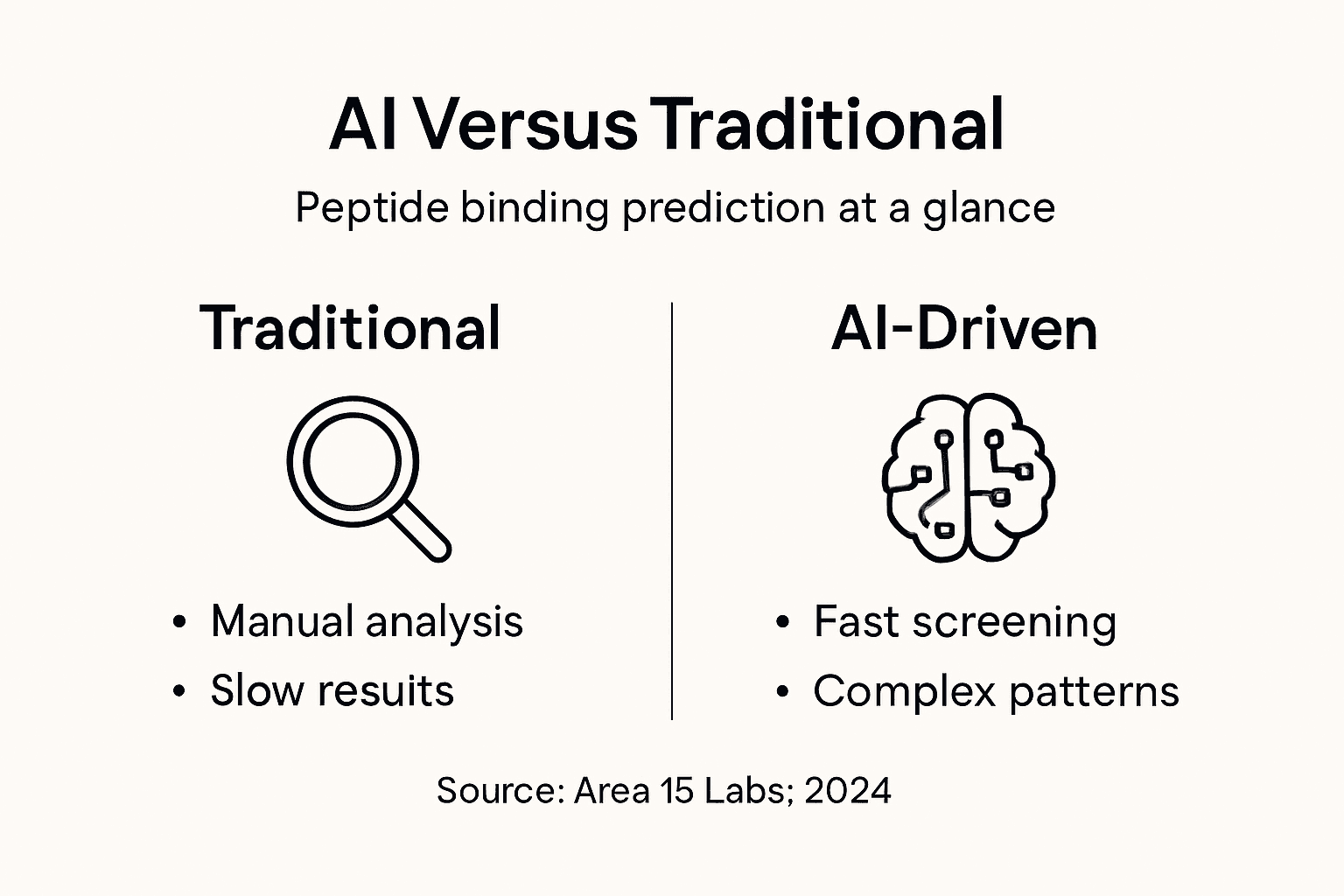
The landscape of peptide research is undergoing a transformative shift, with advanced computational methods challenging traditional research paradigms. AI-driven approaches are rapidly emerging as powerful alternatives to conventional experimental techniques, offering unprecedented speed and exploration capabilities in molecular research.
Key comparative characteristics include:
Traditional Approaches:
- Mechanistic molecular docking
- Physically intensive simulations
- Limited sequence exploration
- High computational resource requirements
AI-Driven Methods:
- Rapid sequence space analysis
- Enhanced prediction accuracy
- Lower computational overhead
- Ability to integrate multiple data types
Deep learning models in peptide research demonstrate remarkable advantages in processing complexity, enabling researchers to navigate molecular interactions with significantly reduced time and resource investments. These AI techniques excel by learning from extensive datasets, providing insights that traditional methods struggle to generate.
The computational efficiency of AI-driven approaches represents a paradigm shift, allowing researchers to rapidly screen and evaluate potential molecular candidates with unprecedented precision. By leveraging machine learning algorithms, scientists can now explore molecular configurations that would have been prohibitively time-consuming or impossible using traditional screening methods.
Pro tip: Always validate AI-generated predictions through experimental cross-referencing to ensure computational insights translate accurately to real-world molecular behaviors.
To summarize, here’s how AI-driven and traditional peptide research approaches differ in key aspects:
| Dimension | Traditional Approach | AI-Driven Method |
|---|---|---|
| Speed | Slow, sequential | Fast, parallelized analysis |
| Data Integration | Limited sources | Multi-source, multi-modal |
| Research Scope | Narrow, hypothesis-driven | Broad, exploratory |
| Predictive Capabilities | Mechanistic, limited scale | Adaptive, handles complex patterns |
Accelerate Your Peptide Research with Area 15 Labs’ No-BS AI-Driven Solutions
Generative AI is transforming peptide binding prediction by slicing through complexity and cutting down research timelines. If you are focused on designing targeted peptides, predicting molecular interactions, or speeding up discovery while keeping top-tier purity and integrity, you need a partner that matches your pace and intensity. Area 15 Labs is that partner. Our Texas-based command center brings you lightning-fast shipping combined with rigorously tested, high-purity peptides ready for advanced machine learning workflows and experimental validation.
Why settle for slow, overseas suppliers when you can get same-day fulfillment right from Texas? Our modular approach echoes the article’s focus on combining generative AI with thorough filtering so you can confidently advance your research with:
- Verified purity that meets stringent quality standards like the big industry names
- Rapid delivery that respects the urgent deadlines in AI-driven peptide design
- Transparent support with real experts who get the science and the hustle
Ready to level up your peptide research pipeline with a brand that delivers speed and swagger? Explore our official laboratory research site for high-purity compounds tailored to the molecular innovation frontier. Dive deeper into how cutting-edge AI accelerates discovery and start experiencing research without the wait.
Don’t let slow shipping and sketchy suppliers hold your science back. Choose the no-nonsense, high-velocity, and trustworthy Texas advantage today.
Frequently Asked Questions
What is generative AI in peptide binding prediction?
Generative AI in peptide binding prediction involves advanced machine learning techniques that autonomously design and predict peptide sequences with specific biological properties, significantly accelerating the drug discovery process.
How does Area 15 Labs utilize AI for peptide design?
Area 15 Labs employs a sophisticated AI pipeline that includes initial generation of peptide candidates and advanced filtering modules to assess properties like interaction quality, solubility, and toxicity, thereby streamlining the peptide research process.
What are the advantages of using instant affinity prediction in peptide research?
Instant affinity prediction allows researchers to conduct rapid binding affinity analyses, enabling them to explore molecular interactions much faster than traditional methods, which helps to expedite the drug discovery timeline.
What are the key risks associated with using AI in peptide research?
The main risks include algorithmic biases, incomplete biological representations, and ethical concerns regarding the potential misuse of technology. It’s crucial to implement robust validation protocols and transparent practices to mitigate these risks.