

Research peptide sourcing has never felt more complex for American citizen scientists. Facing the fast-approaching FDA 2026 update, you need more than just basic knowledge—you need real clarity and reliable partners. With elevated safety protocols, rigorous documentation, and strict purity demands set to reshape the field, understanding the changes and accessing trustworthy supplies from Texas is more crucial than ever. FDA’s 2026 standards for research peptides will demand transparency, speed, and documented quality at every turn.
Table of Contents
- Understanding FDA’s 2026 Research Peptide Update
- Key Peptide Types And Their Regulatory Status
- New Compliance Requirements And Labeling Rules
- Legal Risks For Labs And Researchers
- Texas Advantage: Speed, Transparency, And Trust
Key Takeaways
| Point | Details |
|---|---|
| 2026 FDA Guidelines Transformation | The FDA’s updates necessitate robust compliance systems for enhanced research standards in peptide investigations. |
| Documentation Requirements | Researchers must provide comprehensive documentation encompassing molecular characterization and potential drug interactions. |
| Legal Risks and Compliance | Institutions face significant legal exposure under stricter oversight, requiring proactive compliance and risk management strategies. |
| Texas as an Advantageous Hub | Leveraging Texas advantages enables expedited regulatory processes and efficient research peptide sourcing. |
Understanding FDA’s 2026 research peptide update
The FDA’s 2026 regulatory landscape for research peptides represents a transformative moment in scientific oversight. Emerging from comprehensive review processes, these updates signal a significant shift in how laboratories and researchers will approach peptide-based investigations. The clinical pharmacology guidance introduces nuanced frameworks that promise to elevate research standards.
Key updates in the FDA’s 2026 directive focus on several critical domains of peptide research regulation:
- Enhanced safety protocols for laboratory handling
- More rigorous documentation requirements
- Stricter purity and characterization standards
- Comprehensive immunogenicity assessment guidelines
- Advanced pharmacokinetic evaluation procedures
Research institutions must prepare for these transformative changes by implementing robust compliance mechanisms. The FDA’s draft guidance emphasizes a holistic approach to peptide research, requiring investigators to demonstrate comprehensive understanding of molecular interactions, potential drug interference, and long-term stability considerations.
The following table summarizes how the 2026 FDA peptide guidance impacts common research activities:
| Research Activity | Pre-2026 Approach | 2026+ FDA Guidance |
|---|---|---|
| Safety Documentation | General records kept | Specific protocol audits |
| Molecular Characterization | Basic structural details | In-depth profiling needed |
| Purity Standards | Standard analysis | Advanced verification |
| Data Transparency | Selective reporting | Full lifecycle tracking |
| Legal Accountability | Warnings and fines | Immediate enforcement |
The regulatory landscape now demands unprecedented transparency. Researchers will need to provide detailed documentation covering every aspect of peptide development, from initial molecular design through comprehensive testing protocols. Draft guidance recommendations indicate that simply meeting minimum standards will no longer suffice—excellence and meticulous documentation are now the baseline expectations.
Pro tip: Invest in comprehensive documentation systems and quality management software to streamline compliance with the new FDA requirements.
Key peptide types and their regulatory status
Research peptides encompass a diverse landscape of molecular structures with distinct regulatory implications. The FDA’s comprehensive synthetic peptide classification framework provides critical guidance for researchers navigating the complex regulatory environment. Understanding these classifications is essential for maintaining compliance and ensuring rigorous scientific standards.
Key peptide types subject to FDA regulatory scrutiny include:
- Recombinant peptides: Produced through genetic engineering techniques
- Synthetic peptides: Chemically synthesized in laboratory environments
- Native peptides: Naturally occurring molecular structures
- Modified peptides: Chemically altered versions of original molecular sequences
- Bioengineered peptides: Advanced molecular constructs with engineered properties
The regulatory status of these peptide types varies significantly based on their origin, complexity, and potential research applications. Researchers must carefully document the molecular characterization, purity standards, and potential impurities for each peptide type. The FDA requires detailed documentation demonstrating comprehensive understanding of molecular interactions, potential interference mechanisms, and long-term stability considerations.
Each peptide classification carries unique regulatory challenges. Recombinant peptides, for instance, demand more stringent documentation due to their complex production processes, while synthetic peptides require extensive purity verification. Institutions must develop robust quality management systems that can adapt to these nuanced regulatory requirements and provide transparent, comprehensive documentation of research methodologies.
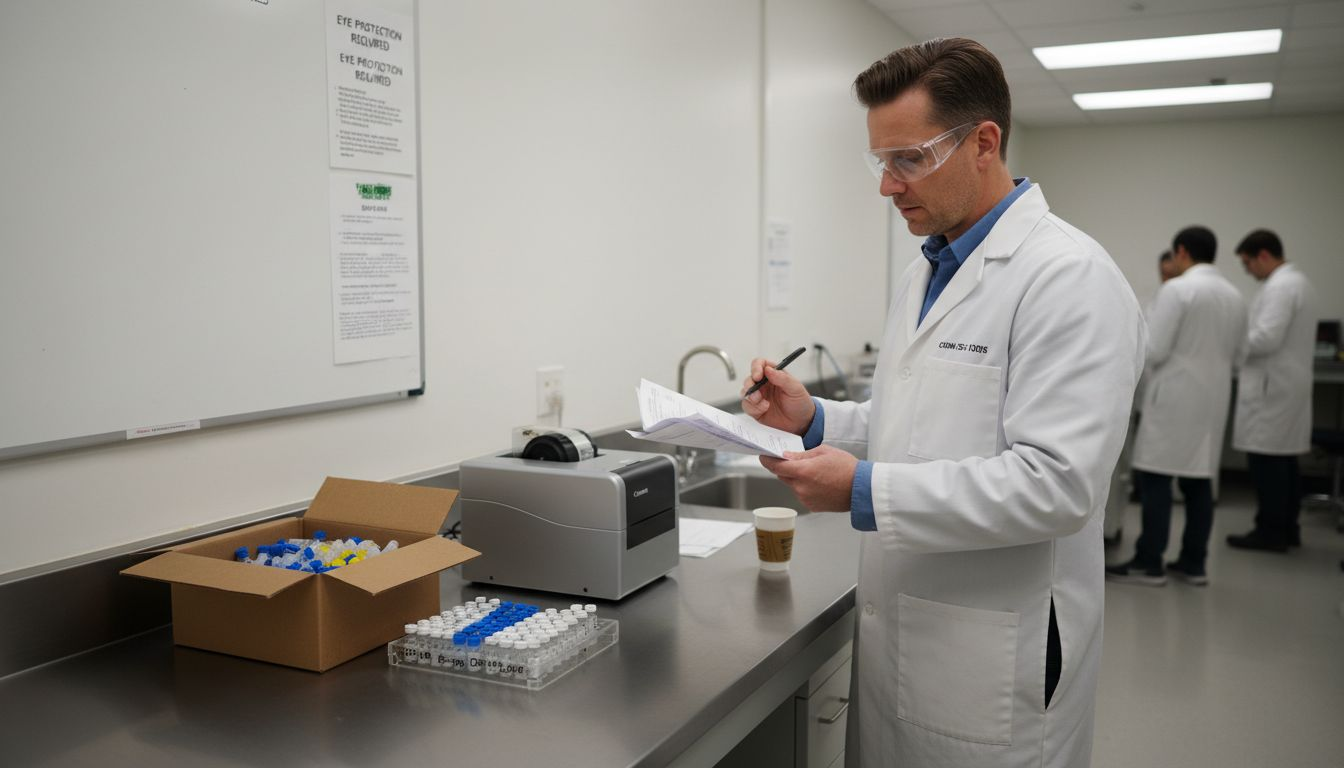
Here is a quick reference to regulatory challenges by peptide type:
| Peptide Type | Main Regulatory Focus | Adaptation Required |
|---|---|---|
| Recombinant | Traceability documentation | Complex tracking systems |
| Synthetic | Purity verification | Enhanced lab analytics |
| Native | Source authentication | Chain-of-custody logs |
| Modified | Impurity risk assessment | Multi-phase reviews |
| Bioengineered | Stability and interaction | Specialized test panels |
Pro tip: Develop a standardized documentation template that addresses FDA requirements for each specific peptide type to streamline regulatory compliance efforts.
New compliance requirements and labeling rules
The FDA’s 2026 update introduces comprehensive labeling requirements for peptide products that demand unprecedented levels of transparency and scientific precision. Researchers must now navigate a complex landscape of documentation standards that go far beyond traditional reporting mechanisms.
Critical new compliance requirements include:
- Molecular characterization documentation
- Detailed impurity profile reporting
- Comprehensive drug interaction potential assessments
- Immunogenicity risk evaluation
- Precise stability data tracking
Research institutions must develop robust systems to capture and communicate these intricate details. The new labeling rules require granular information about molecular structure, potential interactions, and long-term chemical stability. Every label must now serve as a comprehensive molecular passport, providing researchers with unprecedented insight into the peptide’s fundamental characteristics.
The FDA’s updated guidelines mandate a multilayered approach to documentation. Labels must now include not just basic molecular information, but also detailed assessments of potential research interactions, environmental sensitivities, and comprehensive molecular behavior profiles. This shift represents a fundamental transformation in how research peptides are tracked, documented, and understood within scientific ecosystems.
Pro tip: Invest in advanced laboratory information management systems that can automatically generate FDA-compliant documentation and tracking protocols for research peptides.
Legal risks for labs and researchers
Research institutions face increasingly complex legal challenges under the FDA’s 2026 regulatory framework. Laws enforced by FDA now impose stringent requirements that transform how laboratories approach peptide research documentation and compliance.
Key legal risks for research facilities include:
- Regulatory violations resulting in financial penalties
- Potential criminal prosecution for non-compliance
- Immediate facility shutdown risks
- Mandatory research data seizure
- Professional licensing revocation
The Federal Food, Drug, and Cosmetic Act provides the primary legal foundation for these enhanced oversight mechanisms. Research institutions must develop comprehensive compliance strategies that go beyond traditional documentation practices. Every aspect of peptide research—from molecular characterization to storage protocols—now requires meticulous legal scrutiny.
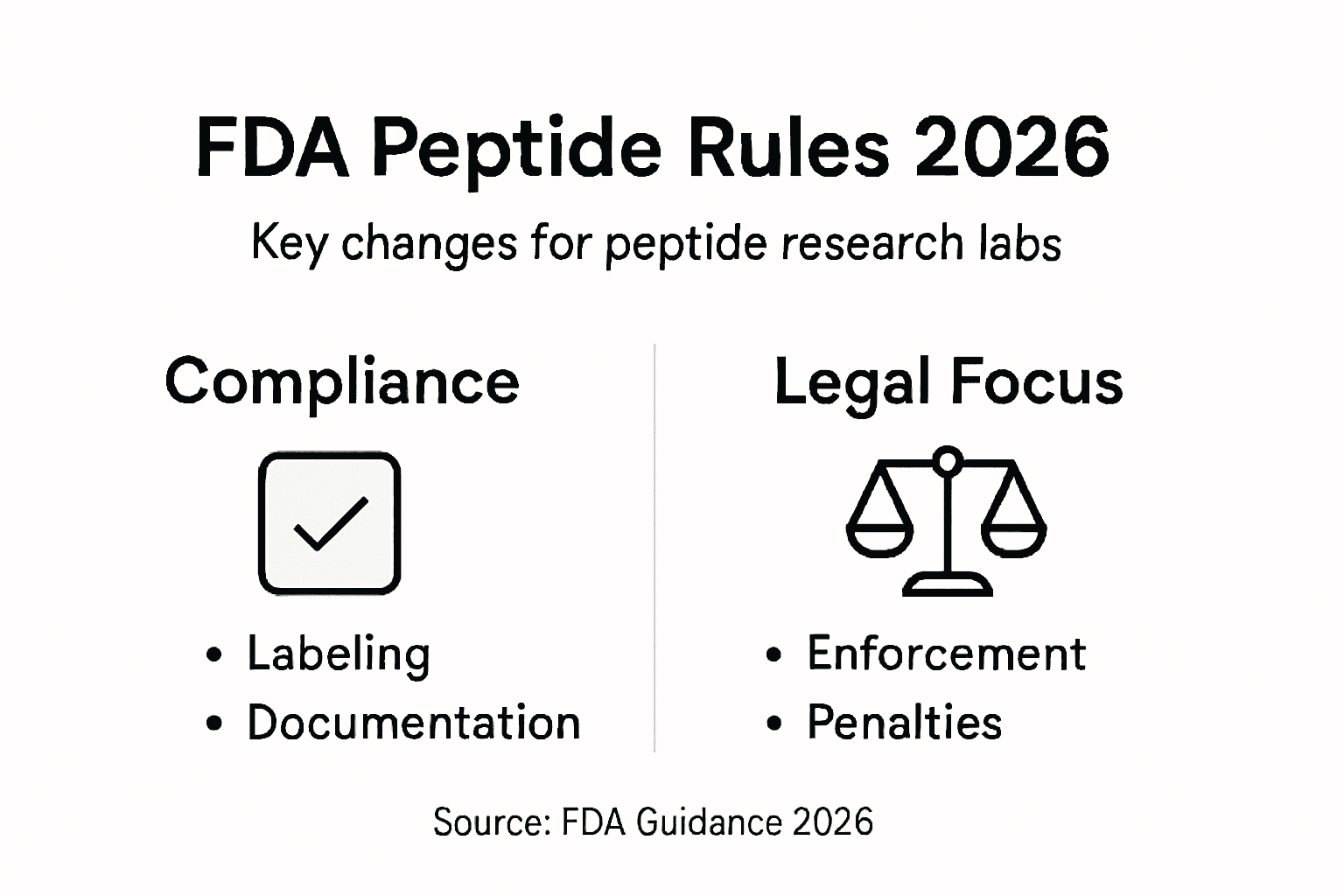
Researchers must recognize that legal exposure extends far beyond simple documentation. The FDA’s 2026 guidelines introduce a zero-tolerance approach to regulatory infractions, with penalties ranging from substantial monetary fines to potential criminal charges. Laboratories must implement robust internal audit systems, maintain transparent research protocols, and develop proactive compliance mechanisms to mitigate these significant legal risks.
Pro tip: Consult with specialized legal counsel experienced in FDA regulatory compliance to develop a comprehensive risk mitigation strategy for your research institution.
Texas advantage: Speed, transparency, and trust
Area 15 Labs leverages the powerful business-friendly Texas environment to revolutionize research peptide sourcing and distribution. Our Texas-based operation provides an unparalleled advantage in navigating the complex 2026 FDA regulatory landscape, delivering unprecedented speed and reliability for scientific research.
Key advantages of our Texas-based approach include:
- Expedited regulatory interactions
- Rapid shipping and logistics
- Transparent documentation processes
- Direct, no-nonsense communication
- Strict quality control standards
Texas offers a unique ecosystem for scientific innovation, characterized by streamlined governmental processes and a commitment to institutional transparency. Unlike research facilities in more bureaucratic states, our Texas headquarters enables lightning-fast turnaround times, ensuring researchers receive high-purity peptide compounds with minimal administrative friction. This approach transforms traditional supply chain bottlenecks into a seamless, efficient research experience.
Our commitment to trust extends beyond geographical advantages. By maintaining rigorous third-party testing, comprehensive molecular characterization, and crystal-clear documentation, Area 15 Labs sets a new standard for research peptide providers. We don’t just ship compounds; we deliver scientific confidence backed by the robust, no-compromise spirit of Texas.
Pro tip: Prioritize research partners with localized, transparent operations that can demonstrate rapid response capabilities and comprehensive quality assurance.
Navigate FDA 2026 Peptide Rules with Texas-Speed Clarity
The FDA’s 2026 updates place strict demands on peptide research transparency, documentation, and safety compliance. Meeting new expectations for molecular characterization, purity verification, and legal accountability is no small task. Research labs face more audits, faster enforcement, and the need for detailed lifecycle data on every peptide type. This means choosing the right research partner is critical to keep your projects moving without regulatory headaches.
At Area 15 Labs, we get it. We are the “No-BS” choice shipped straight from the heart of Texas, delivering lightning-fast peptides with verified purity and crystal-clear documentation to keep you well within FDA guidelines. Our alien-inspired, no-fluff aesthetic matches the science-forward mindset of today’s Citizen Scientists who demand speed, transparency, and trust—not delays and legal gray areas. From recombinant to bioengineered peptides, we supply rigorously tested compounds backed by advanced quality systems designed for the 2026 research landscape.
Ready to leave slow overseas shipping and regulatory guesswork behind? Explore our selection and experience research with swagger at Area 15 Labs. Visit our landing page now to access high-purity peptide blends and expert guidance that align with the new FDA standards. Step into the future of peptide research today.
Frequently Asked Questions
What are the key updates in the FDA’s 2026 guidance for research peptides?
The FDA’s 2026 updates emphasize enhanced safety protocols, rigorous documentation, stricter purity and characterization standards, comprehensive immunogenicity assessments, and advanced pharmacokinetic evaluation procedures for peptide research.
How do the new compliance requirements affect labeling for peptide products?
The 2026 updates mandate detailed labeling that includes molecular characterization, impurity profiles, drug interaction assessments, immunogenicity evaluations, and stability data. Labels must provide comprehensive information about the peptide’s characteristics and potential interactions.
What are the main legal risks for research institutions under the FDA’s 2026 regulations?
Research institutions face several legal risks, including regulatory violations leading to financial penalties, potential criminal prosecution for non-compliance, and risks of facility shutdown or data seizure. Adopting robust compliance strategies is crucial to mitigate these risks.
How can research facilities prepare for the changes introduced by the FDA in 2026?
Research facilities should develop comprehensive compliance mechanisms, invest in quality management systems, enhance documentation practices, and consult legal counsel experienced in FDA regulations to ensure adherence to the new guidelines.