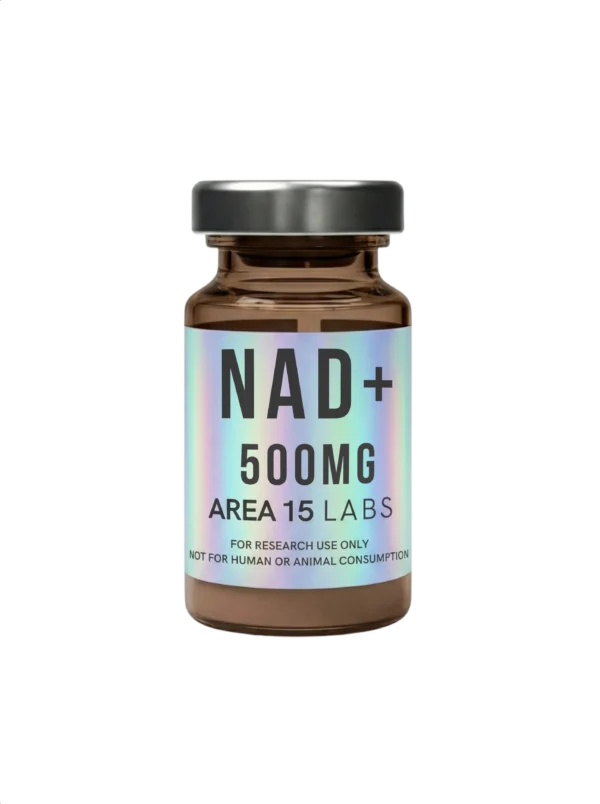
🧪 NAD+ 500mg: Metabolic Research Profile
Nicotinamide Adenine Dinucleotide (NAD+) is a fundamental coenzyme found in all living cells, serving as a primary scaffold for metabolic research. Unlike synthetic analogues, NAD+ is a naturally occurring dinucleotide that functions as a critical redox cofactor. Researchers investigating NAD+ 500mg focus on its ability to modulate the NAD+/NADH ratio, which serves as a metabolic sensor for the redox state of the cell and regulates energy flux through the citric acid cycle.
Redox Cofactor Dynamics: The NAD+ 500mg coenzyme is primarily researched for its role as an electron acceptor in glycolysis and the Krebs cycle, facilitating the conversion of nutrients into cellular energy (ATP).
Sirtuin-Mediated Metabolic Regulation: Studies on NAD+ 500mg indicate it is a mandatory substrate for SIRT1 and SIRT3, which regulate mitochondrial biogenesis and lipid metabolism through the deacetylation of key metabolic enzymes.
ADP-Ribosyltransferase Activity: The NAD+ 500mg formulation is investigated for its consumption by CD38 and PARP enzymes, which impacts systemic NAD+ availability and influences metabolic signaling pathways.
Mitochondrial Homeostasis: Laboratory evaluations of NAD+ 500mg explore its role in the “mitochondrial-nuclear communication” pathway, essential for maintaining metabolic health during cellular stress.
🔬 Key Research Applications of NAD+ 500mg
This specific NAD+ 500mg concentration is a primary focus for research models investigating:
🧬 Metabolic Syndrome Signaling: Investigations into how NAD+ replenishment affects insulin sensitivity and lipid profiles in animal models of metabolic dysfunction.
🧠 Bioenergetic Flux: Research into NAD+ 500mg includes evaluations of the mitochondrial respiratory chain efficiency and the prevention of metabolic “bottlenecks” in high-energy tissues.
🛡️ Oxidative Stress Modulation: Investigations into the biochemical properties of NAD+ 500mg focus on its capacity to bolster antioxidant defenses by maintaining the pool of NADPH.
🔥 Thermogenesis & Energy Expenditure: Evaluation of NAD+ 500mg for its influence on brown adipose tissue (BAT) activation and the regulation of basal metabolic rate.
✅ NAD+ 500mg Product Specifications
| Specification | Detail |
| Product Name | NAD+ 500mg |
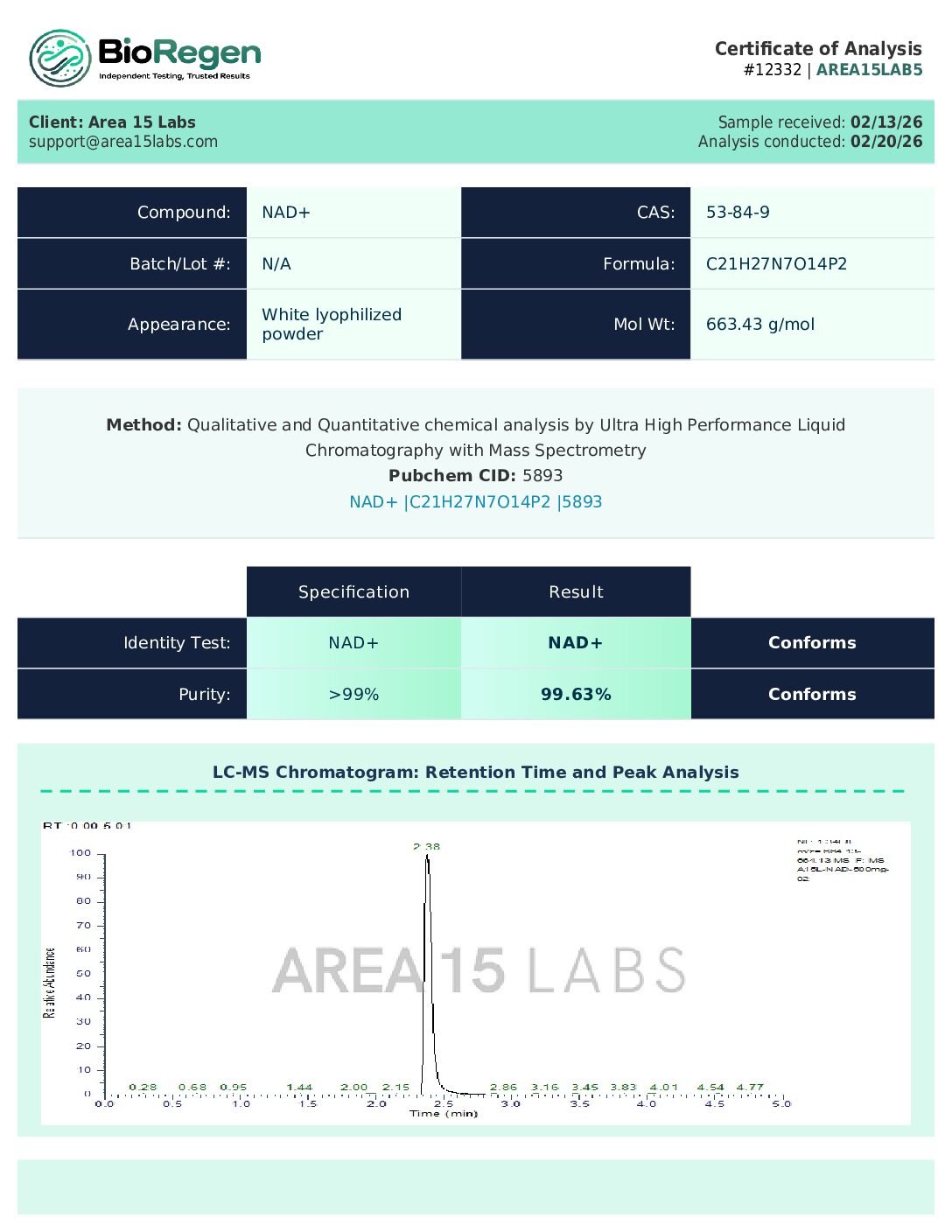
| Molecular Formula | C21H27N7O14P2 |
| Molecular Weight | 663.43 g/mol |
| Concentration | 500 mg per vial |
| CAS Number | 53-84-9 |
| Appearance | White to off-white lyophilized powder |
| Solubility | Soluble in sterile water, PBS, or saline |
❄️ NAD+ 500mg Product Care & Handling Guidelines
Proper storage is essential to prevent the hydrolytic degradation of the NAD+ 500mg coenzyme into nicotinamide and ADP-ribose.
Unreconstituted (Powder): Store NAD+ 500mg in a desiccated environment. Long-term storage is optimal at -20°C to maintain biochemical stability for up to 2 years.
Reconstituted (Liquid): Refrigerate NAD+ 500mg at 2°C to 8°C. Because NAD+ is highly sensitive to aqueous degradation, researchers typically prepare fresh solutions or use them within 24–48 hours for maximum experimental accuracy.
Handling Note: NAD+ is sensitive to pH extremes and light. Use buffered solutions to maintain a pH of approximately 7.0–7.5 and avoid prolonged exposure to intense light sources.
📚 References & Resources
NCBI PubMed: NAD+ Metabolism and its Role in Metabolic Diseases
PubChem: Nicotinamide Adenine Dinucleotide (NAD+) Compound Summary
⚠️ Laboratory Research Use Only Notice
The NAD+ 500mg product is strictly intended for in vitro and non-clinical laboratory research purposes only. It is not for human consumption, veterinary diagnostic, or therapeutic use. Statements regarding the metabolic potential of NAD+ 500mg have not been evaluated by the FDA. Researchers must follow established laboratory safety and ethical standards.