

Tired of watching thoughtful science content disappear while dance trends rack up millions on TikTok? The platform’s 2026 algorithm now flips the script, rewarding authentic, niche-specific videos and prioritizing watch time over raw views for American creators. For citizen scientists eager to share peptide breakthroughs, understanding this shift to interest-based recommendations and the critical first-hour engagement means your research has a real shot at going viral.
Table of Contents
- TikTok’s 2026 Algorithm: Core Shifts and Rules
- Viral Formatting for Research Content Compliance
- Niche SEO: Peptide Keywords That Actually Rank
- Visual Storytelling: Algorithms Vs. Peptide Safety
- Tirzepatide Vs Semaglutide: Research-Only Comparison
- Radical Transparency and Community Trust Strategies
Key Takeaways
| Point | Details |
|---|---|
| TikTok’s Algorithm Shift | In 2026, TikTok transitioned to an interest-driven algorithm that focuses on content engagement rather than traditional metrics like view counts. |
| Content Evaluation Process | The algorithm employs a three-phase evaluation to prioritize engagement, rewarding genuine audience connection and niche content. |
| Research Content Strategies | Academics must craft bite-sized, visually compelling narratives to effectively communicate complex ideas on TikTok, enhancing accessibility and engagement. |
| Building Community Trust | Transparency and ethical communication are crucial; creators need to foster genuine dialogue and maintain clear, consistent messaging to build trust with audiences. |
TikTok’s 2026 Algorithm: Core Shifts and Rules
TikTok’s algorithm has undergone a radical transformation in 2026, shifting from traditional social media metrics to a sophisticated, interest-driven recommendation system. TikTok’s new algorithm strategy now operates through a multi-tiered testing mechanism that fundamentally reimagines content distribution.
The new algorithmic approach features a three-stage content evaluation process designed to identify and amplify truly engaging videos:
- First Phase: 200-view test measuring initial watch completion and engagement
- Second Phase: 2,000-view performance check with stricter engagement requirements
- Final Phase: Viral potential assessment based on sustained audience interaction
US investor ownership has dramatically reshaped content prioritization, with several critical changes emerging. The platform now heavily emphasizes watch time over raw view counts, creating a more nuanced content ecosystem that rewards genuine audience connection.
Key algorithmic priorities have shifted dramatically, including:
- Prioritizing niche-specific content
- Valuing authentic human creators
- Penalizing AI-generated videos
- Rewarding longer video formats (60-180 seconds)
The most significant transformation involves moving from a social graph to an interest graph model. This means TikTok now focuses more on matching content with viewer interests rather than relying solely on existing social connections. Creators must now optimize their content for precise timing and targeted audience engagement within the critical first hour of posting.

Pro tip: Focus on creating authentic, niche-specific content between 60-180 seconds that maintains high viewer retention and generates meaningful engagement in the first hour of posting.
Here’s a summary of TikTok’s evolving content evaluation process and its impact on creators:
| Evaluation Phase | Criteria Emphasized | Creator Implication |
|---|---|---|
| Initial 200-view Test | Watch completion, quick engagement | Immediate appeal required |
| 2,000-view Check | Stricter engagement, retention | Sustained audience interest |
| Viral Assessment | Long-term interaction, niche focus | Consistent, authentic content |
Viral Formatting for Research Content Compliance
The landscape of academic communication is rapidly evolving, with academic TikTok usage growing exponentially as researchers discover powerful new channels for knowledge dissemination. Short-form video platforms are transforming how complex scientific concepts are shared, breaking down traditional barriers between specialized research and public understanding.
Successful research content on TikTok requires a strategic approach that balances academic rigor with digital engagement. Key formatting principles include:
- Distilling complex ideas into 60-90 second narratives
- Using clear, concise visual storytelling techniques
- Incorporating dynamic graphics and animation
- Maintaining professional credibility while embracing platform aesthetics
AI-assisted content generation is revolutionizing how researchers create compelling digital narratives. Modern tools now enable academics to automate script development, visual design, and content refinement, dramatically reducing the time and skill required to produce engaging research videos.
Research content creators must master several critical formatting strategies to succeed on TikTok:
- Open with a provocative research question
- Use clear, jargon-free language
- Include visually compelling data visualization
- Close with a memorable key takeaway
- Maintain scientific accuracy throughout
The emerging digital scholarship ecosystem demands that researchers think beyond traditional publication models. By embracing short-form video platforms, academics can democratize knowledge, reach broader audiences, and make complex scientific concepts more accessible and engaging.
Pro tip: Develop a consistent visual brand for your research content, using recognizable color schemes, typography, and graphic elements that signal professionalism while maintaining platform-specific visual appeal.
Niche SEO: Peptide Keywords That Actually Rank
Navigating the complex world of peptide research requires a strategic approach to keyword research techniques that goes beyond traditional search engine optimization. The digital landscape for scientific content demands precision, specificity, and a deep understanding of user intent.
Successful peptide-related keyword strategies involve multiple critical components:
- Identifying ultra-specific long-tail keywords
- Balancing technical accuracy with searchable language
- Understanding researcher search behavior
- Targeting niche scientific communities
The most effective keyword approaches for peptide content require careful consideration of several sophisticated ranking factors:
- Use precise molecular terminology
- Incorporate research-specific modifiers
- Target academic and research-oriented platforms
- Develop content around emerging scientific interests
- Optimize for semantic search capabilities
Keyword selection in the peptide research domain goes far beyond simple volume metrics. Semantic relevance becomes the primary driver, requiring creators to develop content that speaks directly to highly specialized scientific audiences. This means crafting narratives that interweave technical precision with accessible language, creating a bridge between complex molecular research and digestible digital content.
Effective keyword strategies transform technical complexity into discoverable, engaging scientific communication.
Researchers must think beyond traditional keyword density, focusing instead on contextual depth and topic authority. The most successful content will anticipate researcher questions, provide nuanced insights, and demonstrate comprehensive understanding of emerging peptide research trends.
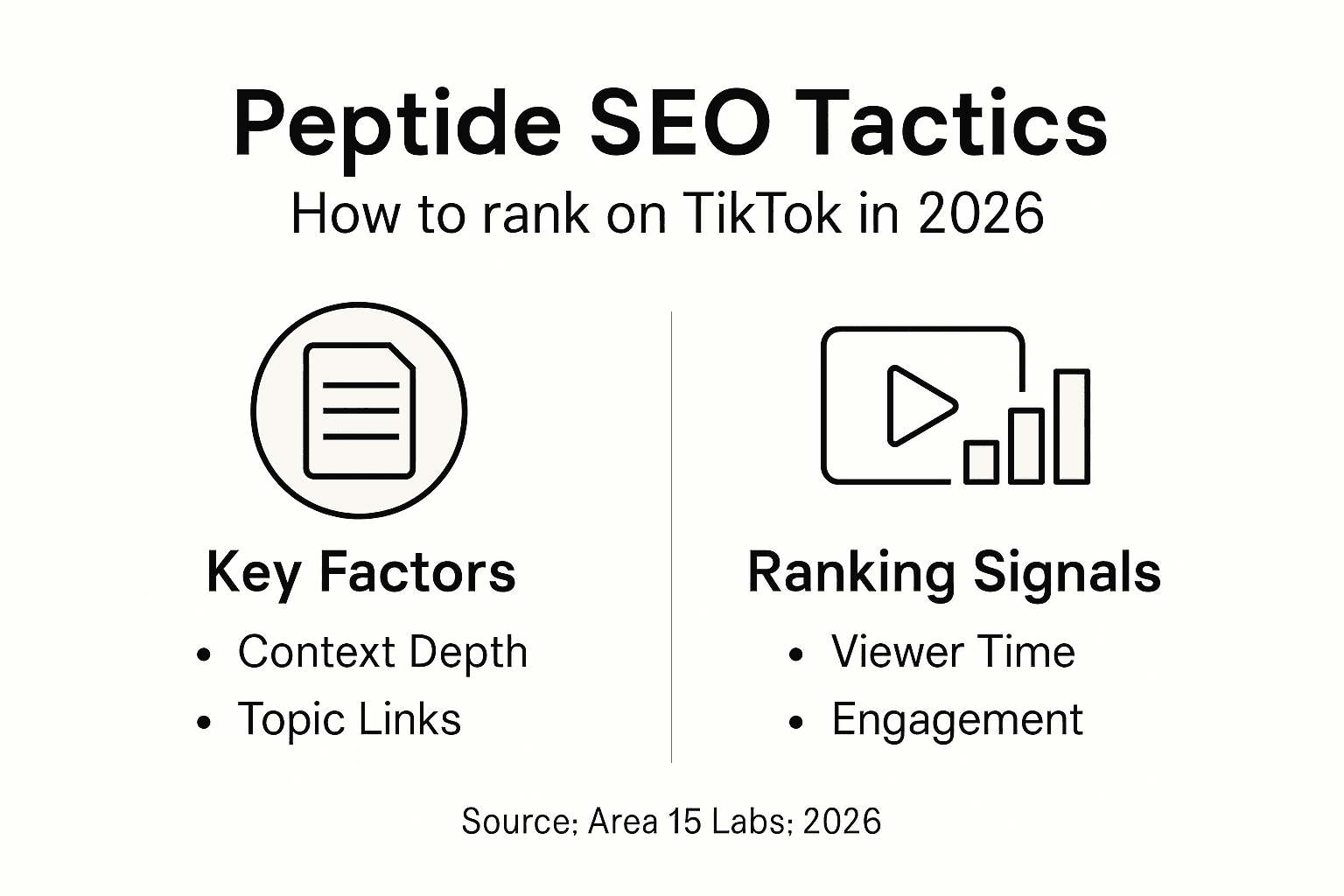
Pro tip: Develop a keyword mapping strategy that connects molecular specificity with broader research interests, using tools that analyze academic search patterns and emerging scientific conversations.
Visual Storytelling: Algorithms vs. Peptide Safety
Creating compelling visual narratives about peptide research requires a nuanced approach to multimodal communication strategies that balance scientific accuracy with algorithmic engagement. The digital landscape demands content that captures attention while maintaining rigorous research standards.
Successful visual storytelling in peptide research involves mastering several key communication techniques:
- Using dynamic facial expressions to convey scientific excitement
- Creating visually compelling molecular graphics
- Balancing technical precision with emotional resonance
- Developing narrative arcs that explain complex concepts
Algorithmic platforms like TikTok prioritize content that demonstrates these critical communication elements:
- Clear, concise visual explanations
- Emotionally intelligent presentation
- High-quality, professional graphics
- Rapid information delivery
- Authentic, human-centered storytelling
The algorithmic landscape demands creators understand the delicate balance between scientific integrity and platform-specific engagement metrics. This means crafting content that speaks both to researcher precision and digital audience expectations, transforming complex molecular research into accessible, shareable narratives.
Visual storytelling in scientific communication is less about simplification and more about strategic translation.
Researchers must become visual communication strategists, understanding how emotional engagement drives algorithmic visibility. The most successful content will seamlessly integrate technical depth with narrative techniques that make molecular science feel both exciting and approachable.
Pro tip: Develop a visual storytelling framework that treats each scientific explanation as a compelling micro-narrative, using emotional signaling and professional graphics to enhance algorithmic discoverability.
Tirzepatide vs Semaglutide: Research-Only Comparison
Understanding the nuanced molecular mechanisms of peptide agonists requires a precise examination of their distinctive research profiles. Cardiovascular disease risk reduction strategies reveal critical differences between tirzepatide and semaglutide that extend beyond simple comparative analysis.
Key molecular distinctions between these peptide compounds include:
- Tirzepatide’s dual GIP/GLP-1 receptor agonism
- Semaglutide’s single GLP-1 receptor mechanism
- Differential receptor binding affinities
- Distinct metabolic interaction profiles
Research methodologies highlight several fundamental comparative characteristics:
- Receptor engagement complexity
- Molecular signaling pathways
- Potential research application domains
- Structural interaction mechanisms
- Potential investigative limitations
Systematic meta-analysis research demonstrates that tirzepatide exhibits a more complex molecular interaction profile compared to semaglutide. The dual-agonist approach suggests potentially more nuanced research opportunities for molecular investigation.
Advanced peptide research demands precision in understanding molecular mechanism variations.
The structural complexity of these peptides presents researchers with intricate investigation pathways. Tirzepatide’s unique dual-receptor engagement mechanism potentially offers more sophisticated research models compared to semaglutide’s more targeted approach.
Pro tip: Focus on understanding the molecular mechanism differences rather than drawing direct comparative conclusions, maintaining a rigorous research-only perspective.
Below is a comparison of tirzepatide and semaglutide research profiles:
| Peptide | Receptor Target(s) | Structural Complexity | Research Potential |
|---|---|---|---|
| Tirzepatide | GIP/GLP-1 dual agonist | More complex interactions | Advanced modeling options |
| Semaglutide | GLP-1 single agonist | Simpler profile | Focused, targeted studies |
Radical Transparency and Community Trust Strategies
In the evolving digital communication landscape, transparency practices have become critical for maintaining audience trust and platform credibility. Modern content creators must navigate complex expectations around openness, authenticity, and ethical communication.
Key strategies for building community trust involve multiple interconnected approaches:
- Providing clear, accessible information
- Demonstrating consistent ethical standards
- Engaging in genuine two-way communication
- Proactively addressing potential concerns
- Maintaining visual and narrative consistency
Successful transparency frameworks require creators to implement several critical practices:
- Develop a consistent communication philosophy
- Create accessible explanation mechanisms
- Maintain rigorous documentation standards
- Foster open dialogue with audience communities
- Regularly review and update transparency protocols
The emerging digital trust ecosystem demands a nuanced approach that goes beyond simple information disclosure. Creators must develop sophisticated communication strategies that balance technical accuracy with genuine human connection.
Radical transparency is not about revealing everything, but about creating meaningful context and understanding.
Modern platforms require creators to develop multi-layered communication models that adapt to rapidly changing audience expectations. This means creating content that is simultaneously precise, accessible, and emotionally resonant.
Pro tip: Develop a consistent transparency framework that treats every piece of content as an opportunity to build trust, using clear language and authentic storytelling techniques.
Master TikTok’s 2026 Algorithm With Research-Ready Peptides From Area 15 Labs
Navigating TikTok’s new interest-driven algorithm means your content has to deliver authentic, niche-specific science in engaging 60 to 180-second videos that hold attention fast and long. The article highlights a shift toward valuing genuine engagement, watch time, and scientific credibility that aligns perfectly with what modern researchers need on their end. That’s where Area 15 Labs steps in as your trusted Texas-based partner, offering high-purity peptides and cutting-edge compounds with lightning-fast same-day shipping designed for the savvy Citizen Scientist.
Don’t get caught waiting weeks on overseas suppliers or working with clinical, boring brands. Area 15 Labs brings the “No-BS” choice from Texas directly to your lab, combining radical transparency with a viral, space-age aesthetic that helps you stand out not just in research but in digital storytelling. Whether you need the latest advanced agonists like Retatrutide or trusted blends like BPC-157/TB-500, count on us for verified quality and rapid delivery that supports your viral research content strategy.
Ready to unlock your content’s full potential by pairing TikTok’s algorithm insights with premium research materials? Explore our lineup now at Area 15 Labs and fuel your research with swagger. Dive deeper into our Alien Tech & Next-Gen Stacks and tap into the power of the No-BS Knowledge Hub to level up your scientific storytelling today.
Frequently Asked Questions
How has TikTok’s algorithm changed in 2026?
TikTok’s algorithm has shifted from traditional social media metrics to a sophisticated, interest-driven recommendation system that emphasizes watch time, audience engagement, and niche content.
What are the key phases of TikTok’s content evaluation process?
The algorithm operates through a three-phase evaluation process: 1) a 200-view test focusing on initial engagement, 2) a 2,000-view performance check with stricter criteria, and 3) a viral potential assessment based on sustained audience interaction.
How should creators optimize their content for TikTok’s new algorithm?
Creators should focus on creating authentic, niche-specific content between 60-180 seconds that generates high viewer retention and meaningful engagement, especially within the critical first hour of posting.
What strategies can researchers use to engage audiences on TikTok?
Researchers should distill complex ideas into 60-90 second narratives, use clear visual storytelling, incorporate dynamic graphics, and maintain scientific accuracy while adapting to the aesthetic demands of the platform.