

Every American researcher digging through online forums for the next big breakthrough in obesity science has noticed the growing buzz around Retatrutide. This experimental compound stands apart for its ability to simultaneously target GLP-1, GIP, and glucagon receptors, offering a broader metabolic intervention than single or dual agonists. With phase 3 trials showing incredible promise, those tracking the latest FDA updates are eager to see if Retatrutide’s triple agonist approach will soon reshape the future of metabolic research.
Table of Contents
- What Is Retatrutide? Triple Agonist Basics
- How Retatrutide Works in Research Settings
- Breakthrough Data: Efficacy and Key Findings
- Is Retatrutide FDA Approved Yet? 2026 Update
- Legal Status, Access, and Research Use Restrictions
- How Retatrutide Compares to Semaglutide, Tirzepatide
Key Takeaways
| Point | Details |
|---|---|
| Innovative Mechanism | Retatrutide is a triple receptor agonist that targets GLP-1, GIP, and glucagon, offering a novel approach to metabolic regulation. |
| Significant Weight Loss | Preliminary trials indicate average weight reductions of up to 28.7% in participants receiving higher doses. |
| Ongoing Research | Retatrutide is currently in phase 3 trials; regulatory submission for FDA approval is expected in late 2025 or early 2026. |
| Comparative Advantage | Unlike other peptides like Semaglutide and Tirzepatide, Retatrutide engages multiple receptors simultaneously, providing enhanced metabolic insights and potential benefits. |
What Is Retatrutide? Triple Agonist Basics
Retatrutide represents a groundbreaking advancement in metabolic research, emerging as a novel triple receptor agonist developed by pharmaceutical innovators at Eli Lilly. Unlike traditional single or dual agonist compounds, this experimental peptide simultaneously targets three critical hormone receptors: GLP-1, GIP, and glucagon.
The unique three-receptor approach distinguishes Retatrutide from previous metabolic compounds. By engaging multiple hormone pathways simultaneously, this peptide aims to provide a more comprehensive intervention in metabolic regulation. Early clinical studies have demonstrated remarkable potential, with participants experiencing up to 24% weight reduction during preliminary trials. This significant outcome suggests Retatrutide could represent a substantial breakthrough in understanding metabolic dynamics.
Key characteristics of Retatrutide include its sophisticated molecular design targeting:
- Glucagon receptor (GCGR)
- Glucose-dependent insulinotropic polypeptide receptor (GIPR)
- Glucagon-like peptide-1 receptor (GLP-1R)
The compound’s multi-receptor engagement allows for more nuanced metabolic pathway modulation compared to existing research peptides. While currently in phase 3 trials, researchers are closely monitoring its potential for addressing complex metabolic disorders.
Pro Tip: When reviewing emerging research compounds, always cross-reference multiple peer-reviewed sources to understand the full spectrum of potential molecular interactions.
How Retatrutide Works in Research Settings
In advanced research environments, Retatrutide represents a sophisticated approach to exploring metabolic interactions through its unique triple hormone receptor mechanism. By simultaneously engaging GLP-1, GIP, and glucagon receptors, this compound offers researchers an unprecedented opportunity to investigate complex metabolic pathways with remarkable precision.
The compound’s mechanism of action involves intricate molecular interactions across three distinct receptor types. When activated, these receptors trigger multiple metabolic responses, including appetite suppression, enhanced insulin sensitivity, and increased energy expenditure. Researchers have observed that this multi-receptor engagement allows for more comprehensive metabolic pathway analysis compared to traditional single or dual agonist compounds.
Key research insights into Retatrutide’s functionality include:
- Suppression of food intake through GLP-1 and GIP pathways
- Increased energy expenditure via glucagon receptor activation
- Enhanced fat oxidation and metabolic rate
- Potential improvements in glucose metabolism
Understanding the molecular dynamics of metabolic receptor interactions remains a critical focus for researchers exploring Retatrutide’s potential applications in metabolic studies. The compound’s ability to modulate multiple metabolic parameters simultaneously makes it a compelling subject for ongoing scientific investigation.
Pro Tip: When documenting research compound interactions, maintain meticulous records of receptor engagement and metabolic responses to ensure reproducibility and scientific integrity.
Breakthrough Data: Efficacy and Key Findings
The latest research data from Eli Lilly reveals extraordinary outcomes in the Phase 3 TRIUMPH-4 clinical trial, showcasing Retatrutide’s unprecedented potential in metabolic research. In this groundbreaking study, participants receiving a 12 mg dose experienced an average weight loss of 28.7% over 68 weeks, a result that dramatically outperforms existing compounds in the obesity research landscape.

Numerical data highlights from the clinical trials demonstrate remarkable consistency across multiple research parameters. Clinical trials reveal dose-dependent weight reduction patterns, with higher dosages consistently producing more significant metabolic improvements. The compound’s ability to simultaneously engage multiple hormone receptors enables a more comprehensive approach to metabolic pathway modulation.
Key findings from advanced research settings include:
- Average weight loss exceeding 24% at higher doses
- Significant reductions in osteoarthritis-related pain
- Improvements in physical function metrics
- Substantial HbA1c level enhancements
- Potential for addressing complex metabolic conditions
Researchers continue to investigate Retatrutide’s long-term safety profile and potential applications across various metabolic research domains. The compound’s multi-receptor engagement mechanism positions it as a potentially transformative tool for understanding complex metabolic interactions.
Pro Tip: When documenting breakthrough research findings, maintain rigorous documentation of dosage variations, participant responses, and statistically significant molecular interactions.
Is Retatrutide FDA Approved Yet? 2026 Update
As of early 2026, Retatrutide remains an investigational compound, not yet FDA-approved. Eli Lilly continues advanced phase 3 clinical trials with regulatory submission anticipated in late 2025 or early 2026. The compound’s path to potential approval involves comprehensive safety and efficacy evaluations that are currently ongoing.
The regulatory landscape for Retatrutide involves careful monitoring of multiple research parameters. Clinical trials and regulatory review are focusing on several critical factors that will influence potential FDA approval, including:
- Comprehensive safety profile assessments
- Long-term metabolic impact documentation
- Gastrointestinal side effect evaluations
- Sensory response monitoring
- Metabolic pathway interaction studies
Researchers at Eli Lilly are meticulously collecting data through the TRIUMPH program, which will provide crucial information for regulatory consideration. The approval process remains complex, with multiple layers of scientific scrutiny required before potential market authorization. Current projections suggest that a definitive FDA decision could emerge in late 2026 or early 2027, depending on the comprehensive trial results.
The following summarizes major milestones and regulatory factors in Retatrutide’s development:
| Milestone | Description | Year/Status |
|---|---|---|
| Phase 3 Trials | Advanced studies evaluating efficacy and safety | 2024-2025 |
| Regulatory Submission | Anticipated FDA submission | Late 2025 |
| Expected FDA Decision | Projected approval timeline | Late 2026-2027 |
| Safety Documentation | Focus on metabolic and GI side effect monitoring | Ongoing |
Pro Tip: When tracking emerging research compounds, maintain a systematic approach to monitoring regulatory milestones and clinical trial progression.
Legal Status, Access, and Research Use Restrictions
Retatrutide currently maintains a highly restricted status within the research community, available exclusively through clinical trials. This investigational compound is not commercially accessible and can only be utilized by qualified research institutions under stringent regulatory protocols. The compound’s access remains tightly controlled to ensure comprehensive scientific oversight and participant safety.
Investigational new drug status governs Retatrutide’s legal framework across multiple jurisdictions. Key restrictions and requirements include:
- Enrollment limited to approved clinical trials
- Strict institutional review board (IRB) approvals
- Mandatory informed consent protocols
- Comprehensive safety monitoring
- Restricted distribution through authorized research channels
Researchers interested in Retatrutide must navigate complex regulatory landscapes, which involve multiple layers of institutional and governmental approvals. Potential expanded access programs remain theoretical, with current focus remaining squarely on systematic safety evaluations and controlled research environments. Any institutional research involving this compound requires meticulous documentation and adherence to extensive regulatory guidelines.
Pro Tip: Maintain comprehensive documentation and establish direct communication channels with regulatory bodies when pursuing specialized research compounds.
How Retatrutide Compares to Semaglutide, Tirzepatide
Retatrutide emerges as a groundbreaking compound that distinguishes itself from existing metabolic research peptides through its innovative triple agonist molecular mechanism. Unlike semaglutide, which targets only the GLP-1 receptor, and tirzepatide, which activates GLP-1 and GIP receptors, Retatrutide uniquely engages three critical hormone receptors simultaneously.
The key differences in receptor engagement translate into significant variations in research outcomes. Comparative research reveals Retatrutide’s potential advantages, including:
- More comprehensive metabolic pathway activation
- Enhanced energy expenditure
- Superior fat oxidation potential
- Greater weight reduction metrics
- Increased metabolic parameter modulation
Researchers have observed that Retatrutide’s additional glucagon receptor activation provides a more nuanced approach to metabolic research. Early clinical data suggest its triple-receptor engagement could yield more substantial metabolic insights compared to single or dual agonist compounds. The compound’s ability to simultaneously interact with multiple hormone pathways represents a potential paradigm shift in understanding metabolic dynamics.
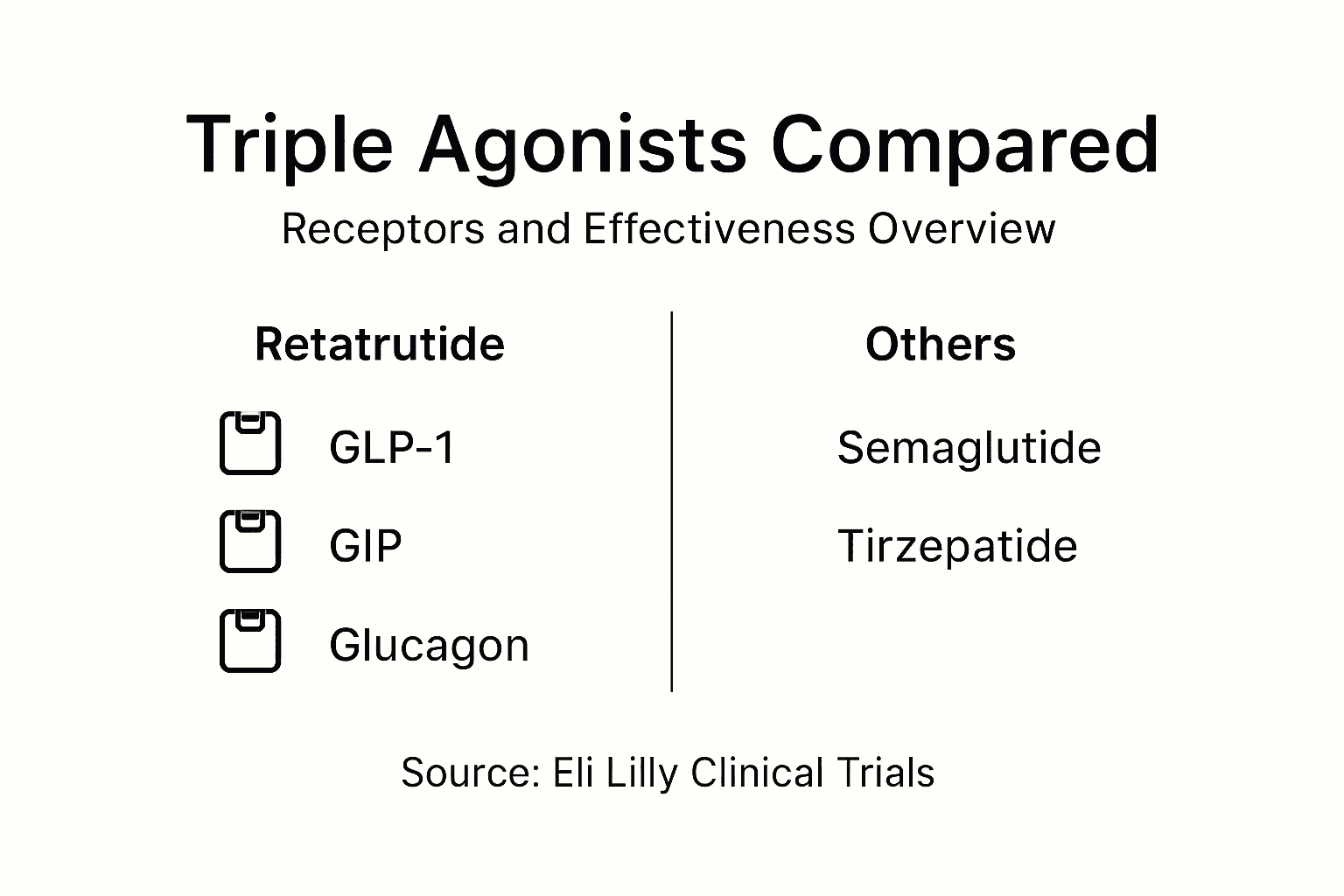
Here is a comparison of receptor engagement and key research effects between leading metabolic peptides:
| Compound | Receptors Targeted | Average Weight Reduction | Distinct Mechanism Impact |
|---|---|---|---|
| Retatrutide | GLP-1, GIP, Glucagon | Up to 28.7% at 12 mg | Increased fat oxidation, energy expenditure |
| Tirzepatide | GLP-1, GIP | ~20% | Appetite suppression, insulin sensitivity |
| Semaglutide | GLP-1 | ~15% | Strong appetite suppression |
Pro Tip: When comparing research compounds, always examine the full spectrum of receptor interactions rather than focusing solely on individual metabolic outcomes.
Discover Cutting-Edge Triple Agonist Research With Area 15 Labs
Retatrutide is rewriting the playbook for metabolic research with its triple receptor targeting power. If you’re tackling the challenges of complex metabolic pathways and want to move beyond single or dual agonists, you need access to the purest, most reliable compounds that meet the highest standards. At Area 15 Labs, we understand the frustration of slow overseas shipping and vague quality claims. That is why we ship directly from Texas with lightning-fast fulfillment and transparent, third-party tested purity. Our focus on advanced agonists like Retatrutide means you get next-gen molecules delivered with zero hassle so your research stays on the cutting edge.
Join the no-nonsense research revolution and fuel your exploration of GLP-1, GIP, and glucagon receptor interactions with confidence. Experience the swagger of working with a trusted partner who rejects sterile big pharma vibes in favor of speed, style, and scientific integrity. Ready to elevate your metabolic studies? Explore our high-purity peptide offerings and get same-day Texas shipping at Area 15 Labs. Check out the Advanced Agonists section to stay ahead of the curve. Don’t settle for slow shipments or questionable quality. Start your next breakthrough today with Area 15 Labs.
Frequently Asked Questions
What is Retatrutide and how does it work?
Retatrutide is a novel triple receptor agonist that targets GLP-1, GIP, and glucagon receptors, aiming to provide comprehensive metabolic intervention by engaging multiple hormone pathways simultaneously.
What are the key findings from the latest clinical trials involving Retatrutide?
Recent Phase 3 trials showed that participants experienced an average weight loss of 28.7% over 68 weeks, alongside significant improvements in other metabolic parameters like HbA1c levels and physical function metrics.
Is Retatrutide currently FDA approved?
As of early 2026, Retatrutide remains an investigational compound and is not yet FDA-approved. Eli Lilly is conducting advanced clinical trials, with the regulatory submission anticipated in late 2025 or early 2026.
How does Retatrutide compare to other metabolic peptides like semaglutide and tirzepatide?
Retatrutide distinguishes itself by activating three hormone receptors simultaneously, unlike semaglutide (which targets only GLP-1) and tirzepatide (which activates GLP-1 and GIP). This multi-receptor engagement may lead to greater weight reduction and metabolic insights.