

Over 35 million American adults have been touched by groundbreaking peptide research shaping the field of metabolic science. With so much attention on GLP-1 and GIP agonists, understanding these powerful molecules means unlocking a new level of insight into cellular communication and metabolism. This overview breaks down the science behind these innovative metabolic tools, helping you recognize how American researchers are leading discoveries that could redefine metabolic regulation worldwide.
Table of Contents
- GLP-1 And GIP Agonists Explained
- How These Agonists Affect Metabolic Pathways
- Molecular Differences: Structure And Function
- Research Applications And Lab Benefits
- Dual Agonists And Next-Gen Stacks
Key Takeaways
| Point | Details |
|---|---|
| GLP-1 and GIP Agonists | These compounds play crucial roles in metabolic regulation by mimicking natural hormonal signals to influence insulin secretion and appetite. |
| Research Applications | GLP-1 and GIP agonists provide advanced tools for studying metabolic pathways, enabling deeper insights into cellular communication and potential therapeutic strategies. |
| Dual Agonist Technologies | Combining multiple receptor targeting enhances research precision and opens new avenues for understanding complex metabolic interactions. |
| Molecular Differences | The distinct structural characteristics of GLP-1 and GIP agonists significantly impact their receptor interactions and signaling capabilities, allowing for targeted metabolic responses. |
GLP-1 and GIP Agonists Explained
The world of metabolic research is filled with fascinating molecular players, and GLP-1 and GIP agonists are two revolutionary compounds that have captured scientific attention. These peptide-based molecules operate as critical signaling mechanisms in metabolic regulation, offering researchers unprecedented insights into complex biological pathways. Understanding receptor mechanisms in metabolic signaling reveals how these agonists interact with cellular systems to modulate critical physiological responses.
GLP-1 (Glucagon-Like Peptide-1) and GIP (Glucose-Dependent Insulinotropic Polypeptide) agonists represent sophisticated molecular tools that engage specific receptor sites to trigger nuanced metabolic responses. These compounds function by mimicking natural hormonal signals, essentially “hacking” cellular communication networks to influence insulin secretion, appetite regulation, and energy metabolism. By binding to receptors with high specificity, these agonists can potentially redirect metabolic processes in carefully controlled research environments.
Researchers have identified several key characteristics that distinguish these molecular agents:
- Receptor Interaction: GLP-1 agonists primarily target pancreatic beta cells
- Signaling Mechanisms: GIP agonists demonstrate unique glucose-dependent insulin stimulation
- Metabolic Modulation: Both compounds influence appetite and energy expenditure
- Research Potential: Offer insights into complex metabolic regulation pathways
The emerging field of dual agonists, such as Tirzepatide, which combines GLP-1 and GIP receptor targeting, represents a cutting-edge approach in metabolic research. These innovative molecular constructs provide researchers with increasingly sophisticated tools to explore intricate biological systems with unprecedented precision.
How These Agonists Affect Metabolic Pathways
Understanding the intricate mechanisms of metabolic regulation reveals the sophisticated ways GLP-1 and GIP agonists influence cellular processes. Comprehensive metabolic pathway analysis demonstrates these molecular agents engage complex biological networks with remarkable precision, fundamentally reshaping how researchers comprehend metabolic interactions.

At the cellular level, these agonists exert multifaceted effects on metabolic function. Insulin secretion becomes strategically modulated, with GLP-1 and GIP receptors triggering glucose-dependent hormonal responses that dynamically adjust pancreatic beta cell activity. This nuanced interaction allows for targeted metabolic intervention without inducing unpredictable systemic responses, making them powerful research tools for understanding metabolic regulation.
Key metabolic pathway interactions include:
- Glucose Metabolism: Direct stimulation of insulin release
- Lipid Regulation: Modulation of lipogenesis and lipolysis
- Hormonal Signaling: Suppression of glucagon production
- Gastrointestinal Function: Influence on digestive motility and nutrient absorption
The emerging research on dual agonist mechanisms suggests these compounds represent a sophisticated approach to understanding metabolic complexity. By simultaneously targeting multiple receptor sites, researchers can potentially unlock deeper insights into the intricate biochemical networks that govern metabolic homeostasis.
Molecular Differences: Structure and Function
The molecular landscape of GLP-1 and GIP agonists reveals a fascinating interplay of structural complexity and functional specificity. Detailed molecular configuration analysis demonstrates that these compounds possess unique architectural characteristics that fundamentally influence their receptor interactions and signaling capabilities.
Structural Variations play a critical role in determining how these molecular agents engage with cellular receptors. GLP-1 and GIP agonists differ in their amino acid sequences, peptide chain lengths, and binding domain configurations, which directly impact their ability to trigger specific metabolic responses. These nuanced structural differences create distinct molecular “fingerprints” that enable targeted interactions with receptor sites, allowing researchers to explore precise metabolic mechanisms.
Key molecular distinguishing features include:
- Receptor Binding Affinity: Unique molecular configurations that determine interaction strength
- Peptide Chain Composition: Variations in amino acid sequence and structure
- Conformational Flexibility: Different molecular folding patterns
- Signal Transduction Mechanisms: Unique pathways for cellular communication
Advanced structural comparative studies highlight the sophisticated molecular engineering behind these agonists. By meticulously analyzing their structural nuances, researchers can develop increasingly precise molecular tools that offer unprecedented insights into metabolic regulation at the cellular level.
Research Applications and Lab Benefits
Comprehensive research investigations reveal the extraordinary potential of GLP-1 and GIP agonists as groundbreaking molecular tools for advanced laboratory research. These sophisticated compounds offer researchers unprecedented opportunities to explore complex metabolic mechanisms with remarkable precision and depth, transforming our understanding of cellular signaling networks.
Laboratory Applications extend far beyond traditional research boundaries, enabling scientists to develop sophisticated models for investigating metabolic regulation. By leveraging the unique molecular characteristics of GLP-1 and GIP agonists, researchers can generate nuanced insights into cellular communication pathways, potentially unlocking new approaches to understanding metabolic disorders and developing innovative therapeutic strategies.
Key research benefits include:
- Molecular Modeling: Advanced tools for studying cellular receptor interactions
- Metabolic Pathway Analysis: Precise mechanisms for investigating hormonal signaling
- Computational Research: Sophisticated molecular simulation capabilities
- Biochemical Exploration: Targeted investigation of complex metabolic networks
Advanced preclinical research methodologies demonstrate that these agonists represent cutting-edge molecular instruments. By providing researchers with increasingly sophisticated analytical tools, GLP-1 and GIP agonists continue to push the boundaries of our understanding of metabolic regulation at the cellular and molecular levels.
Dual Agonists and Next-Gen Stacks
Emerging research on dual agonist technologies reveals a groundbreaking approach to molecular targeting that transcends traditional single-receptor strategies. By simultaneously engaging multiple receptor pathways, these sophisticated molecular constructs represent a quantum leap in research capabilities, offering unprecedented precision in exploring complex metabolic interactions.
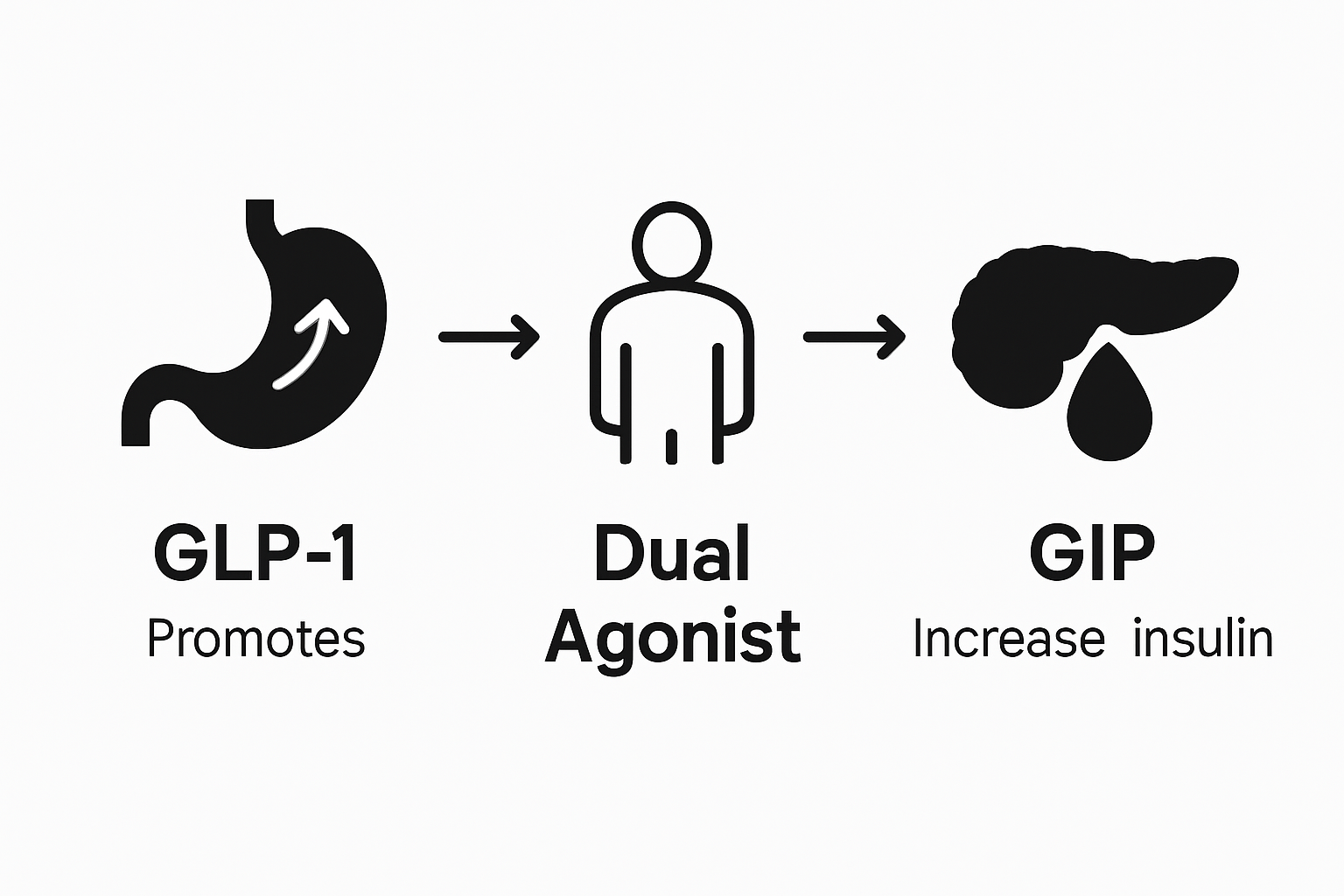
Next-Generation Molecular Stacking represents a sophisticated scientific frontier where researchers can combine multiple receptor agonists to create more nuanced and powerful research tools. These advanced molecular configurations allow for simultaneous interaction with different cellular receptors, generating more comprehensive insights into metabolic signaling networks and potentially unlocking new understanding of cellular communication mechanisms.
Key characteristics of dual agonist technologies include:
- Multi-Receptor Targeting: Simultaneous engagement of different cellular receptors
- Enhanced Molecular Specificity: Precise interaction with complex signaling pathways
- Advanced Research Capabilities: Comprehensive metabolic pathway exploration
- Sophisticated Molecular Design: Engineered compounds with intricate interaction profiles
Recent developments in weight loss research highlight the transformative potential of these molecular innovations. Compounds like tirzepatide and retatrutide demonstrate how dual agonist strategies can create powerful research tools that provide unprecedented insights into metabolic regulation at the molecular level.
Elevate Your Metabolic Research with the No-BS Agonist Experts
Diving into the world of GLP-1 and GIP agonists means confronting complex molecular interplay and the challenges of precise receptor targeting. You need research tools that match that complexity with uncompromising purity and lightning-fast delivery. At Area 15 Labs, we get it. You want to explore nuanced insulin secretion patterns and dual agonist effects without the usual shipping delays or shady sourcing.
Our Texas-based command center offers rigorously tested, high-purity compounds like GLP-1 Semaglutide and cutting-edge dual agonists such as Tirzepatide and Retatrutide, designed for advanced metabolic pathway analysis. When you research with swagger, backed by superior quality and no-nonsense customer support, you can push the boundaries of cellular signaling research confidently. No overseas wait times just straight-up, same-day fulfillment.
Ready to upgrade your research game with precision and speed? Explore our full catalog now at Area 15 Labs and join the community powering the future of metabolic science.
Frequently Asked Questions
What are GLP-1 and GIP agonists?
GLP-1 (Glucagon-Like Peptide-1) and GIP (Glucose-Dependent Insulinotropic Polypeptide) agonists are peptide-based molecules that enhance metabolic regulation by mimicking natural hormonal signals, influencing insulin secretion, appetite regulation, and energy metabolism.
How do GLP-1 and GIP agonists differ in their functions?
GLP-1 agonists primarily target pancreatic beta cells to stimulate insulin secretion, while GIP agonists provide unique glucose-dependent insulin stimulation. Both also play roles in appetite modulation and energy balance but through different mechanisms.
What are the potential research applications of GLP-1 and GIP agonists?
These agonists can be used for advanced laboratory research to study metabolic pathways, explore hormonal signaling, and investigate complex biochemical networks, potentially leading to new therapeutic strategies for metabolic disorders.
What is the significance of dual agonists in metabolic research?
Dual agonists, such as tirzepatide, combine the mechanisms of GLP-1 and GIP, allowing for simultaneous targeting of multiple receptor pathways. This approach enhances precision in research and provides deeper insights into metabolic interactions.
Recommended
- Battle of the Agonists: Semaglutide vs. Tirzepatide vs. Retatrutide | Research Peptides & News | Area 15 Labs
- GLP-1 Semaglutide 10mg | Research Peptide | High-Purity Compound
- GLP-2 Tirzepatide 30 mg | Research Peptide | High-Purity Compound
- Tirzepatide 30mg GLP-1/GIP Dual Agonist Research Peptide
- How GLP-1 Receptor Agonists Aid in Weight Loss? – LeanAndFit

[…] Battle of the Agonists: GLP-1 vs. GIP Breakdown […]