

Over 60 percent of American research labs report concerns about data accuracy and reproducibility. In the fast-paced world of scientific studies, maintaining reliable results is essential for earning trust and advancing innovation. Understanding how Quality Assurance works within research environments reveals why strict standards are more than just checklists. Get straight answers on what strengthens research labs, from preventing errors to achieving findings respected by scientists and institutions worldwide.
Table of Contents
- Quality Assurance Defined for Research Labs
- Types of Quality Assurance Processes
- How QA Drives Research Purity and Speed
- Compliance Requirements and Ethical Testing
- Risks of Poor QA and How to Avoid Them
Key Takeaways
| Point | Details |
|---|---|
| Importance of Quality Assurance | Quality Assurance ensures scientific integrity and reproducibility through systematic protocols in research labs. |
| Types of Quality Assurance Processes | Key processes include Internal Quality Control, External Quality Assessment, and Statistical Process Control to maintain data integrity. |
| Compliance and Ethical Testing | Rigorous adherence to ethical standards and regulatory compliance is crucial for maintaining research integrity and accountability. |
| Risks of Poor Quality Assurance | Failures in Quality Assurance can lead to significant data integrity collapse and reputational damage, emphasizing the need for robust risk management strategies. |
Quality Assurance Defined for Research Labs
Research Quality Assurance (QA) represents a systematic framework designed to ensure scientific integrity, reliability, and precision in laboratory environments. At its core, QA involves meticulously planned activities that prevent errors and validate research processes from initial design through final data interpretation.
In practical terms, Quality Assurance encompasses comprehensive strategies that address multiple critical dimensions of scientific research. Systematic verification protocols help laboratories maintain rigorous standards by implementing structured approaches to data collection, analysis, and documentation. These protocols typically include:
- Establishing clear research methodologies
- Defining precise measurement standards
- Creating comprehensive documentation processes
- Implementing regular internal and external audits
- Developing transparent error tracking mechanisms
The fundamental goal of QA in research labs is generating reproducible and credible scientific data. Researchers must ensure that every experimental procedure follows predetermined protocols with minimal variation. This requires careful attention to equipment calibration, researcher training, material sourcing, and consistent experimental techniques. By maintaining meticulous standards, scientific teams can produce findings that withstand peer review and contribute meaningfully to broader academic understanding.
Understanding QA is not merely about following rules but cultivating a culture of scientific precision. Our mission at Area 15 Labs centers on delivering research materials that meet the highest standards of purity and reliability. Successful Quality Assurance transforms raw scientific potential into verified, trustworthy knowledge—a critical process that underpins technological advancement and scientific discovery.
Types of Quality Assurance Processes
Research laboratories employ multiple sophisticated Quality Assurance processes designed to maintain scientific rigor and data integrity. Comprehensive QA strategies typically encompass several critical approaches that systematically validate research methodologies and minimize potential errors.
The primary types of Quality Assurance processes include:
- Internal Quality Control
- Continuous monitoring of laboratory procedures
- Regular equipment calibration
- Immediate error detection and correction mechanisms
- Consistent staff training and performance evaluation
- External Quality Assessment
- Independent verification of research protocols
- Comparative analysis with industry benchmark standards
- Periodic external audits and inspections
- Validation by third-party research evaluation teams
- Statistical Process Control
- Advanced quantitative analysis of research processes
- Tracking variability in experimental outcomes
- Implementing statistical techniques to predict potential deviations
- Using data-driven insights to refine research methodologies
Statistical control techniques represent a sophisticated approach to ensuring research consistency. Failure testing methods help laboratories proactively identify potential weaknesses in experimental design, enabling researchers to develop more robust and reliable scientific protocols. By systematically analyzing potential points of failure, research teams can create more predictable and reproducible experimental frameworks.

Ultimately, Quality Assurance processes function as a comprehensive defense mechanism against scientific uncertainty. They transform raw research potential into verified, trustworthy knowledge by implementing layered verification strategies that address every stage of scientific investigation—from initial hypothesis development through final data interpretation.
How QA Drives Research Purity and Speed
Quality Assurance transforms research processes by creating a systematic approach that dramatically enhances both scientific reliability and operational efficiency. Comprehensive testing protocols enable researchers to accelerate discovery while maintaining unprecedented levels of precision and reproducibility.
The core mechanisms driving research purity and speed include:
Accelerated Error Detection
Rapid identification of potential contamination
Immediate correction of methodological inconsistencies
Minimized research time lost to unexpected complications
Streamlined Experimental Workflows
Standardized procedures reduce variability
Consistent methodology across research stages
Predictable and replicable experimental outcomes
Quality Assurance practices operate across multiple critical research phases. Advanced testing methodologies ensure that each experimental stage—from initial material selection through final data analysis—maintains rigorous scientific standards. By implementing multilayered verification processes, research teams can significantly reduce the time typically lost to experimental redesign and repeated trials.
Ultimately, Quality Assurance acts as a high-performance filter, separating potential breakthrough research from unreliable data. It transforms the traditional research model from a hit-or-miss approach to a precision-engineered pathway of scientific discovery. The result is not just faster research, but fundamentally more trustworthy and impactful scientific contributions that can withstand the most stringent academic and professional scrutiny.
Compliance Requirements and Ethical Testing
Research laboratories must navigate a complex landscape of ethical standards and regulatory compliance that demands meticulous attention to detail. Rigorous verification protocols serve as the critical framework ensuring that scientific investigations maintain the highest levels of integrity and professional responsibility.
Key compliance requirements encompass multiple critical dimensions:
- Institutional Review Standards
- Comprehensive documentation of research methodologies
- Transparent reporting of experimental procedures
- Independent ethical review board approvals
- Consistent adherence to established research guidelines
- Methodological Integrity
- Verified calibration of research equipment
- Comprehensive staff training programs
- Systematic documentation of experimental processes
- Regular internal and external performance audits
- Ethical Testing Protocols
- Strict data privacy and confidentiality measures
- Elimination of potential research bias
- Transparent reporting of experimental limitations
- Comprehensive informed consent procedures
Advanced compliance strategies transform ethical testing from a bureaucratic requirement into a sophisticated quality control mechanism. By implementing multilayered verification processes, research teams create a robust framework that protects scientific integrity and ensures the most rigorous standards of professional conduct.
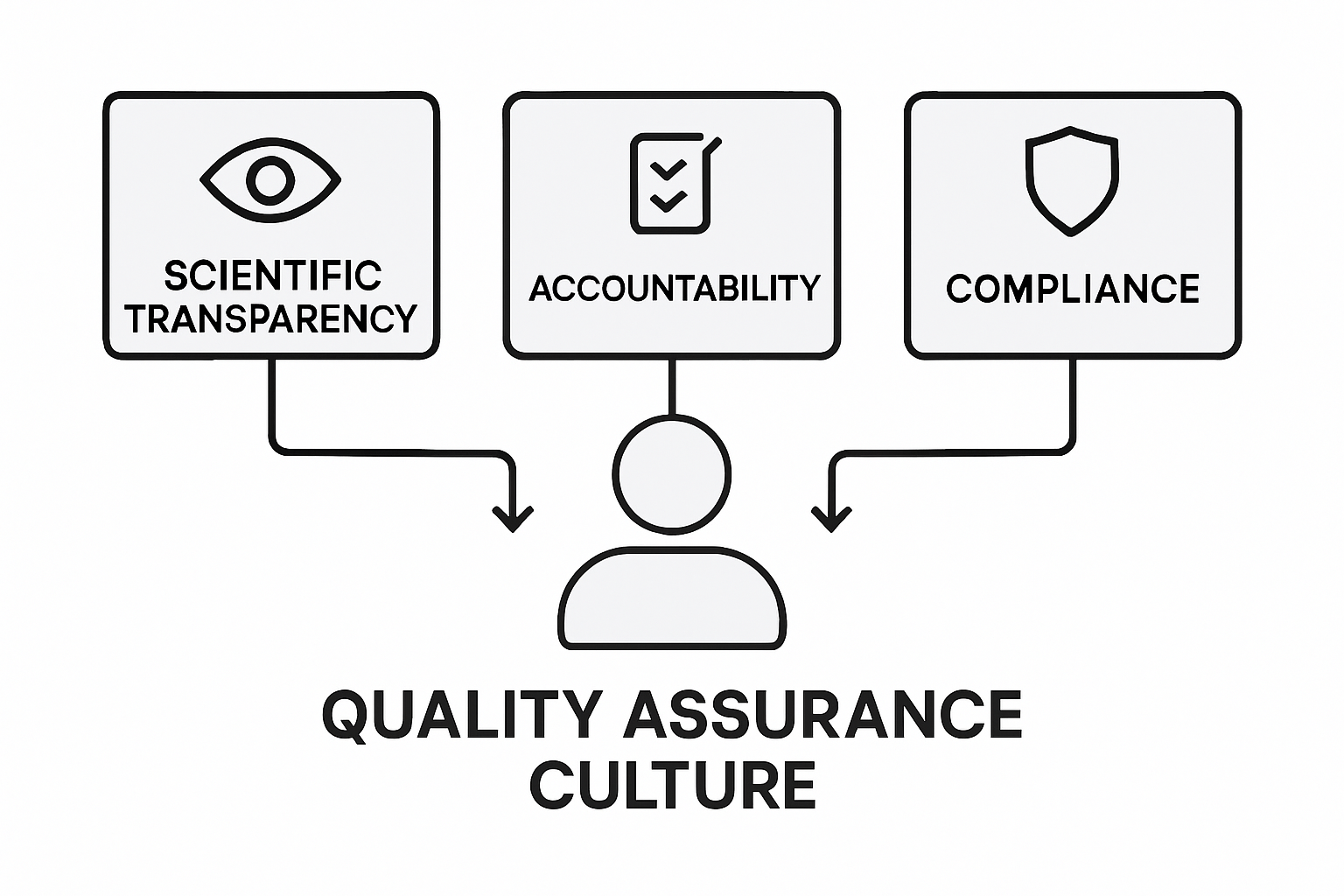
Ultimately, compliance is not about checking boxes but creating a culture of scientific transparency and accountability. It represents the fundamental mechanism by which research communities maintain trust, validate scientific discoveries, and push the boundaries of human knowledge while maintaining the highest ethical standards.
Risks of Poor QA and How to Avoid Them
Quality Assurance failures can create catastrophic consequences that extend far beyond immediate research outcomes. Comprehensive risk management strategies are critical for preventing potentially devastating scientific and professional setbacks.
The most significant risks associated with poor Quality Assurance include:
- Data Integrity Collapse
- Compromised research reproducibility
- Potential invalidation of entire research projects
- Loss of institutional credibility
- Financial and reputational damage
- Methodological Vulnerabilities
- Increased probability of experimental errors
- Unreliable scientific conclusions
- Reduced research funding opportunities
- Potential regulatory non-compliance
- Ethical and Professional Risks
- Potential research misconduct allegations
- Permanent damage to research reputation
- Loss of professional credentials
- Institutional trust erosion
Advanced error prevention techniques transform risk management from a passive defensive strategy to an active quality enhancement mechanism. By implementing multilayered verification processes, research teams can systematically identify and neutralize potential vulnerabilities before they escalate into critical failures.
Mitigating QA risks requires a proactive, holistic approach that combines rigorous protocols, continuous staff training, and a cultural commitment to scientific excellence. It’s not just about avoiding mistakes—it’s about creating a resilient research ecosystem that consistently delivers reliable, trustworthy scientific insights.
Elevate Your Research with No-Nonsense Quality Assurance from Texas
The article lays it out plain and simple: Quality Assurance in a research lab means unwavering precision, ethical compliance, and data integrity from start to finish. You know the pain of waiting weeks for overseas shipments or chasing vendors who dodge questions about purity. That uncertainty can derail experiments, waste time, and tank your credibility. By embracing rigorous verification protocols and advanced error prevention techniques, your research gains speed and trustworthiness — exactly what every modern scientist needs.
That is where Area 15 Labs changes the game. We are the “No-BS” choice from Texas shipping lightning-fast high-purity compounds with transparent third-party testing that matches the standards of the industry giants. Say goodbye to waiting and shady suppliers. Our approach turns Quality Assurance into an unbeatable competitive advantage. From our signature quality control methods to swift same-day fulfillment, we ensure your research materials uphold the highest ethical and scientific standards so your data can stand up under scrutiny.
Ready to ditch the delays and doubts holding your research back? Experience the difference of working with the command center for modern research. Discover how our advanced compliance strategies and precision testing accelerate your path to credible results. Visit Area 15 Labs now and power your lab with quality assurance that delivers every time.
Frequently Asked Questions
What is Quality Assurance in research labs?
Quality Assurance (QA) in research labs is a systematic framework designed to ensure scientific integrity, reliability, and precision throughout the research process, from initial design to final data interpretation.
Why is Quality Assurance important in scientific research?
Quality Assurance is crucial in scientific research because it helps prevent errors, validates research processes, and ensures that findings are reproducible and credible, thus contributing to trustworthy scientific knowledge.
What are some key Quality Assurance processes used in research laboratories?
Key Quality Assurance processes include internal quality control, external quality assessment, and statistical process control, each designed to validate methodologies and minimize potential errors in research.
How can poor Quality Assurance impact research outcomes?
Poor Quality Assurance can lead to compromised data integrity, increased methodological vulnerabilities, and ethical risks, potentially resulting in invalid research conclusions and damage to institutional credibility.
Recommended
- Peptide Quality Control: Complete Guide for Researchers
- 7 Key Benefits of Peptide Research Every Lab Should Know
- Our Mission & GLP-Grade Quality | Area 15 Labs
- RUO – Area 15 Labs
- Understanding Food Safety Audits Explained for Businesses – Probe IT
- Understanding Cannabis Quality Indicators for Better Choices – California Blendz

[…] Advanced research demands precision at every single step, transforming compound handling from a mundane task into a critical scientific ritual. Think of GHK-Cu as a temperamental genius that requires absolute respect. […]
[…] multilayered defense strategies that systematically address potential molecular integrity threats. Role of Quality Assurance in Research Supply emphasizes the necessity of implementing strict quality control measures throughout the entire […]