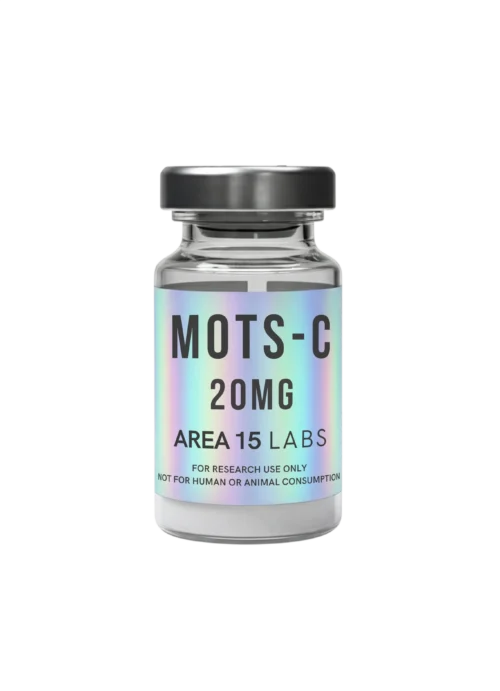
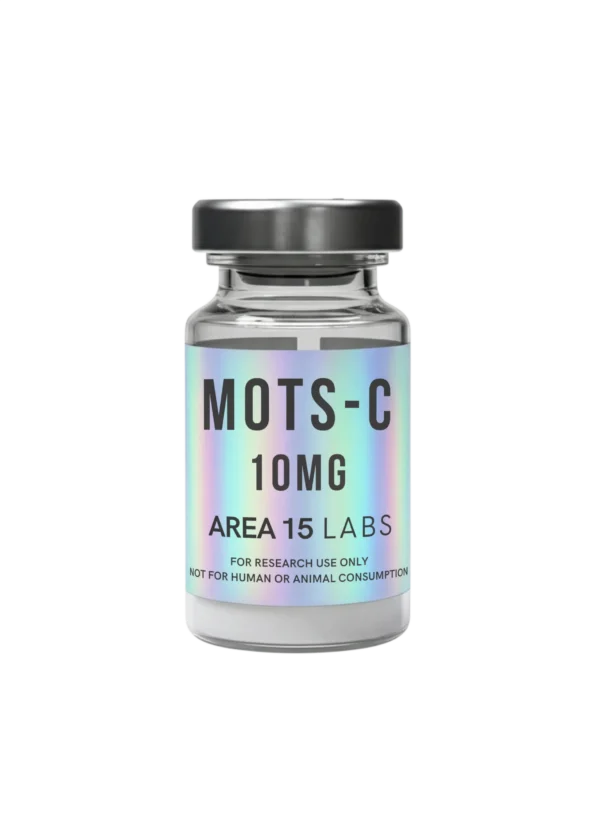
🧪 MOTS-C 10mg: Mitochondrial Research Profile
MOTS-C 10mg (Mitochondrial ORF of the 12S ribosomal RNA type-c) is a unique peptide encoded by the mitochondrial genome rather than the nuclear genome. Researchers utilizing MOTS-C 10mg focus on its ability to translocate to the nucleus during metabolic stress, where it regulates a broad array of stress-adaptation genes containing antioxidant response elements.
AMPK Pathway Activation: The MOTS-C 10mg peptide is primarily researched for its ability to activate 5′ AMP-activated protein kinase (AMPK), often cited as the body’s “master metabolic switch.”
Folate-Purine Regulation: Studies on MOTS-C 10mg indicate that it inhibits the folate cycle, leading to the accumulation of AICAR, which facilitates a potent metabolic response in cellular analogs.
Insulin Sensitivity Research: The MOTS-C 10mg formulation is investigated for its role in inducing GLUT4 translocation, which promotes glucose uptake and stabilizes insulin signaling in muscle tissue models.
Gene Expression Control: Laboratory evaluations of MOTS-C 10mg explore its capacity to regulate nuclear genes associated with lipid metabolism and physical adaptability.
🔬 Key Research Applications of MOTS-C 10mg
This peptide is a primary focus for research models investigating:
🧬 Metabolic Homeostasis: Studies on MOTS-C 10mg look at the effects of mitochondrial signaling on weight regulation and the prevention of diet-induced metabolic imbalances.
🏃 Physical Performance & Muscle: Research into MOTS-C 10mg includes evaluations of physical capacity, skeletal muscle adapter responses, and the “browning” of white adipose tissue.
🛡️ Cellular Longevity Models: Investigations into the biochemical properties of MOTS-C 10mg focus on its potential to reverse age-dependent physical decline and stabilize mitochondrial density.
🔥 Inflammatory Stress Control: Evaluation of MOTS-C 10mg for its ability to reduce pro-inflammatory cytokines and mitigate cellular stress in the intestinal and neural systems.
✅ MOTS-C 10mg Product Specifications
| Specification | Detail |
| Product Name | MOTS-C 10mg |
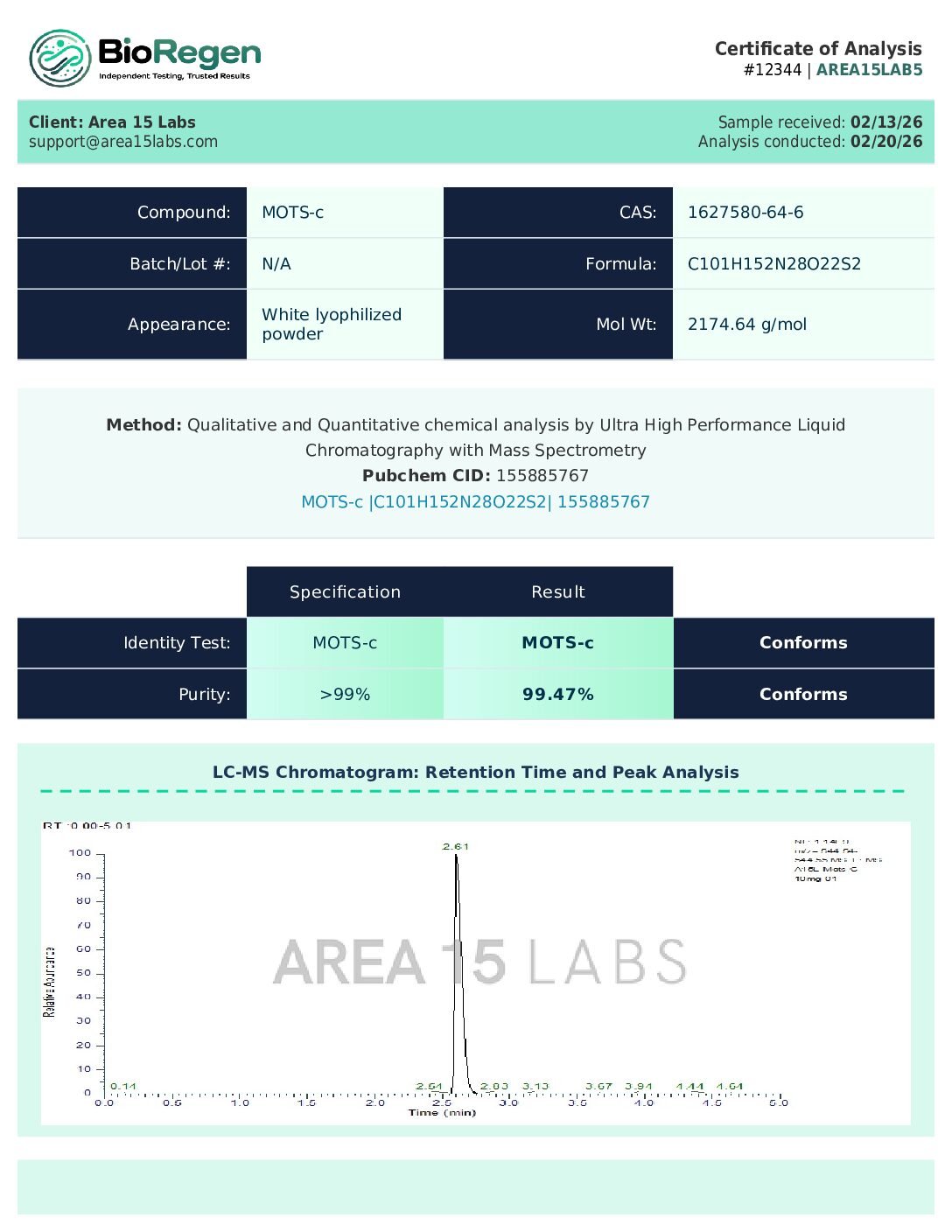
| Molecular Formula | C101H152N28O22S2 |
| Molecular Weight | 2174.6 g/mol |
| Concentration | 10 mg per vial |
| Sequence | Met-Arg-Trp-Gln-Glu-Met-Gly-Tyr-Ile-Phe-Tyr-Pro-Arg-Lys-Leu-Arg |
| Appearance | White lyophilized powder |
| Solubility | Soluble in sterile water or PBS |
❄️ Product Care & Handling Guidelines
Proper storage is required to maintain the molecular integrity of the MOTS-C 10mg polypeptide.
Unreconstituted (Powder): Store MOTS-C 10mg in a dry, dark environment. Long-term storage is optimal at -20 degrees C for up to 3 years.
Reconstituted (Liquid): Refrigerate MOTS-C 10mg at 2 degrees C to 8 degrees C immediately; researchers typically use the solution within 5 to 7 days for maximum potency.
Handling Note: Peptides like MOTS-C 10mg are sensitive to moisture and mechanical stress. Use gentle swirling during reconstitution and avoid repeated freeze-thaw cycles.
📚 References & Resources
NCBI PubMed: https://pubmed.ncbi.nlm.nih.gov/33473109/
NCBI PMC: https://pmc.ncbi.nlm.nih.gov/articles/PMC9854231/
NCBI PubMed: https://pubmed.ncbi.nlm.nih.gov/36761202/
PubChem: https://pubchem.ncbi.nlm.nih.gov/compound/Mots-c
NCBI PMC: https://pmc.ncbi.nlm.nih.gov/articles/PMC5116416/
⚠️ Laboratory Research Use Only Notice
The MOTS-C 10mg product is strictly intended for in vitro and non-clinical laboratory research purposes only. It is not for human consumption, veterinary diagnostic, or therapeutic use. Statements regarding the biochemical potential of MOTS-C 10mg have not been evaluated by the FDA. Researchers must follow established laboratory safety and ethical standards.