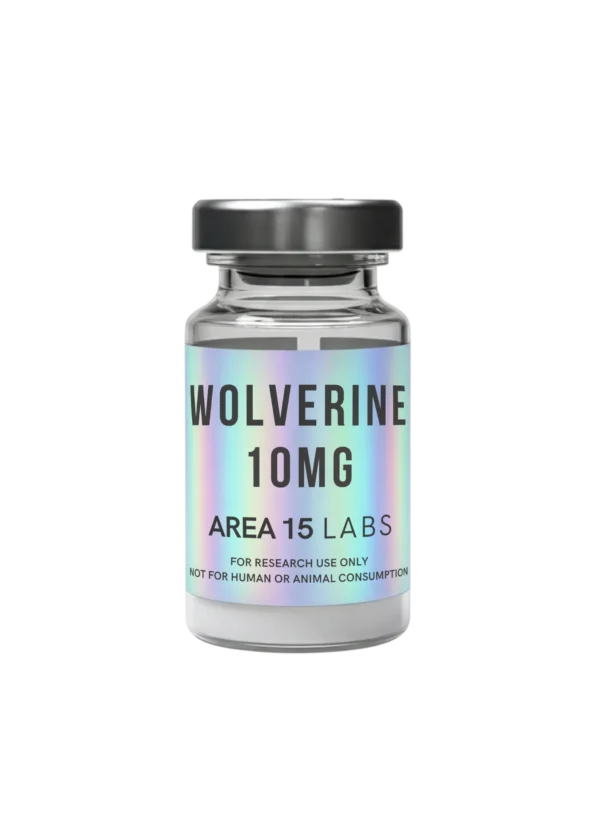
🧪 Wolverine Blend (10mg): Advanced Research Profile
The Wolverine Blend represents a sophisticated laboratory tool designed to explore the synergistic relationships between localized tissue protection and systemic repair signals. Researchers utilizing the Wolverine Blend focus on how these two molecules coordinate to regulate the extracellular matrix (ECM) and facilitate rapid cellular mobilization toward injury sites.
🔬 Scientific Mechanism & Data
Complementary Angiogenesis: The Wolverine Blend is researched for its ability to promote new blood vessel formation via both the VEGFR2-NO signaling axis and VEGF-dependent endothelial migration.
Growth Factor Upregulation: Studies on the Wolverine Blend evaluate the upregulation of growth hormone receptors (GHR) in fibroblasts, which enhances the anabolic response to tissue repair signals.
Cytoskeletal Dynamics: The Wolverine Blend formulation is investigated for its role in G-actin sequestering, a critical mechanism that allows cells to move efficiently to repair damaged fibers.
Inflammatory Modulation: Laboratory evaluations explore the suppression of pro-inflammatory cytokines like TNF-alpha and IL-6 while preventing excessive scar formation.
✅ Product Specifications
| Specification | Detail |
| Product Name | Wolverine Blend |
| Composition | 5mg BPC-157 / 5mg TB-500 |
| Total Mass | 10 mg per vial |
| Appearance | White to off-white lyophilized powder |
| Format | Lyophilized powder for reconstitution |
| Solubility | Soluble in bacteriostatic water or sterile saline |
❄️ Product Care & Handling Guidelines
Unreconstituted (Powder): Store the Wolverine Blend in a cool, dry environment. Long-term storage is optimal at -20°C.
Reconstituted (Liquid): Refrigerate the Wolverine Blend at 2°C to 8°C immediately; researchers typically use the solution within 14 to 21 days for maximum activity.
Handling Note: Peptides in the Wolverine Blend are sensitive to mechanical stress. Use gentle swirling during reconstitution and avoid repeated freeze-thaw cycles.
📚 References & Resources
NCBI PubMed: https://pubmed.ncbi.nlm.nih.gov/40756949/
NCBI PMC: https://pmc.ncbi.nlm.nih.gov/articles/PMC12446177/
NCBI PubMed: https://pubmed.ncbi.nlm.nih.gov/14554208/
⚠️ Laboratory Research Use Only Notice
The Wolverine Blend product is strictly intended for in vitro and non-clinical laboratory research purposes only. It is not for human consumption, veterinary diagnostic, or therapeutic use. Statements regarding the biochemical potential of the Wolverine Blend have not been evaluated by the FDA. Researchers must adhere to established laboratory protocols.